- // ELEKTROPROMREMONT
- On-site repair
Repair of electric machines at the place of operation
Field crews
Engineers and production specialists
Mobile laboratory
Diagnostics and electrical testing
Mobile equipment
Repair carried out on site
The full package
From dismantling to readiness for start-up
// WHAT WE DO
On-site repair of electric machines at the Customer's premises
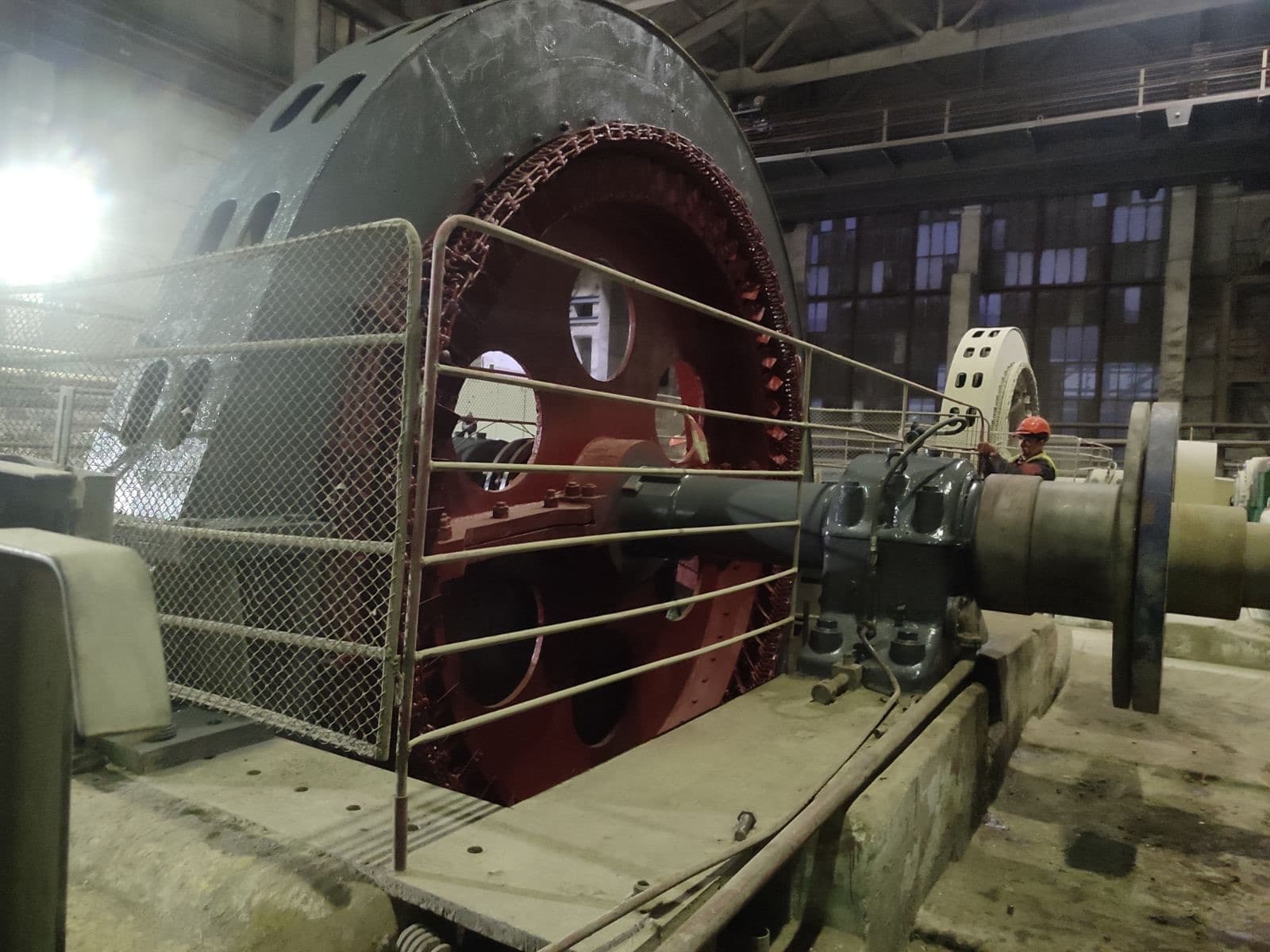
We carry out complete repairs of large electric motors and generators directly at their place of operation — where removal, transport or delivery to a repair base is technically difficult, uneconomic or simply impossible.
Dedicated field crews, mobile repair equipment and our own mobile electrical laboratory make it possible to perform a substantial part of the process on the industrial site itself.
 // REPAIR AT THE INSTALLATION SITE
// REPAIR WHERE THE MACHINE WORKS
Large equipment does not always have to travel to a repair base
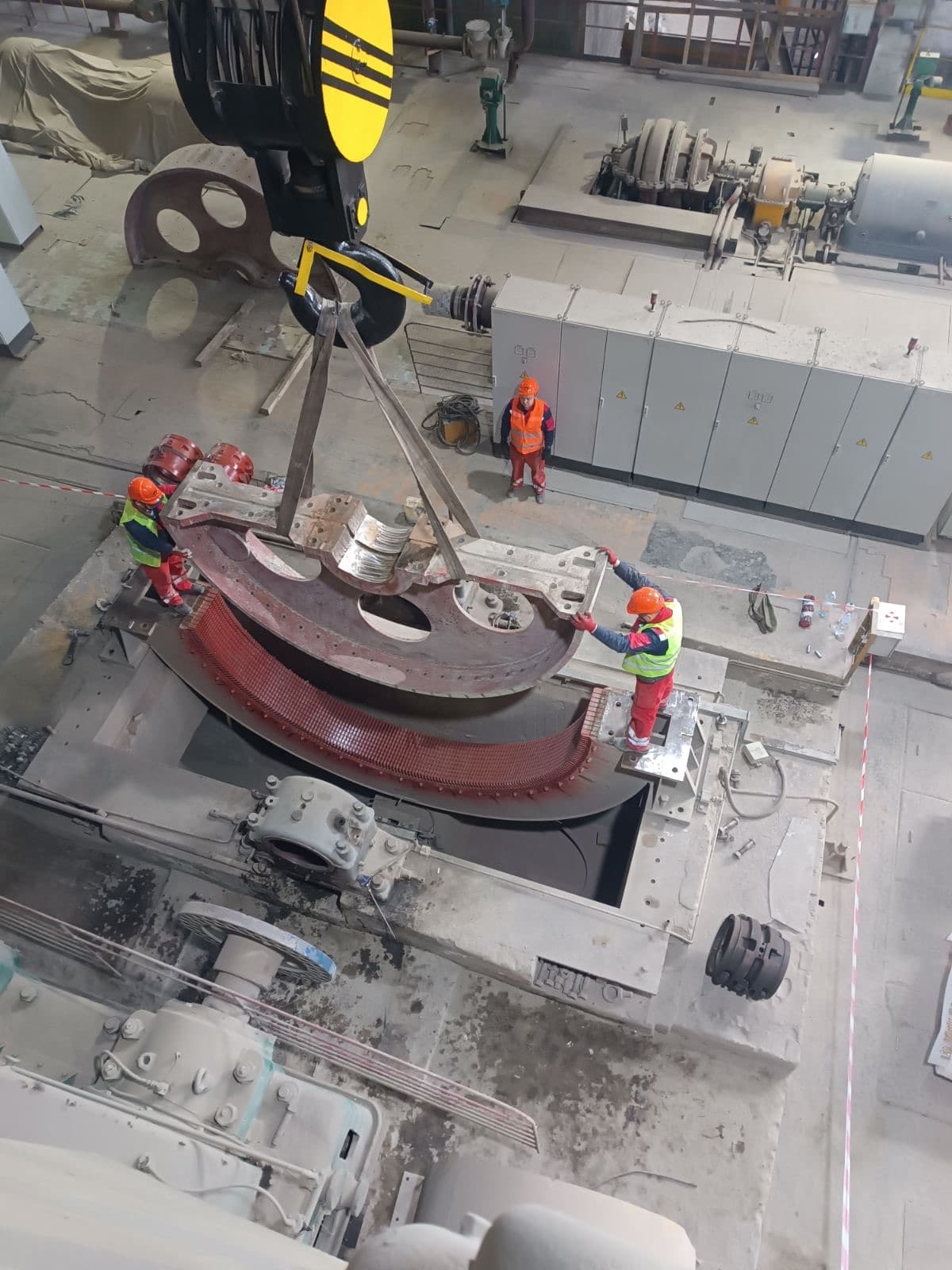
For large motors and generators, removal and transport can call for complex rigging, special vehicles and a long shutdown of the process plant. In some cases the design of the foundation, the building or the drive train makes moving the machine at short notice difficult or impossible.
In those situations Elektropromremont specialists carry out the largest possible package of repair operations right where the machine stands.
Before work begins the machine is surveyed, its actual condition established, and the repair method set out to suit the conditions of that particular site.
Technical diagnostics
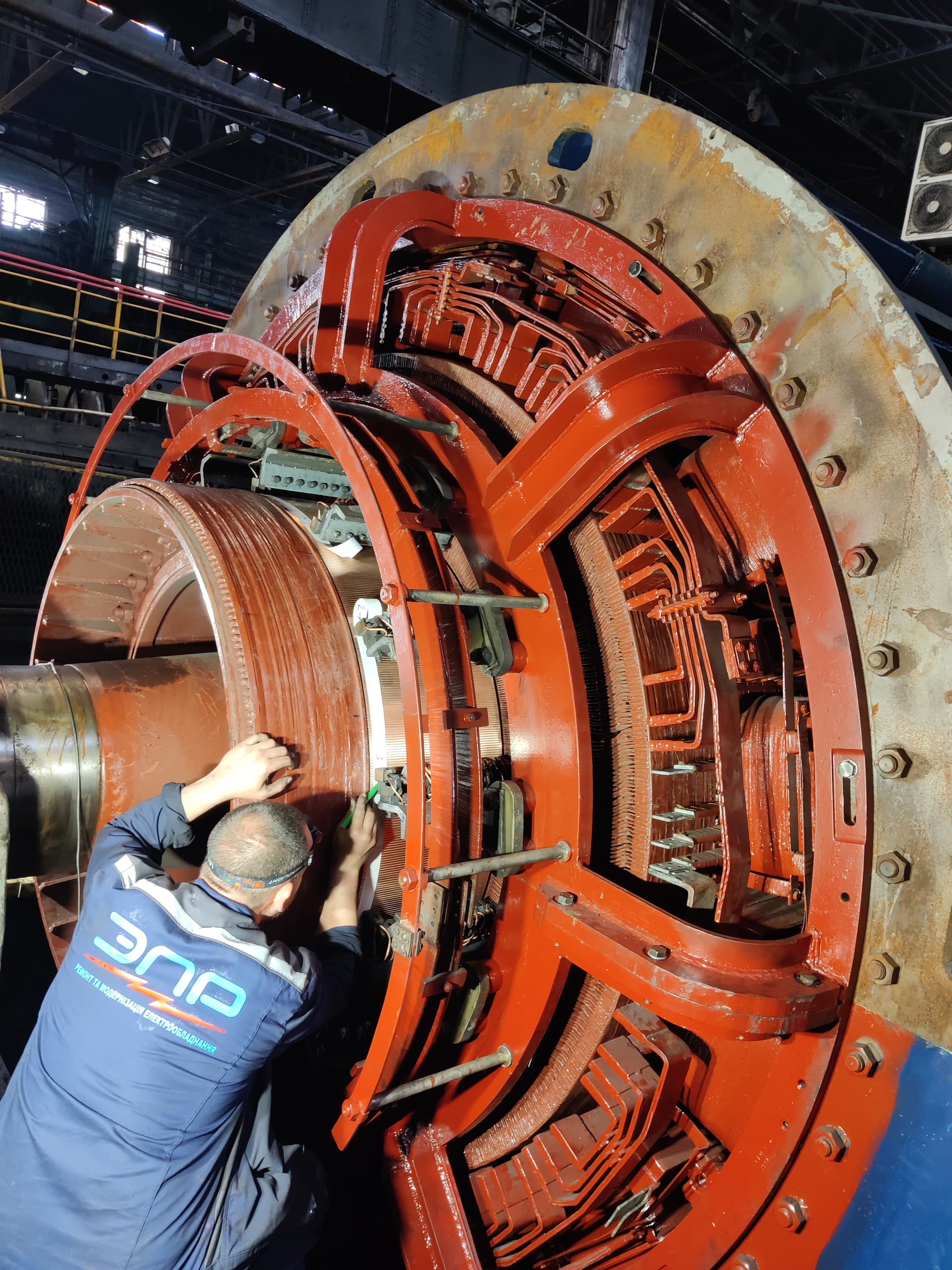
A complete survey of the machine before the repair begins, establishing the condition of both the electrical and the mechanical parts.
Dismantling and defect assessment
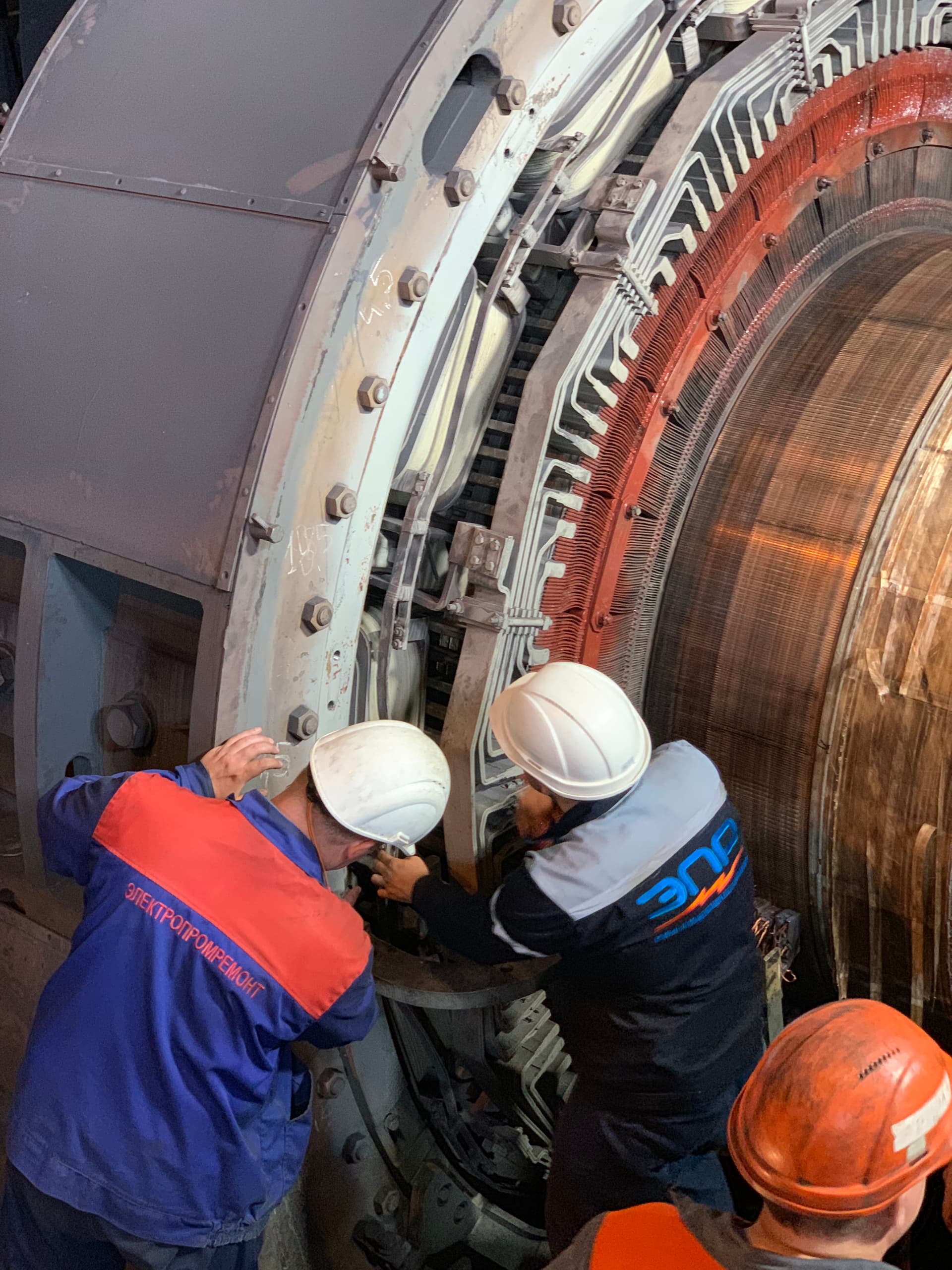
Dismantling the machine right where it operates, then assessing the stator, the rotor, the bearing assemblies, the cooling system and the auxiliary equipment.
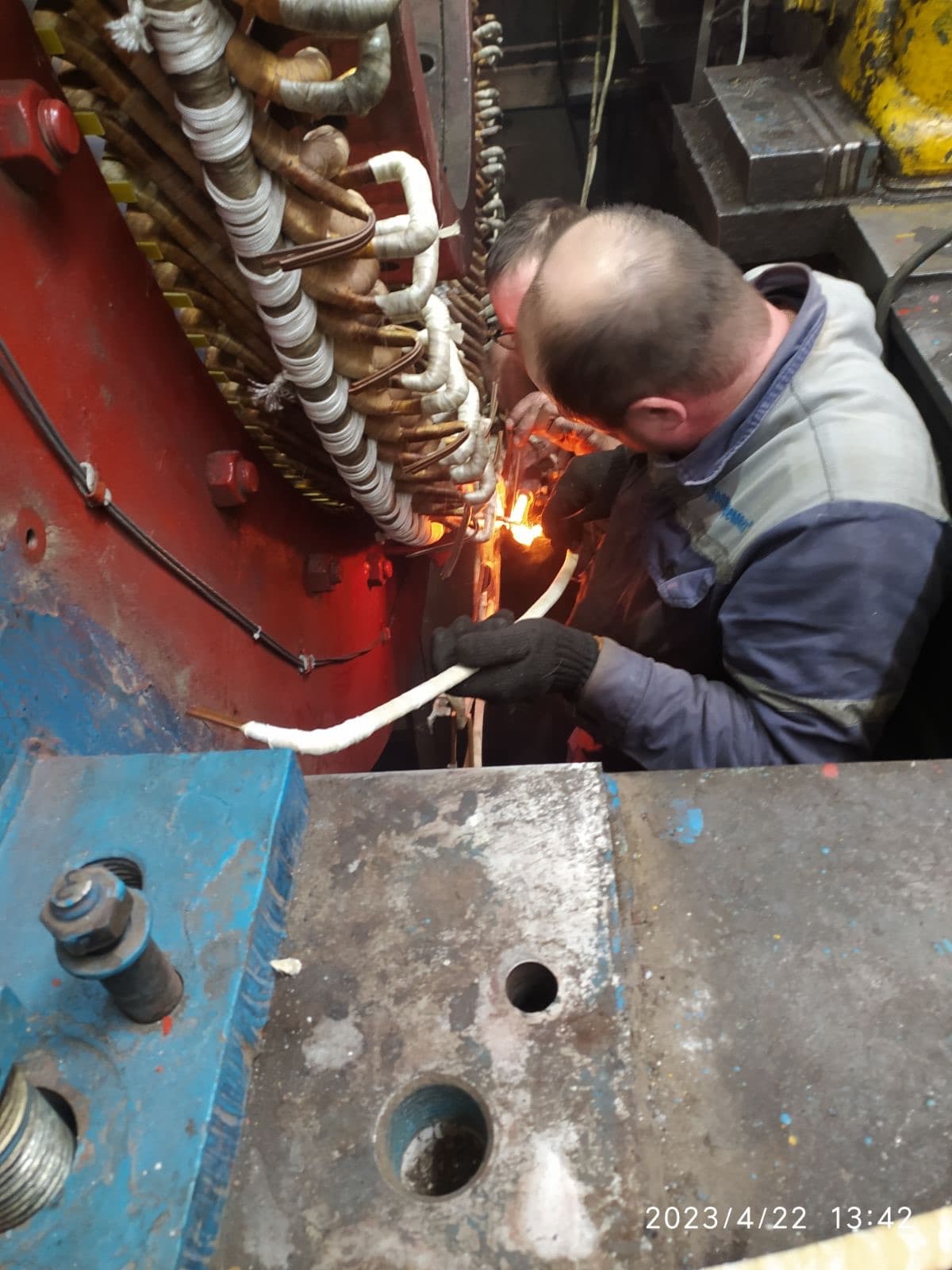
Stator and winding repair
Removing damaged elements, repairing insulation and windings, restoring connections and carrying out the other operations that site conditions allow.
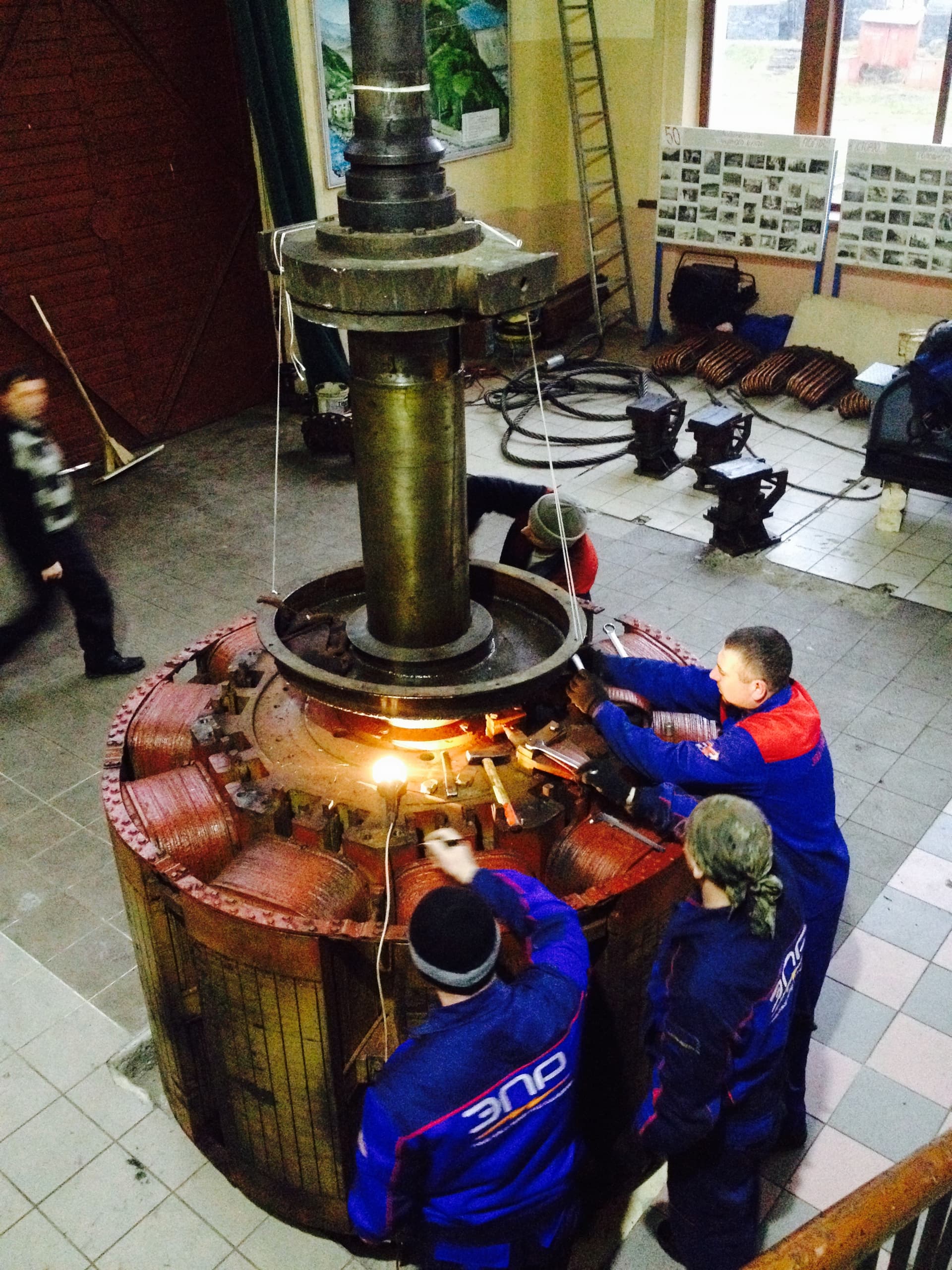
Rotor repair
Assessment and repair of rotor elements, slip rings and the pole system, machining of the shaft and other assemblies depending on the design of the machine, and balancing.
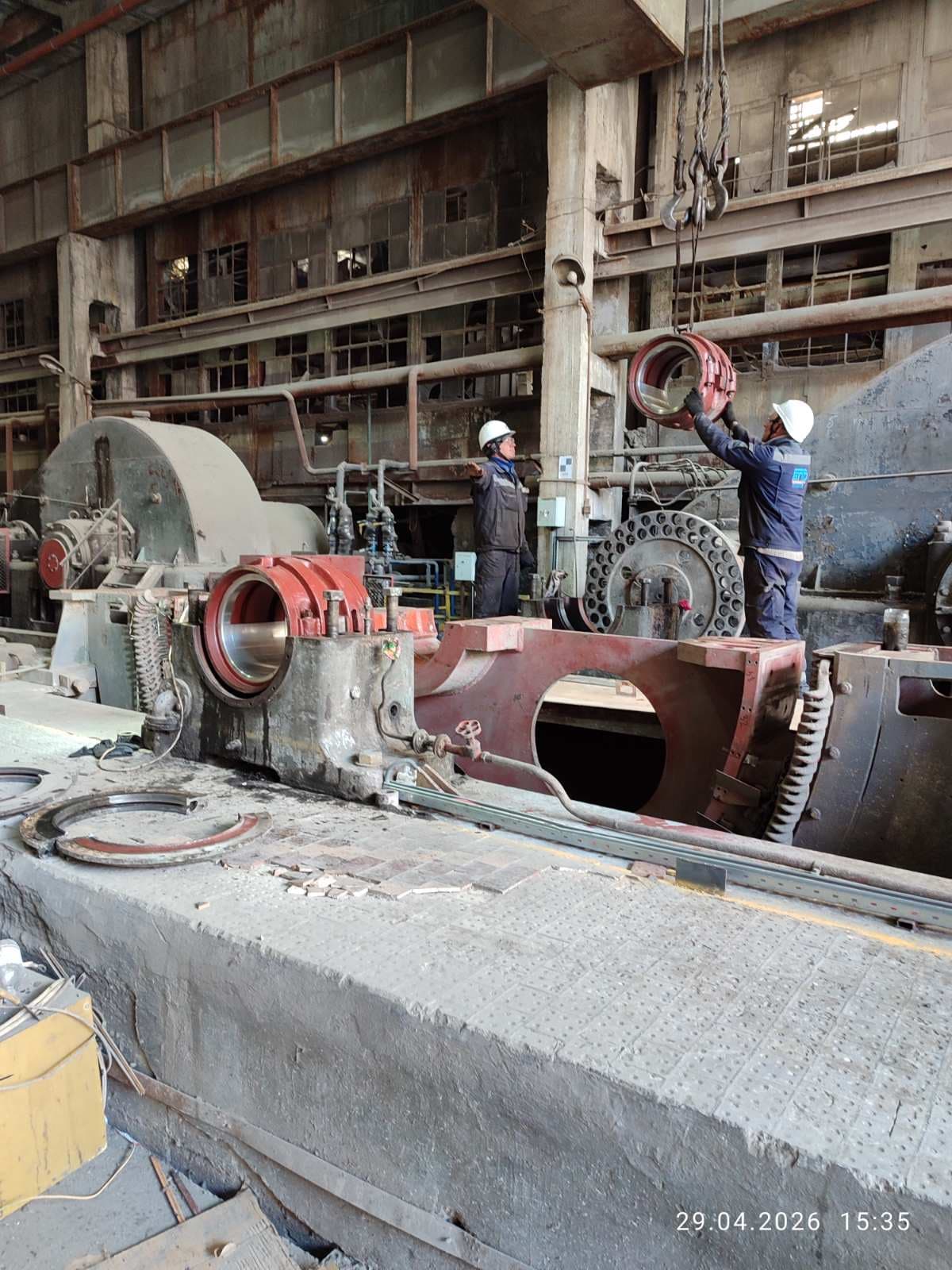
Bearing assembly repair
Assessment and restoration of bearing pedestals, sleeve bearings, and the sealing, oil-retaining and labyrinth elements.
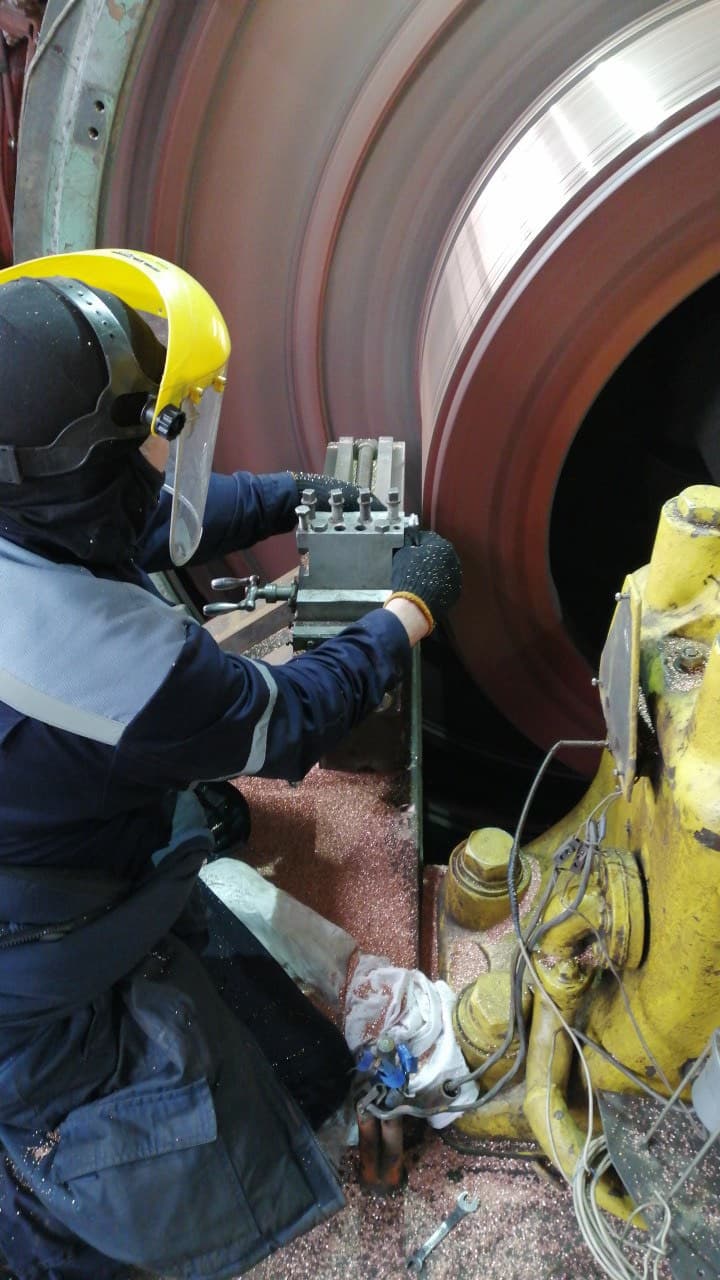
Restoring mechanical assemblies
Repair of seating surfaces, housing parts, mounting arrangements, ventilation and other mechanical elements.
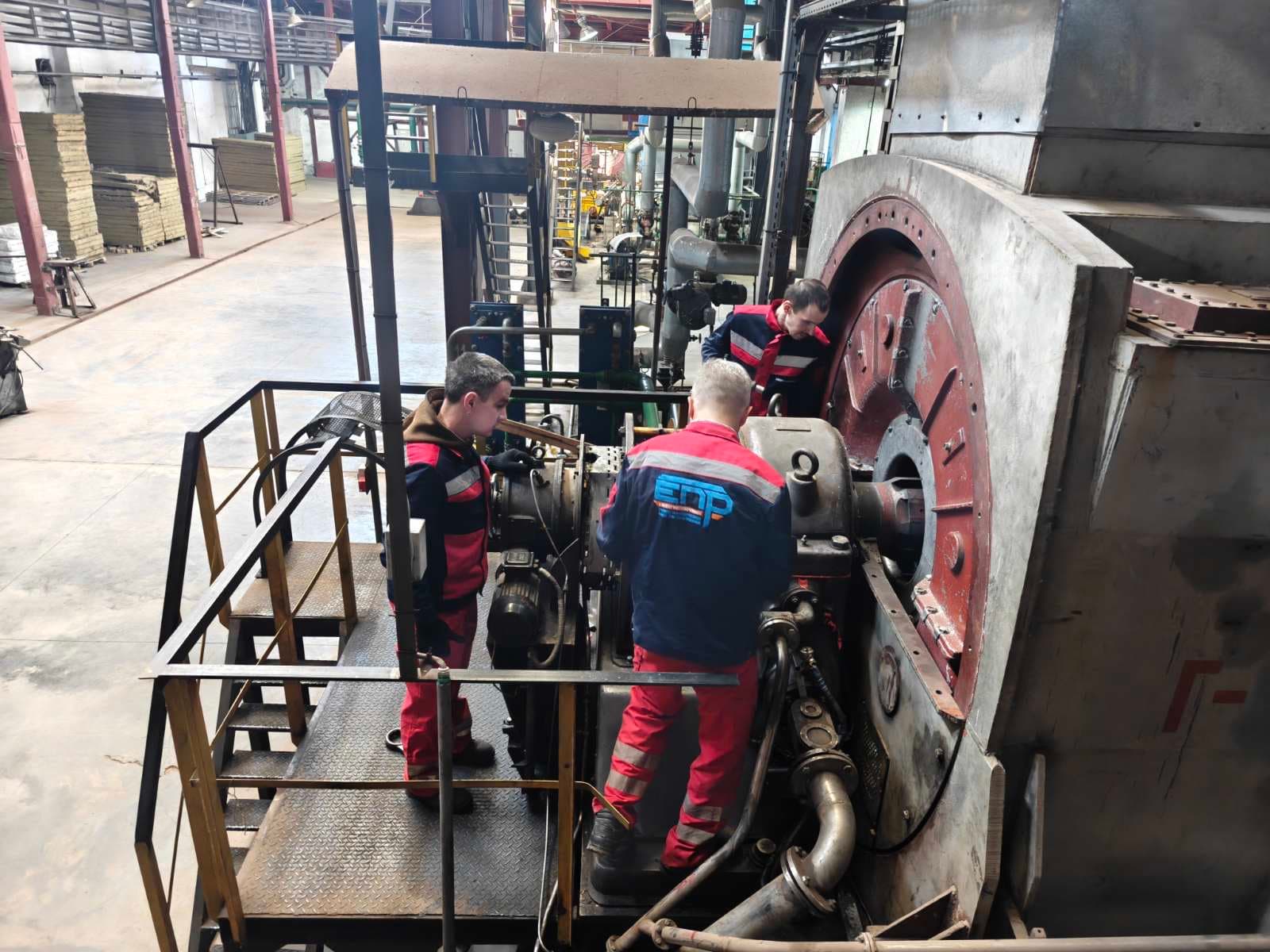
Alignment with the mechanism and start-up
Aligning the stator with the rotor, laser alignment of the machine with its driven mechanism, start-up under load, vibration measurement and acceptance testing.
// REPAIR CYCLE
The on-site overhaul of a low-speed mill motor, step by step
Every stage on the drawing is a real operation of a field crew on an SDMZ 2000-100 synchronous motor: opening the split frame under the hall crane, removing the rotor poles, rewinding both windings, reassembling and handing the machine over under load.
// HOW WE ORGANISE AN ON-SITE REPAIR
Eight steps from the first site visit to handing the machine back
The scope is set only after the survey: first we assess the machine and the conditions on site, then we build the method and the crew around that particular job, and only after acceptance testing does the set go back into service.
- 01Site visit and survey
We assess the equipment, the working conditions and the access to its assemblies.
- 02Diagnostics
The mobile laboratory carries out the preliminary measurements and tests required.
- 03Defect assessment
We establish the actual scope and the method of the repair.
- 04Mobilising the crew
We put together the team, tools, tackle and mobile equipment for the specific project.
- 05Repair on site
We carry out the agreed package of electrical and mechanical work.
- 06Installation and alignment
We set the machine in place and align it with the driven mechanism.
- 07Acceptance testing
We verify the electrical and mechanical parameters after the repair.
- 08Preparation for service
Final inspection and handover of the equipment to the Customer.
// MOBILE ELECTRICAL LABORATORY
Diagnostics and testing right where the machine stands
Our own mobile electrical laboratory makes it possible to run a full set of diagnostic and electrical tests at the place where the equipment operates — before the repair starts, while the work is under way, and once it is finished.
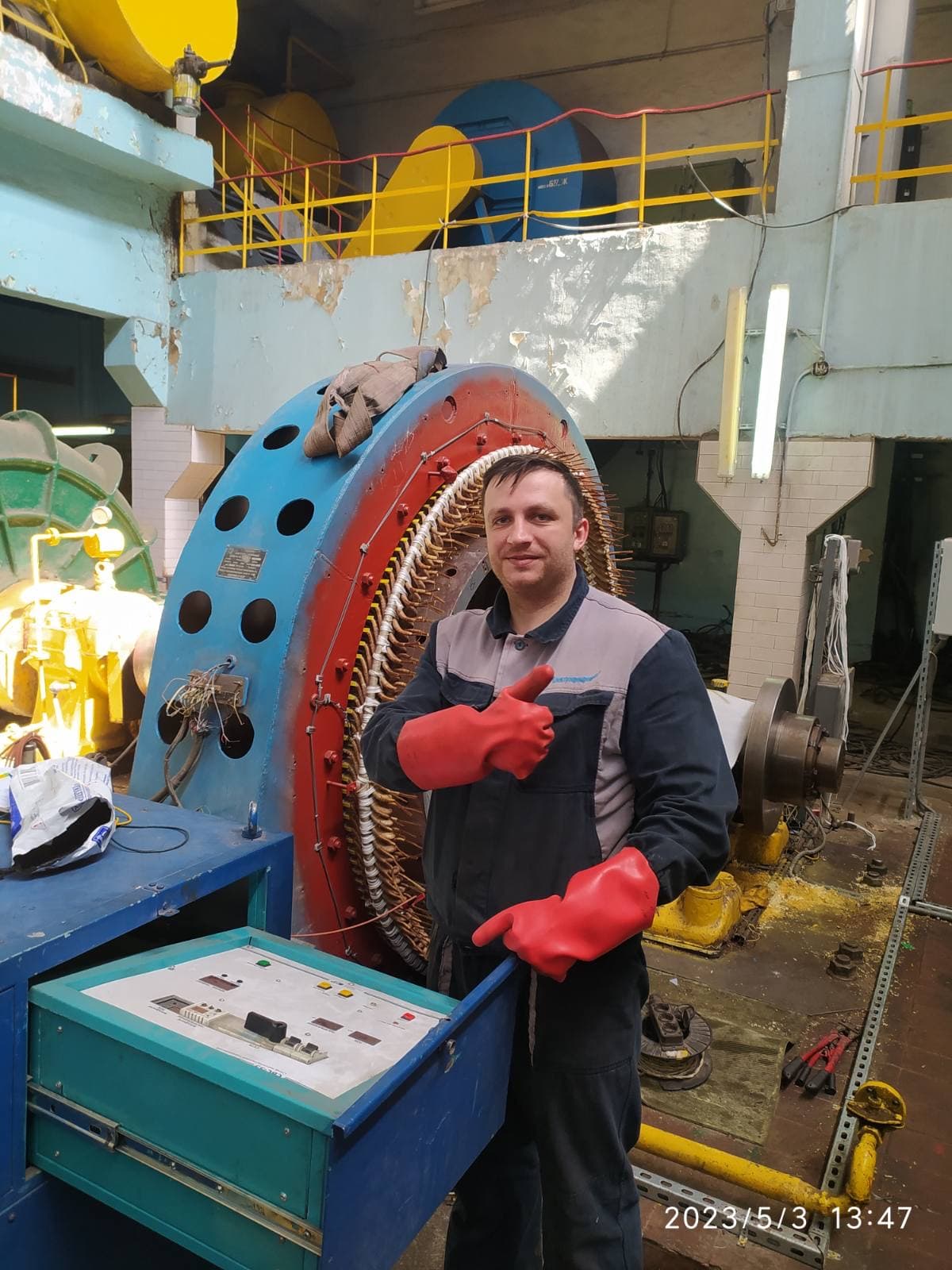 // HIGH-VOLTAGE STATOR TEST
// TESTS PERFORMED
- Insulation resistance measurement
- Absorption and polarisation index
- DC resistance of the windings
- High-voltage insulation testing
- Interturn insulation check
- Verification of winding electrical parameters
- Assessment of the insulation system
- Issue of test reports
// REMOVING AND INSTALLING ELECTRIC MACHINES
From shutdown to readiness for start-up
Field crews remove and install motors and generators to the proper dismantling method, checking seating surfaces, clearances, fastenings and the position of the machine.
Once the repair is finished the machine is installed, its position checked, prepared for alignment, and the mechanical condition of the drive verified.
- Removal
- Repair
- Installation
- Alignment
- Inspection
- Start-up
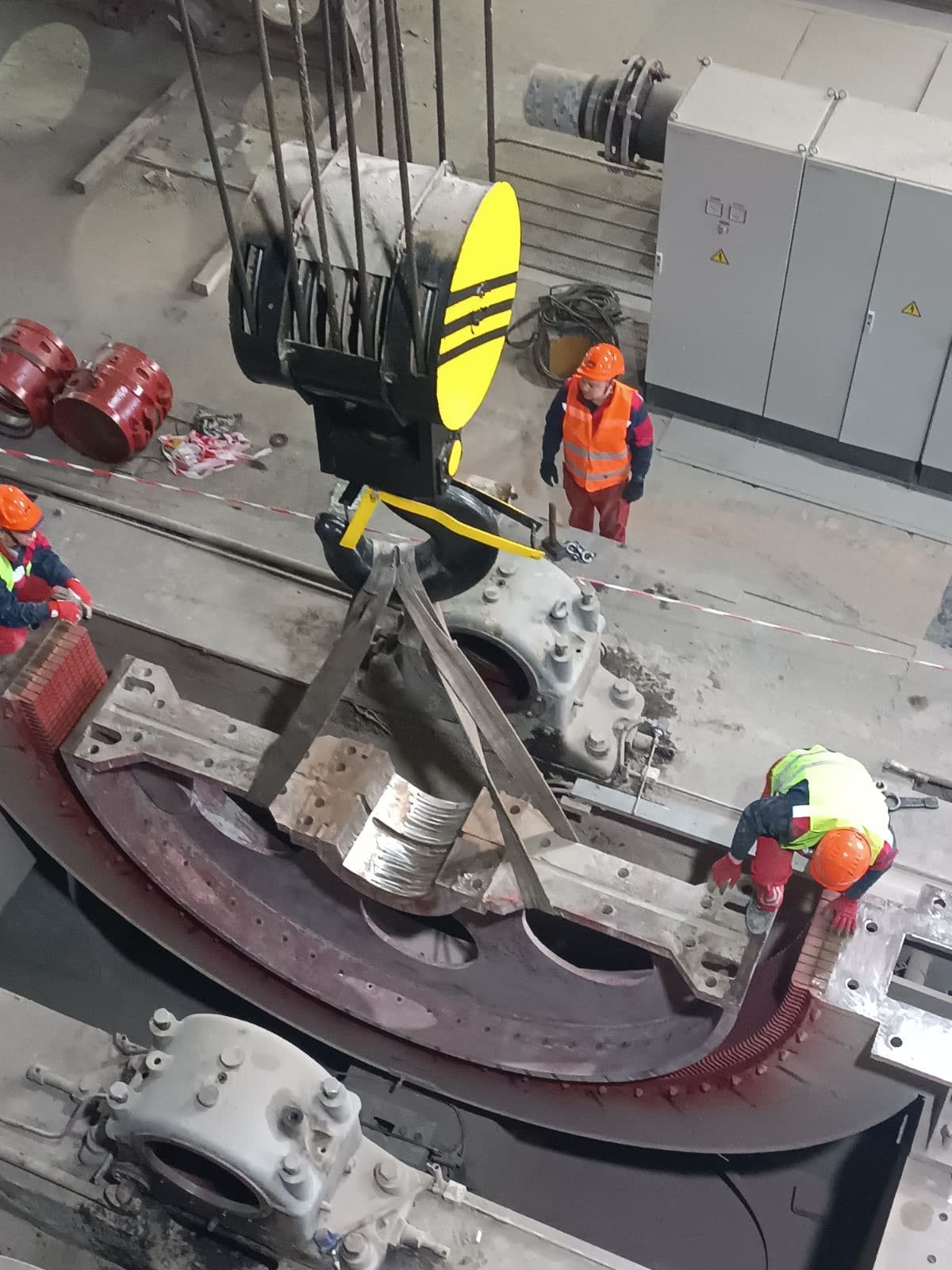 // ROTOR INSTALLATION
// BASEPLATES AND MOUNTING STRUCTURES
Manufacture and restoration of baseplates
We survey, repair and manufacture baseplates and mounting structures for electric motors and driven equipment. Where required we carry out machining, restore the bearing surfaces and prepare the structure for accurate positioning of the set.
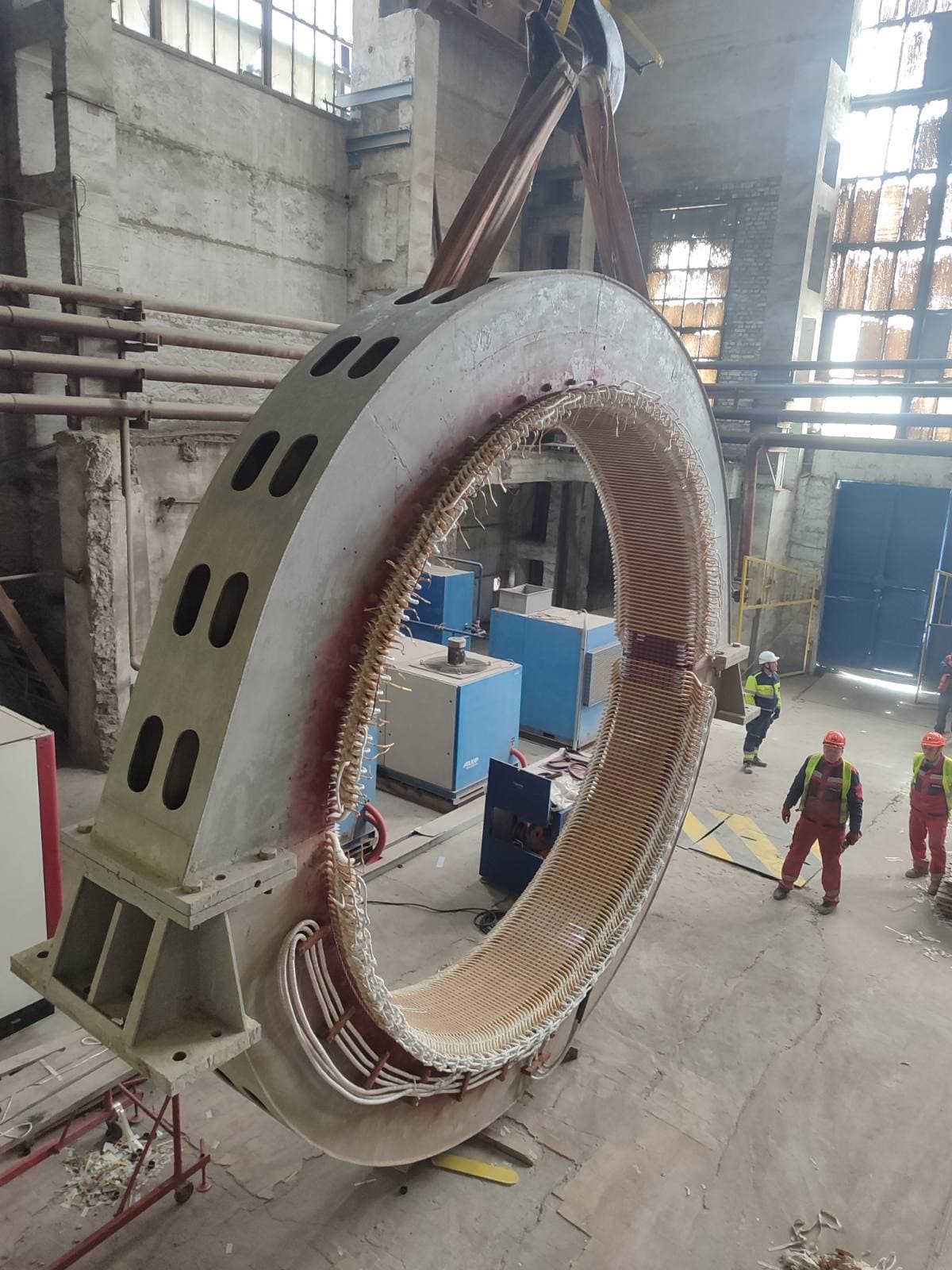 // STATOR SET ON ITS BASE
// ALIGNMENT AND VIBRATION MEASUREMENT
Checking how the machine behaves as part of the set
A repaired motor is only as reliable as its alignment to the driven mechanism — which is why laser alignment and a vibration survey follow every installation.
// LASER ALIGNMENT
Aligning the motor with its driven mechanism
Once the machine is installed we align the shafts of the motor and the driven mechanism precisely, using modern laser systems.
Controlling concentricity reduces the load on bearings and couplings, brings vibration down and keeps the set running steadily after the repair.
// VIBRATION MEASUREMENT
Checking the mechanical condition of the equipment
We measure and analyse the vibration parameters of electric machines and driven mechanisms to establish their actual condition, verify the quality of the installation and check the equipment after repair.
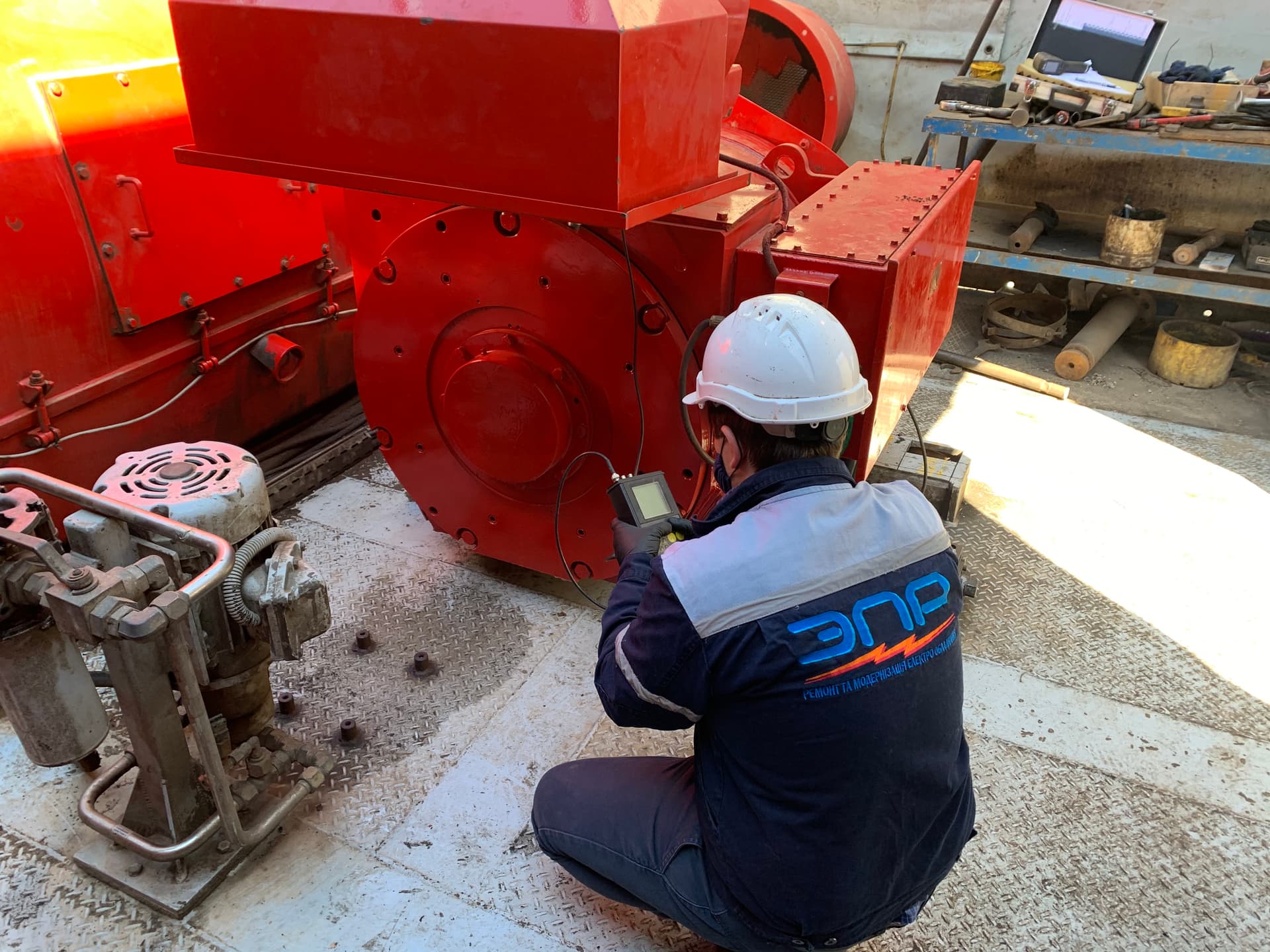 // VIBRATION SURVEY
// WHEN IT MAKES SENSE
When an on-site repair is the right call
Repairing in place is not always an alternative to a repair base — but in these cases it turns out faster, cheaper, or the only option there is.
Large equipment
Removal and transport would call for complex rigging operations.
Restricted access
The building or the process plant makes getting the machine out difficult.
Critical equipment
A long outage of the set would mean substantial production losses.
Repair of a single assembly
There is no technical reason to transport the whole machine.
Installation of new equipment
Setting in place, baseplate, alignment and checks are needed before commissioning.
// NOT JUST THE MOTOR
The whole drive train, not one machine
Our job is not simply to repair a motor. During on-site work we assess how the machine performs as part of the whole set: the foundation, the baseplate, the coupling, the alignment, the bearing assemblies, the vibration behaviour and the interaction with the driven mechanism.
// ADVANTAGES OF OUR FIELD SERVICE
What the Customer gets along with the field crew
- 01Dedicated field crews
Engineers and production specialists experienced in working on industrial sites.
- 02Mobile laboratory
Electrical measurement and testing without transporting the machine.
- 03Mobile repair equipment
The tooling is assembled around the particular job.
- 04Electrical plus mechanical
We work on the whole set, not only on the winding.
- 05Installation and alignment
From removal through to readiness for start-up.
- 06An engineered answer for the site
The repair method is set only after the machine and the conditions it runs in have been surveyed.
// INDUSTRIES SERVED
Where we work on site
// COMPLETED ON-SITE REPAIRS
Work carried out at the place of operation
Three jobs where the machine never had to travel to a repair base — from a commutator skimmed inside a day to a full overhaul of a mill motor.
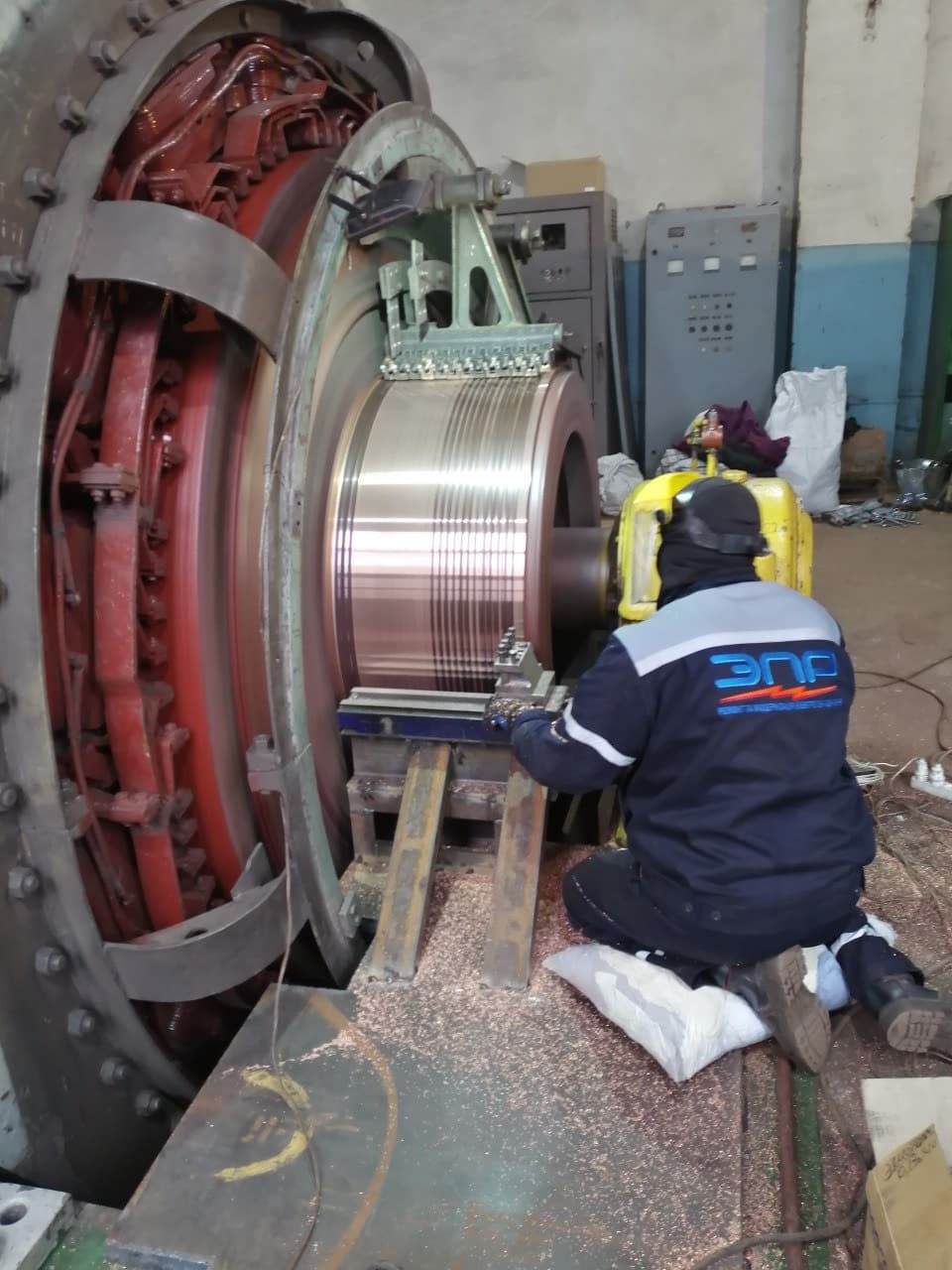
Commutator repair on a mine winder
- Equipment
- The electric drive of a mine hoisting machine.
- Problem
- Run-out on the commutator working surface and unsatisfactory operation of the brush gear.
- Work carried out
- The commutator was skimmed in situ, and the brush gear restored and re-set.
Within 24 hours the run-out was eliminated and the equipment returned to service, with no removal or transport of the machine to a repair base.
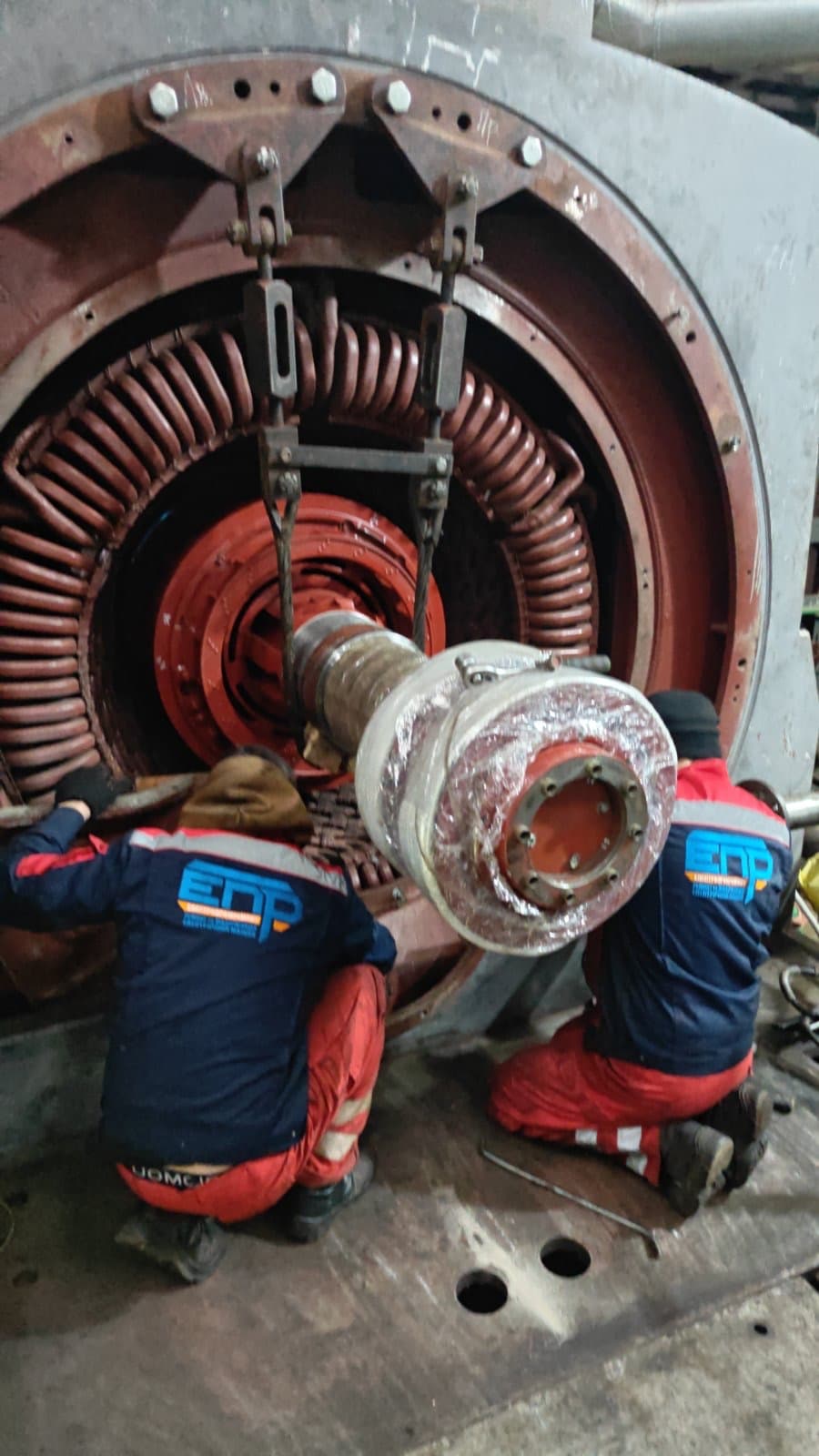
On-site repair of a T-20 turbogenerator
- Equipment
- A T-20 type turbogenerator.
- Problem
- Elevated vibration and the need to restore the rotor and bearing system.
- Work carried out
- Repair of the turbogenerator rotor, restoration of the bearing assemblies, installation and alignment, acceptance testing and start-up under load.
Vibration was brought down and the turbogenerator now runs steadily at its rated duty under load.
Overhaul of a cement mill synchronous motor
- Equipment
- An SDSZ-2000-100 synchronous motor driving a cement mill.
- Problem
- An overhaul was needed at short notice to keep the downtime of the main process plant to a minimum.
- Work carried out
- A full overhaul of the motor with complete replacement of both the stator and the rotor winding, followed by assembly, installation and acceptance testing.
The repair was completed within the short window agreed, the motor was recommissioned, and the cement mill ran reliably through the production season.
Learn more about electric motor repair in knowledge base
Technical articles, diagnostic guides, and answers to common questions from Elektropromremont engineers.
Cannot — or should not — move the machine to a repair base?
Our engineers will assess whether the repair can be done on your site, establish the scope of work and the equipment needed, and put together a field crew for that particular job.