- // ELEKTROPROMREMONT
- Random-wound motor repair
Repair of motors with random windings
0.25–600 kW
Power range
Round wire
Random-wound stator winding
Any manufacturer
Ukrainian and imported motors
Full repair cycle
Stator and rotor rewinding, machining and restoration
// WHAT WE DO
Comprehensive repair of random-wound electric motors
Elektropromremont LLC repairs and rewinds low-voltage asynchronous electric motors with round-wire random windings for industrial equipment of every purpose.
We fully restore both the electrical and the mechanical part of the motor: removal of the damaged winding, identification and restoration of its parameters, manufacturing of the new winding, stator rewinding, impregnation and heat treatment, rotor rewinding, repair of the rotor, shaft, end shields and machined seats, balancing, assembly, and control testing.
We work with motors of Ukrainian and foreign manufacture, including equipment for which the factory technical documentation is missing or incomplete.
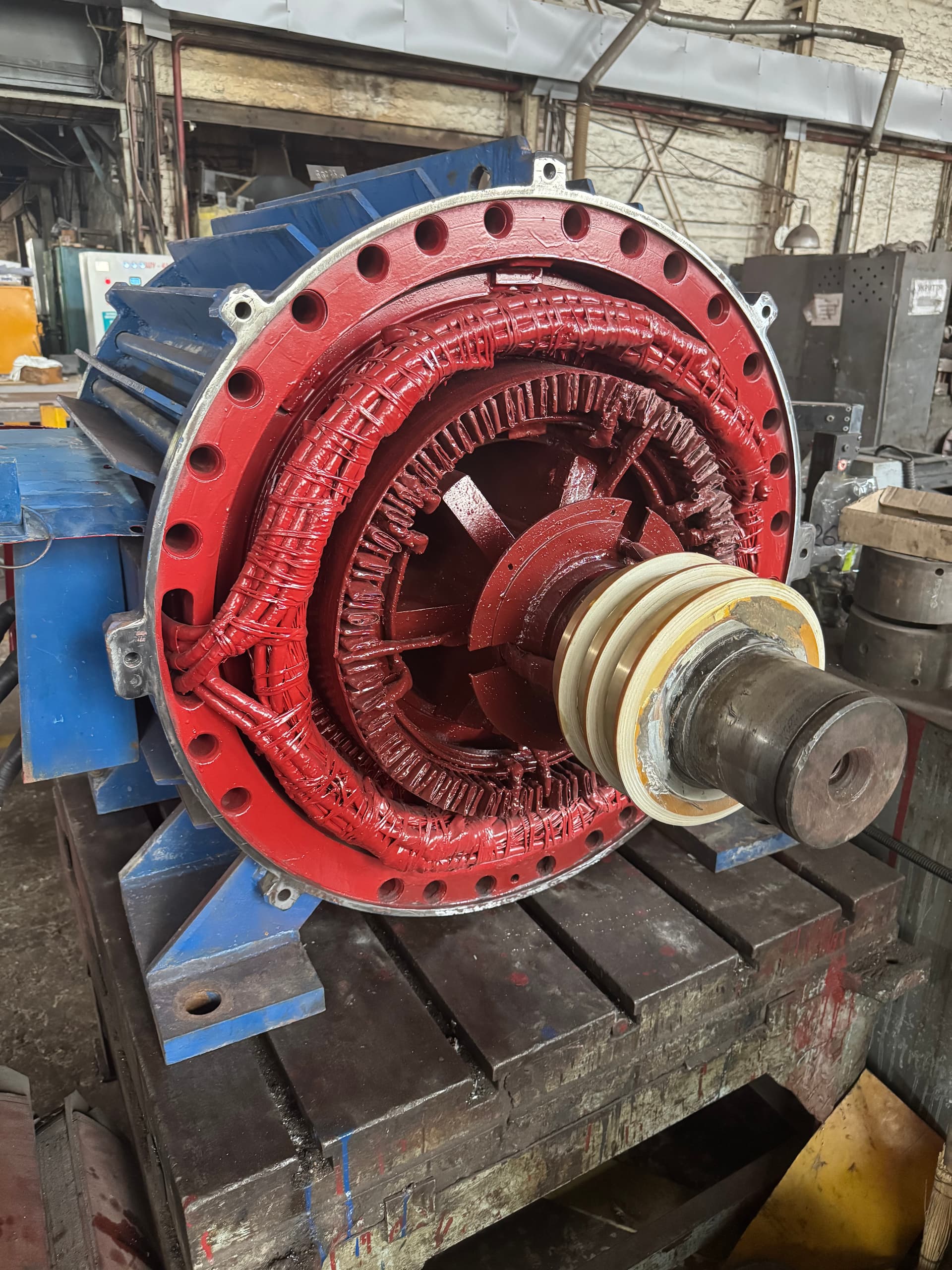
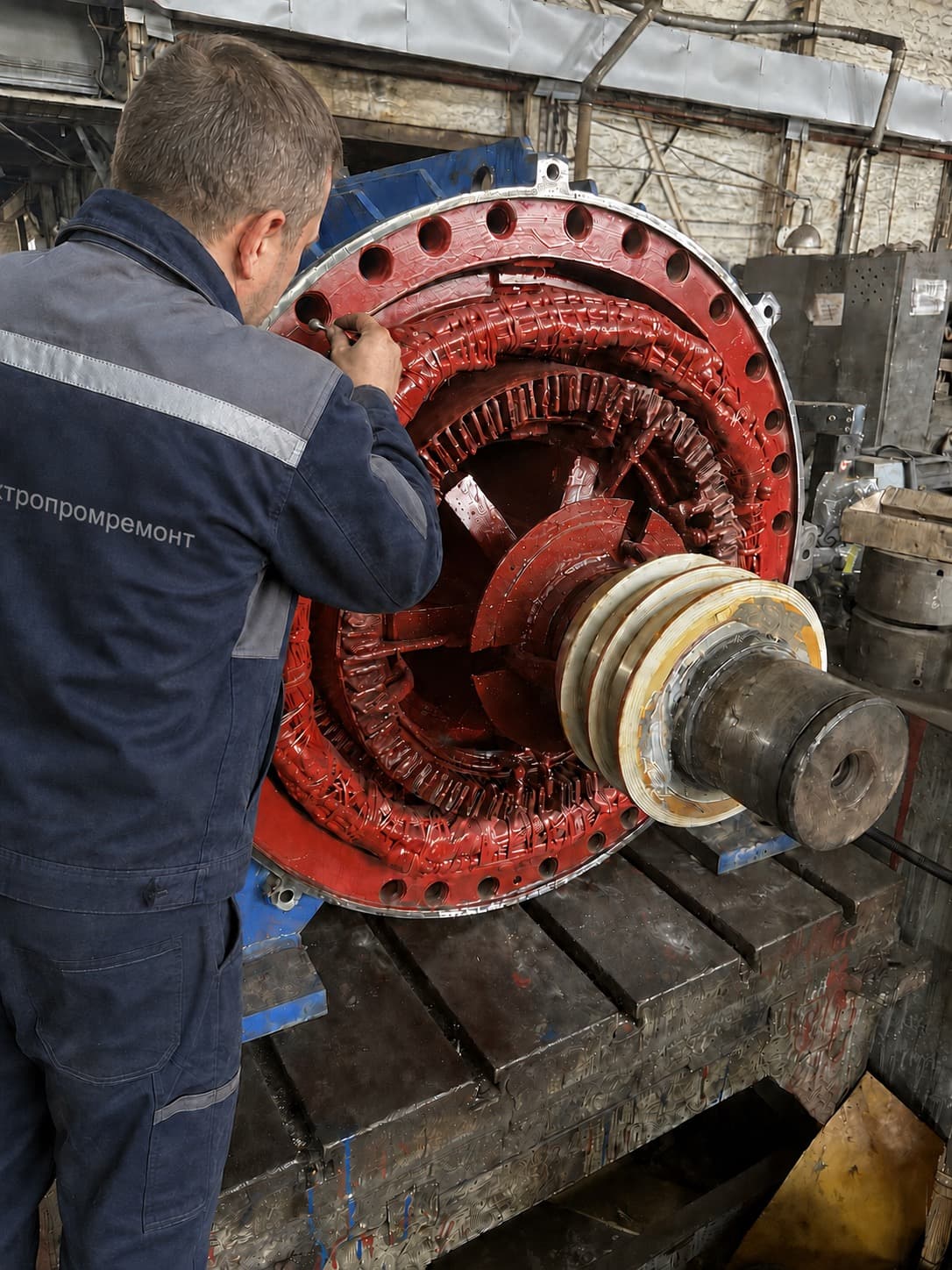 Wound-rotor rewinding
// EQUIPMENT NOMENCLATURE
The electric motors we repair
Every group of motors has its own design features and winding scheme, which we restore from the actual data of the machine.
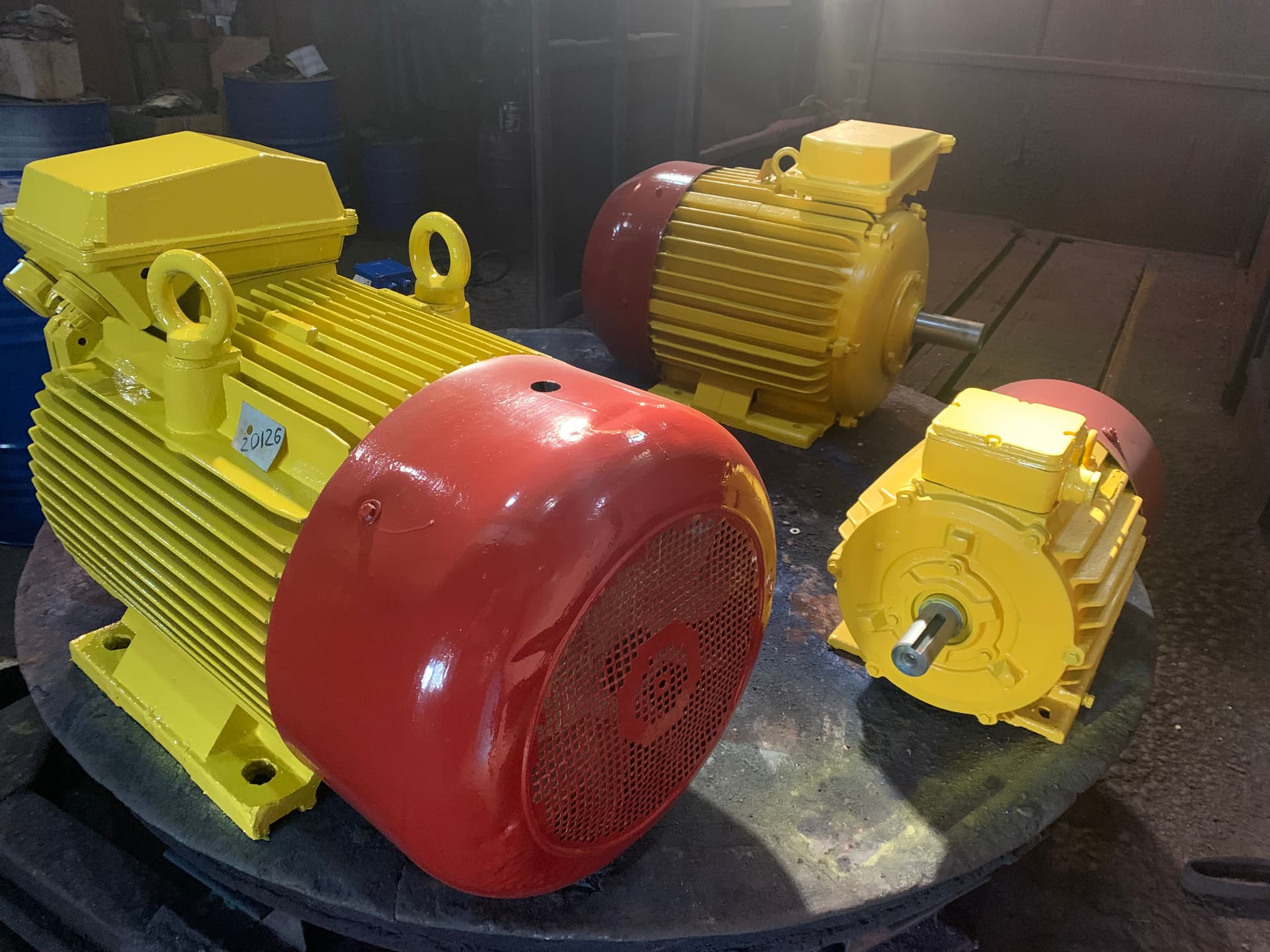
General-purpose industrial motors
Standard three-phase asynchronous motors for pumps, fans, compressors, machine tools, and other industrial equipment.
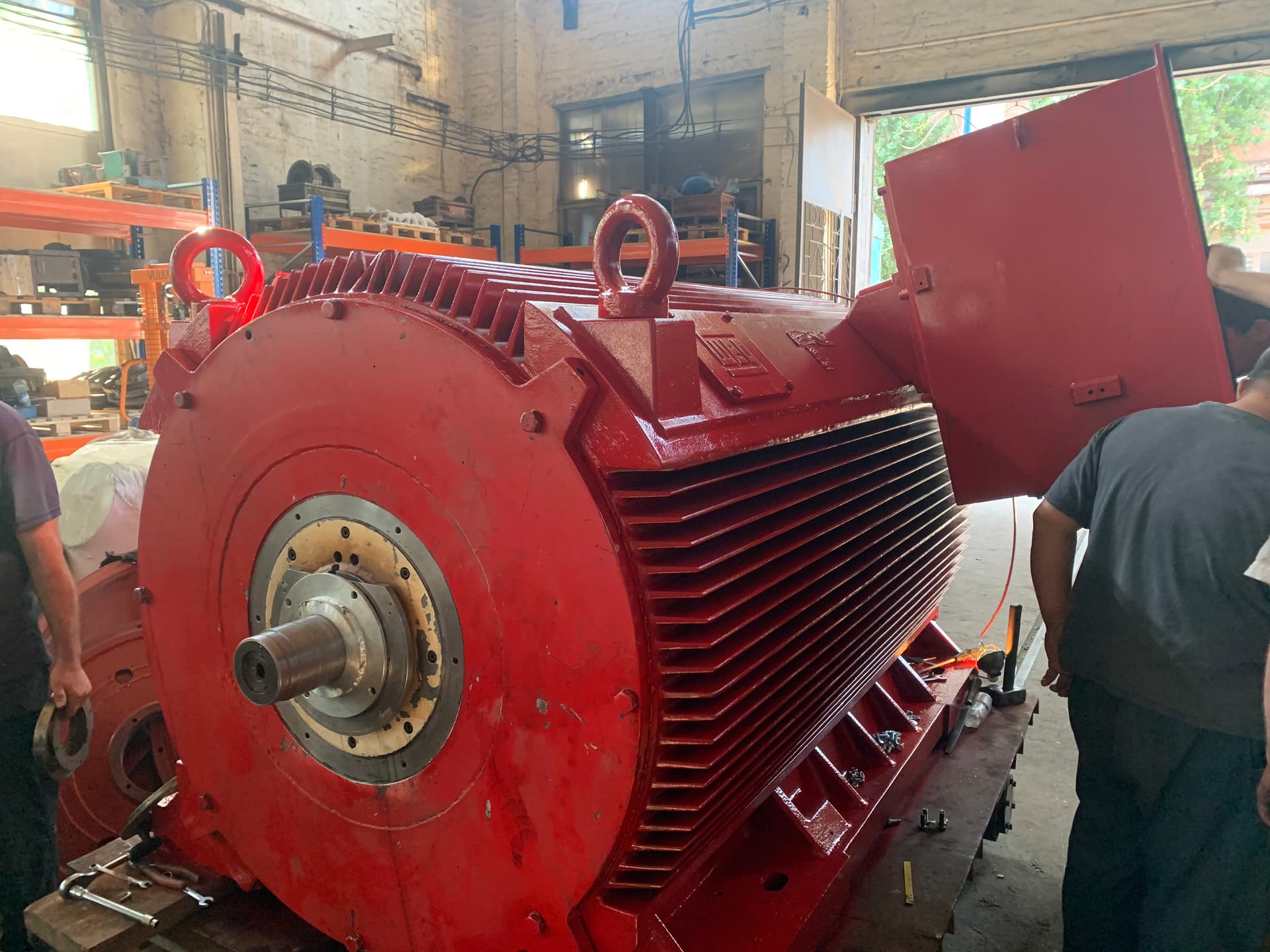
Crane electric motors
Repair of motors for hoisting and travel mechanisms and other load-handling equipment.
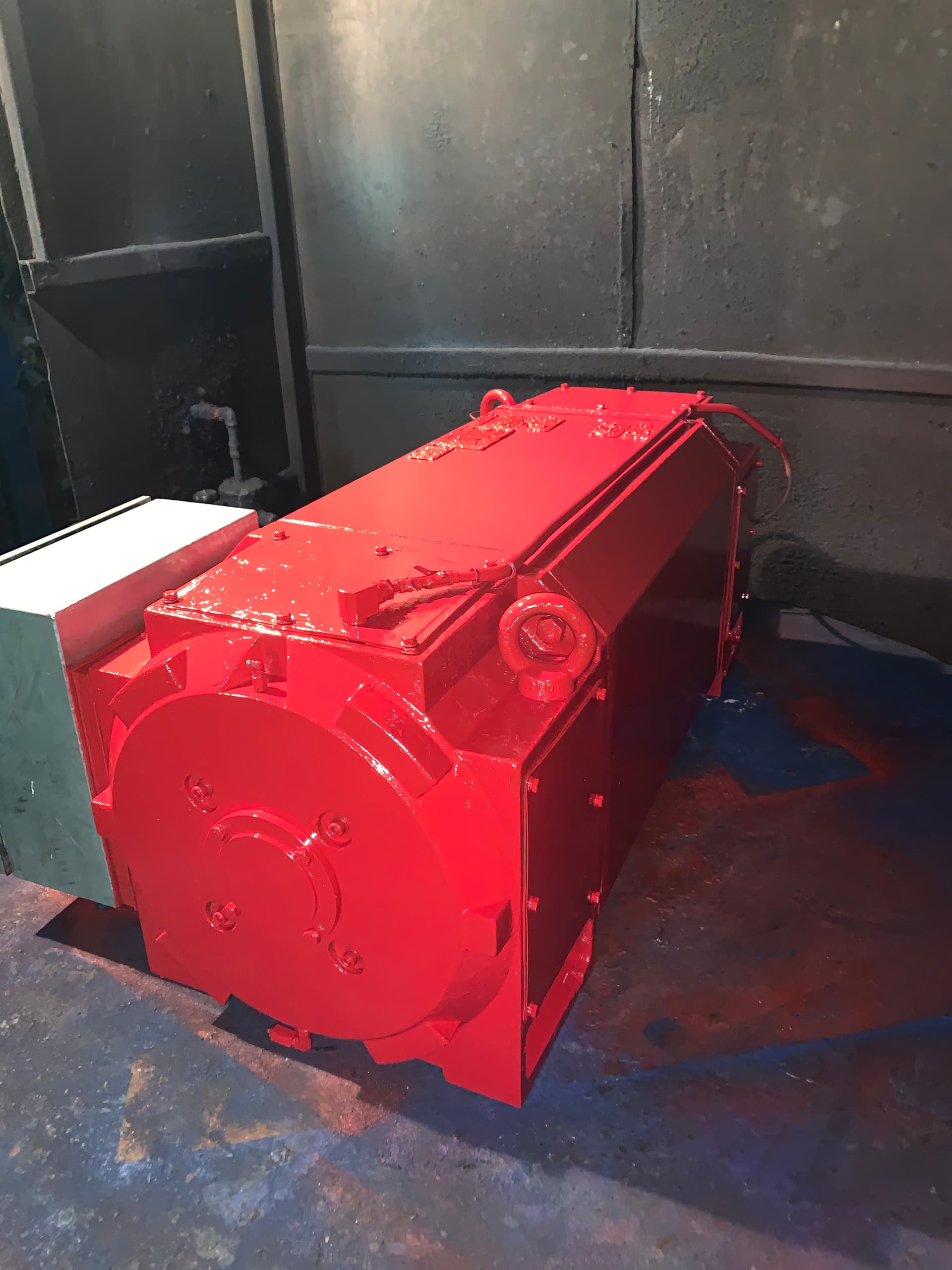
Explosion-proof electric motors
Repair of special-design machines with restoration of the design parameters and inspection of every assembly.
Imported electric motors
Repair of motors from foreign manufacturers, with the winding parameters restored from the actual data of the machine.
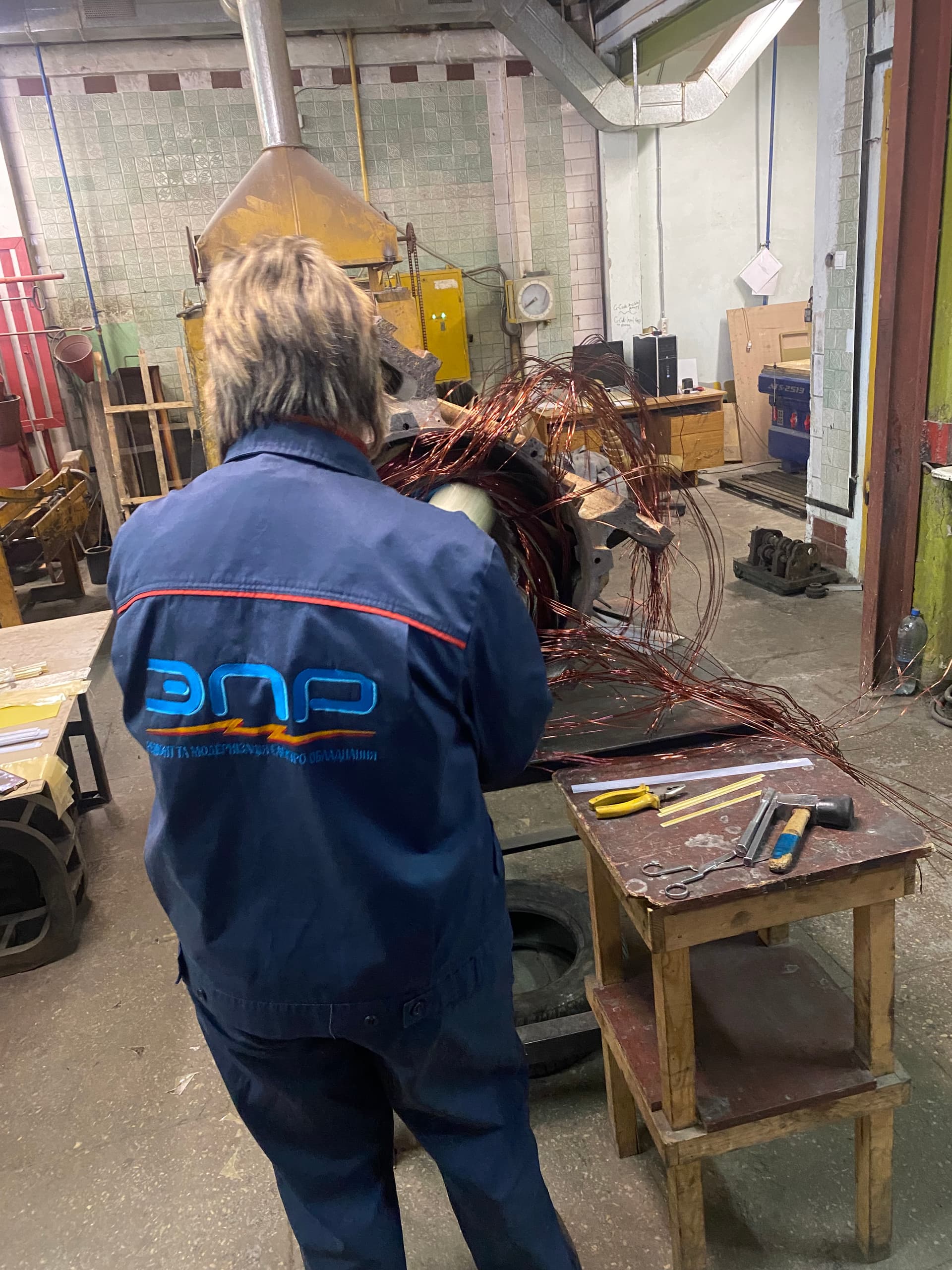
Multi-speed and special motors
Restoration of complex winding schemes and non-standard design versions.
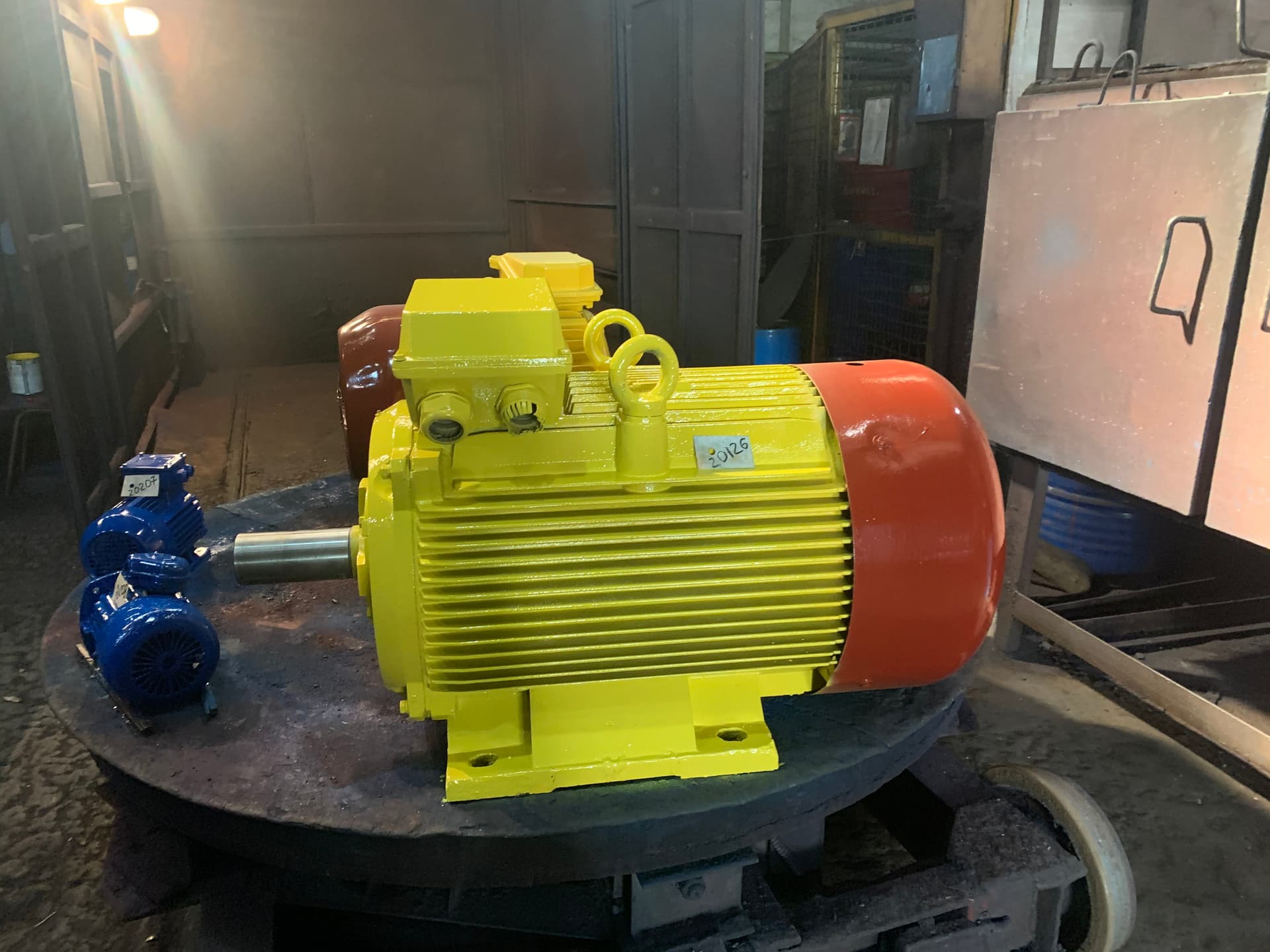
Motors of special equipment
Pumps, fans, compressors, gear drives, machine tools, and process installations.
// CAN'T FIND YOUR TYPE?
Send us the nameplate and photos of the motor — we'll define the scope and timeline of repair.
SEND DATA// REPAIR STAGES
A visual rewinding cycle — from burn-out to testing
Every stage on the blueprint is a real winding-shop operation: stripping the old winding, slot insulation, coil winding, insertion, connecting the scheme, and impregnation.
// HOW A REPAIR RUNS
The full repair cycle of a random-wound motor
From the initial fault detection and recording of the winding parameters to manufacturing the new winding, restoring the mechanical part, assembly, and control testing of the motor.
- 01Diagnostics and fault detection
Disassembly of the motor, electrical measurements, and inspection of the stator, rotor, bearing assemblies, and mechanical part.
- 02Recording the winding parameters
Establishing the scheme, turn count, wire diameter, coil span, connections, and the other parameters of the existing winding.
- 03Stripping the old winding
Removal of the damaged winding while preserving the parameters needed to manufacture the new one.
- 04Preparing the stator core
Cleaning the core, checking the condition of the slots and the laminations, repairing local damage, and preparing for the new winding.
- 05Manufacturing and inserting the new winding
Winding the coils from magnet wire, insulating the slots, inserting the coils, connecting the phases, and forming the end windings.
- 06Impregnation and curing
Impregnating the winding with insulating materials and curing it thermally to give it electrical and mechanical strength.
- 07Mechanical repair and balancing
Where required — repair of the shaft, machined seats, and end shields, replacement of the bearings, and balancing of the rotor.
- 08Assembly and testing
Final assembly, checks of the electrical parameters, insulation testing, a no-load run, and monitoring of vibration and motor operability.
// SCOPE OF WORK AND CONTROL
What a repair covers, how it is tested, and where it is used
Rewinding is only part of the job. The motor goes back to the Customer with both its electrical and mechanical parts restored and its control tests passed.
// SCOPE OF WORK
What a repair includes
Stator rewinding
Stripping the damaged winding, establishing the scheme and parameters, manufacturing and inserting the new round-wire winding.
Insulation system restoration
Replacement of the slot, phase and lead insulation to match the temperature class and the operating conditions of the motor.
Impregnation and heat treatment
Impregnation of the winding with electrical insulating materials, then cured to give it electrical and mechanical strength.
Squirrel-cage rotor repair
Inspection of the bars and shorting rings, checking the condition of the rotor, and restoration of the damaged elements.
Shaft repair
Restoration of the machined seats, shaft journals, keyways, and other damaged sections.
End shield repair
Restoration of the bearing seats, machining, and alignment control.
Bearing replacement
Selection, fitting, and condition control of the bearing assemblies.
Cooling system repair
Restoration of the fans, cowls, air ducts, and the other cooling components.
Rotor balancing
Dynamic balancing after the mechanical repair, to bring vibration within the permitted level.
Final testing
A set of electrical and mechanical checks before the motor is handed over to the Customer.
// FAULTS
The typical faults we repair
// TESTING AND CONTROL
Quality control and testing after repair
- Insulation resistance measurement
- Winding checks
- Dielectric strength test of the insulation
- Verification of the winding connection scheme
- Checking the leads and the phase marking
- Mechanical condition checks
- Inspection of the bearing assemblies
- Vibration measurement
- Running the motor under no load
- Where technically possible for the particular motor
Test results are recorded in the corresponding technical documentation.
// INDUSTRIES SERVED
Where our repaired motors work
// REWINDING
Rewinding electric motors
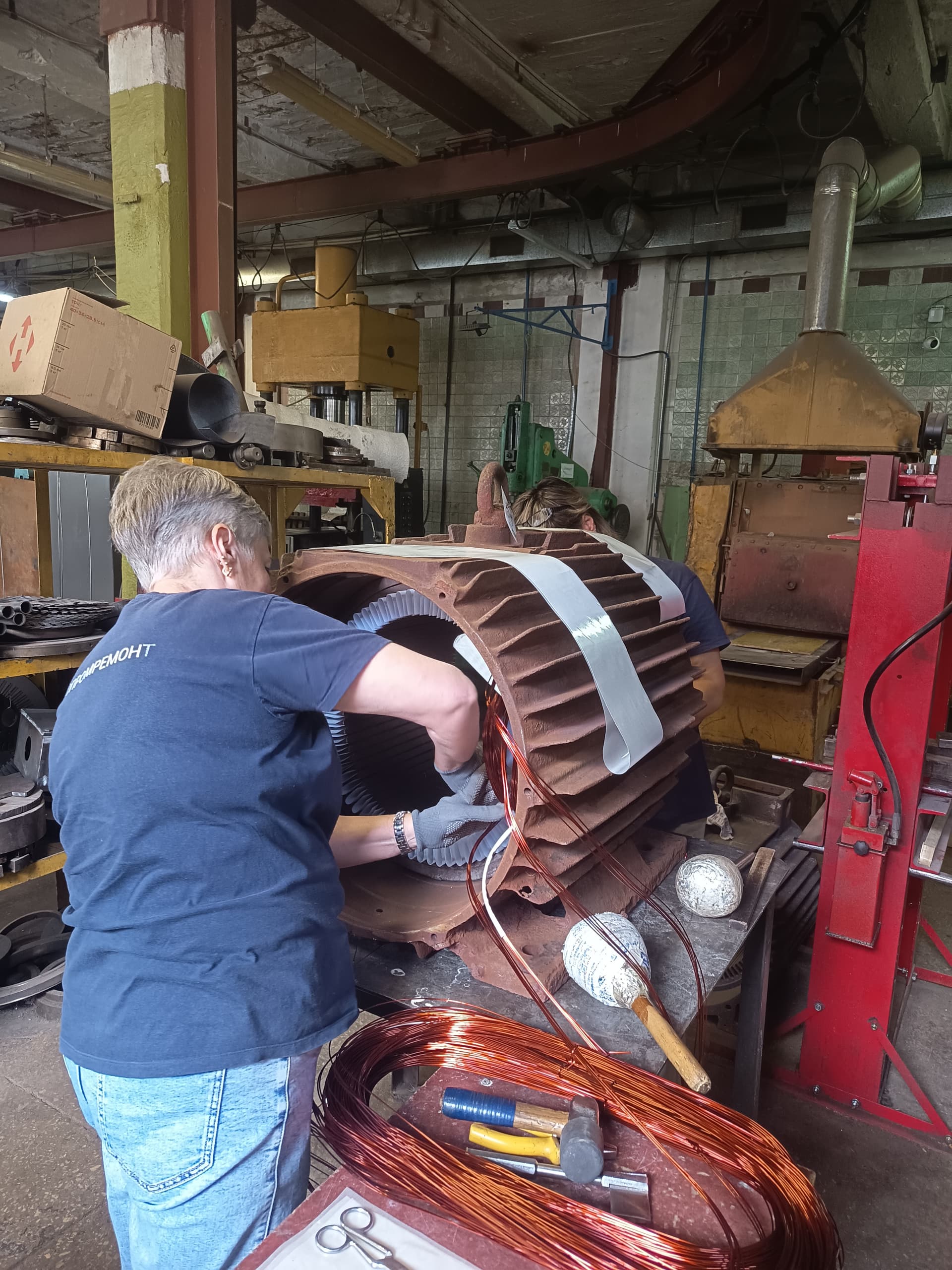
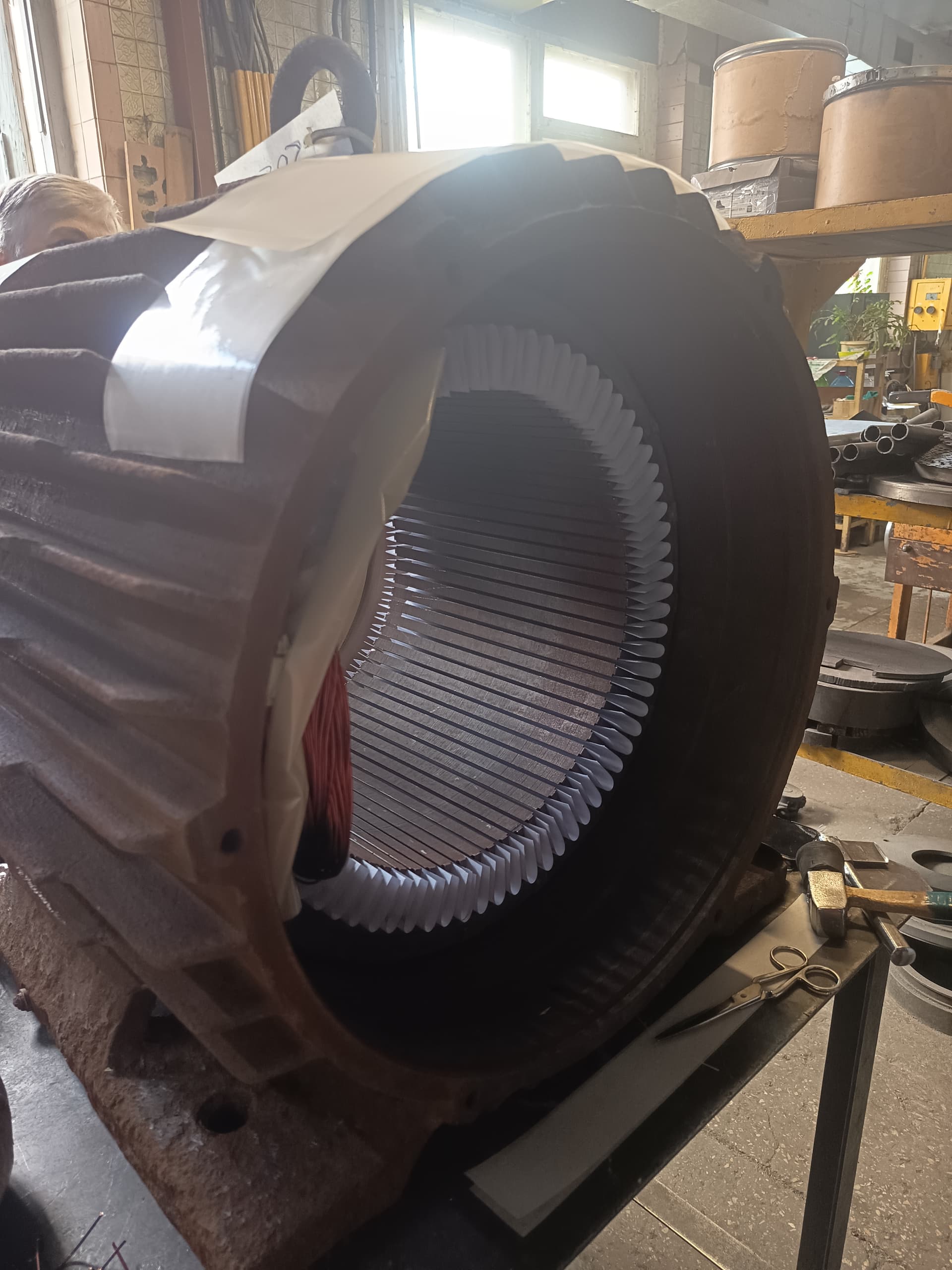
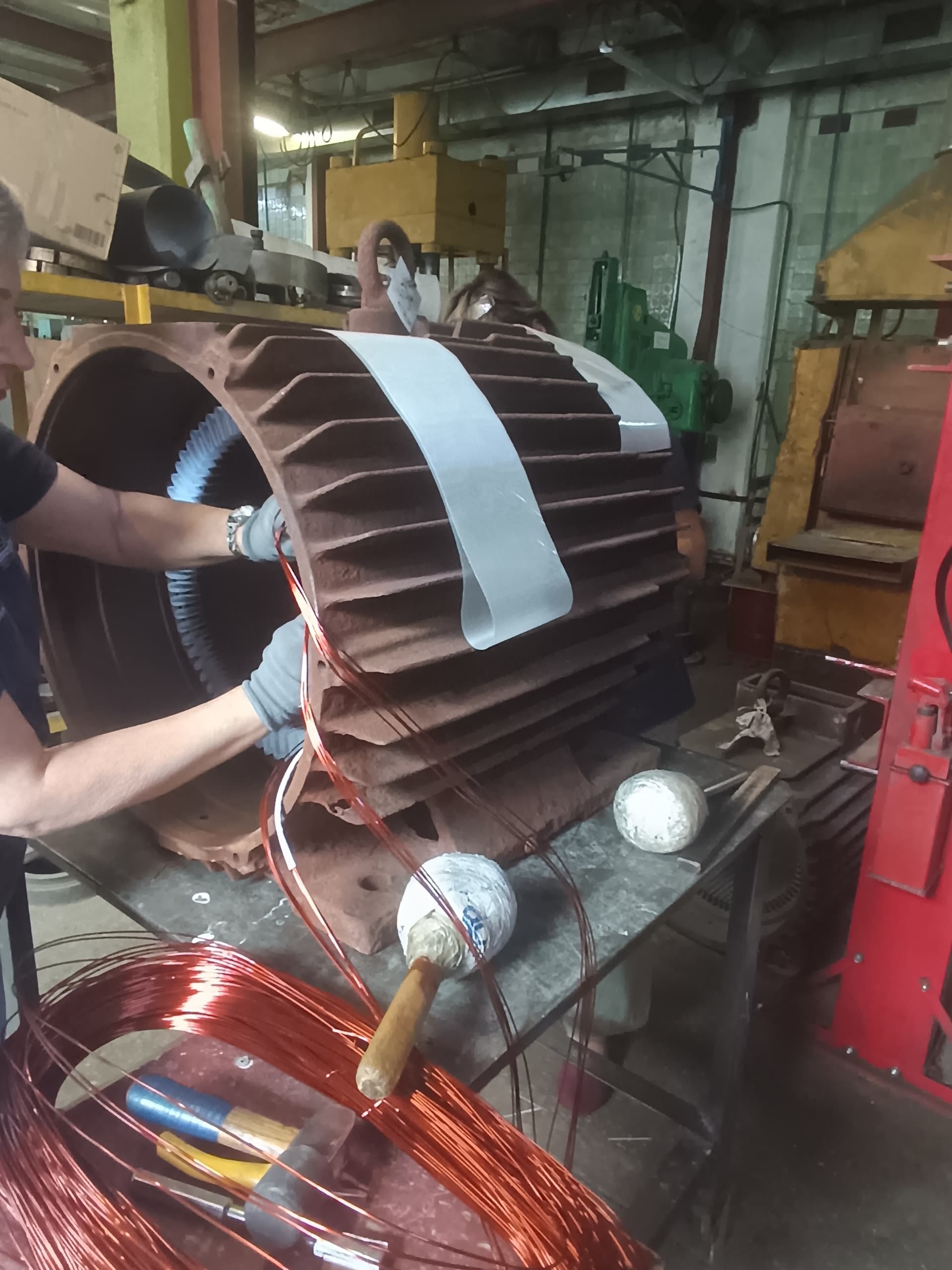
A rewind restores the factory electrical parameters of the motor. Before the old winding is stripped, its scheme, coil span, turn count, wire cross-section, connection scheme, and other design parameters are all recorded.
The new winding is made from magnet wire and electrical insulating materials of the matching thermal class. Once inserted, the winding goes through electrical checks, impregnation, curing, and final testing.
// REPAIR OR REPLACE
Repair or replace the motor?
- The motor is of a non-standard design
- It has special mounting dimensions
- New equipment has a long delivery lead time
- Replacing it would mean rebuilding the existing drive
- Standard low-power motors of mass production
- New equipment is in stock and cheaper than the repair
- The damage is beyond what can be restored
That is why, before any work starts, we assess the technical condition of the machine and agree with the Customer whether restoring it makes sense.
// ADVANTAGES
Why a random-wound repair is worth trusting to us
- 01Dedicated winding shop
Repair of round-wire wound motors across a range of frame sizes.
- 020.25–600 kW
A wide power range of the motors we repair.
- 03Electrical + mechanical part
Not just a rewind, but a comprehensive restoration of the motor.
- 04In-house machining
Repair of shafts, end shields, machined seats, and housing parts.
- 05Balancing and testing
Control of the rotor and of the finished motor after repair.
- 06Work with imported motors
Parameters restored even when the full factory documentation is missing.
Learn more about electric motor repair in knowledge base
Technical articles, diagnostic guides, and answers to common questions from Elektropromremont engineers.
Need to repair or rewind an electric motor?
Send us the nameplate, photos, and a short description of the fault. Our specialists will make a preliminary assessment of the scope of work and prepare a repair proposal.