- // ELEKTROPROMREMONT
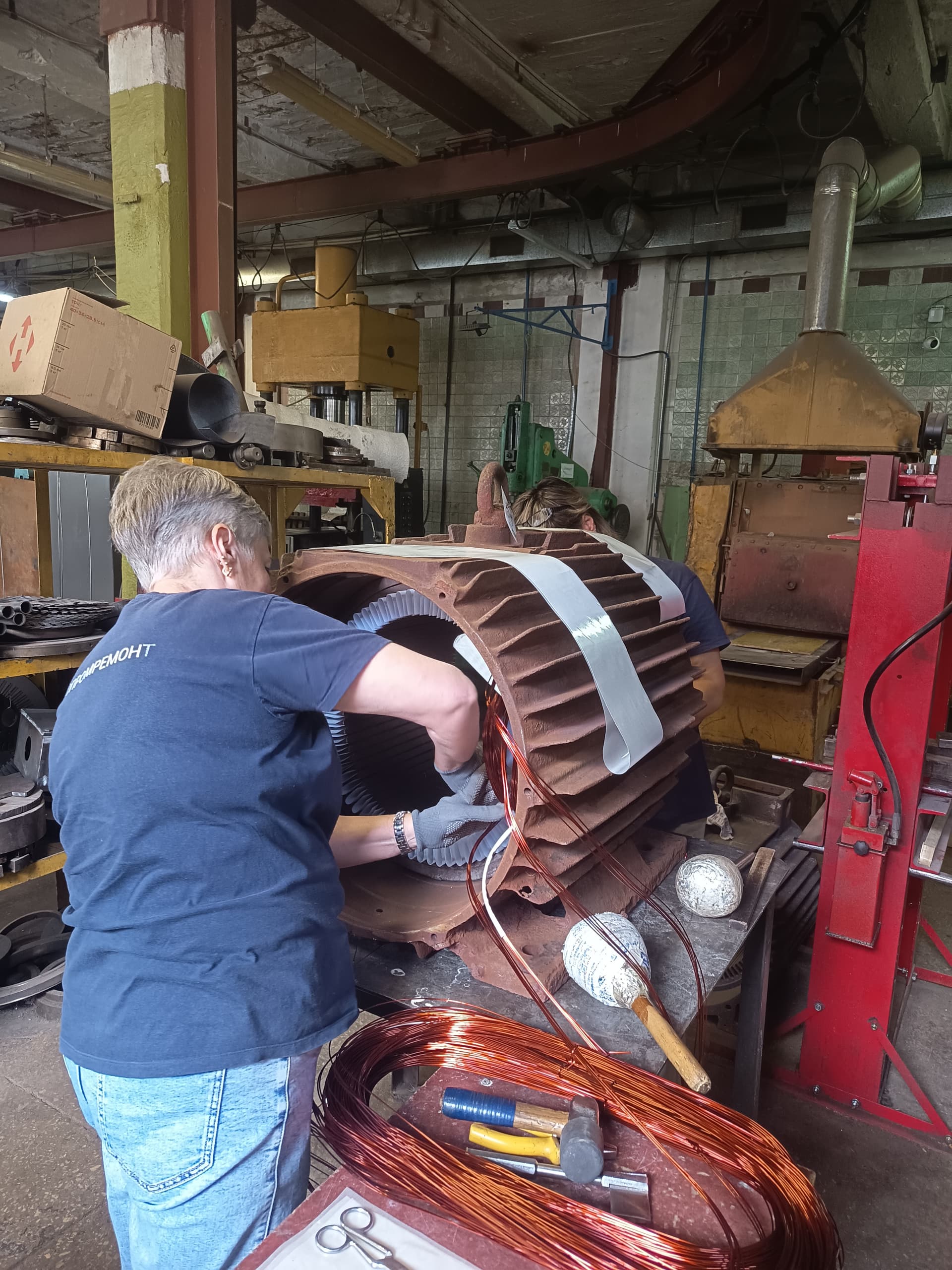
- Random-wound electric motors
Random-wound electric motors
// Key materials
Where to start
The foundational articles of the category: how an asynchronous machine is built, the complete repair process and rewinding of a random-wound stator.
Overview
Asynchronous motors: design, operating principle, types, characteristics, faults and repair
The foundational article of the category — design, classification, duty types and typical defects.
Read the articleTechnology
How electric motors are repaired: the complete process from fault detection to testing
The full works-repair route, with verification steps at every stage.
Read the articleTechnology
How a motor stator is rewound: the full technology from fault detection to testing
Winding calculation, laying, insulation, impregnation and post-rewind testing.
Read the article
// All articles in the category
Choose a topic
Each article covers one topic: causes, symptoms, the diagnostic sequence, typical mistakes and answers to common questions.
Overview
4 articlesWhat are stator and rotor windings: design, types and faults
Terminology, winding types, materials, insulation and typical faults of electrical-machine windings.
Read the articleWhat is a motor rotor: design, types, faults and repair
Design, rotor types, balancing and typical faults of an electrical machine’s rotating part.
Read the articleWhat is a motor stator: design, winding, faults and repair
Design, winding types, insulation and typical faults of an electrical machine’s stator.
Read the articleAsynchronous motors: design, operating principle, types, characteristics, faults and repair
The foundational article of the category — design, classification, duty types and typical defects.
Read the article
Technology
12 articlesWhat does a capital repair of a motor include?
The complete process cycle of a capital repair — from intake to final testing.
Read the articleFiberglass laminate in electric motor manufacturing and repair
Grades, properties, applications and machining of fiberglass-laminate parts.
Read the articleElectric motor winding insulation: types, classes F and H
IEC 60085 thermal classes, thermoplastic vs thermoset insulation, and VPI.
Read the articleHow are synchronous rotors rewound?
The full technology for restoring the field winding of salient-pole and non-salient-pole rotors.
Read the articleWhat is electric motor rotor balancing?
Static and dynamic balancing, the causes of imbalance, and post-repair checks.
Read the articleHow electric motors are repaired: the complete process from fault detection to testing
The full works-repair route, with verification steps at every stage.
Read the articleHow a motor stator is rewound: the full technology from fault detection to testing
Winding calculation, laying, insulation, impregnation and post-rewind testing.
Read the articleVarnishes for electric motor repair
Impregnating and covering varnishes, curing regimes, matching the insulation thermal class, and common application defects.
Read the articleVacuum-Pressure Impregnation of Motor Windings: the VPI Technology
How Vacuum-Pressure Impregnation (VPI) turns a winding into a single solid mass: the process, the equipment, and quality control.
Read the articleCopper winding wire for electric motors: grades, insulation, selection
Construction, enamel and thermal classes, round versus rectangular cross-section — how to choose the right wire when rewinding a winding.
Read the articleMotor repair timeline: how long it takes and what the stages are
Why there is no single repair timeline, what stages a capital repair goes through, and what actually extends or shortens the turnaround time.
Read the articleBearings during an electric motor repair: selection and fitting
Why bearings are replaced at every capital repair, how to select the replacement, remove and fit a bearing without damage, and recondition the seats.
Read the article
Diagnostics
12 articlesHow to check the balancing of a motor rotor?
The complete dynamic-balancing procedure and how to tell imbalance apart from other causes of vibration.
Read the articleWhen does a motor need rewinding?
The main technical grounds for rewinding a winding and the diagnostics that precede the decision.
Read the articleCan a motor be repaired without rewinding?
When repair can be done without replacing the winding, and how that is determined by diagnostics.
Read the articleMotor vibration: what it is and how it is diagnosed
Sources of vibration, measurement parameters, spectral analysis and the signatures of typical defects.
Read the articleWhat is a motor high-voltage test
The purpose, types and procedure of a motor’s HiPot insulation test.
Read the articleElectric motor testing after repair and before commissioning
The complete list of electrical, mechanical and thermal checks for a motor after repair.
Read the articleHow do I measure shaft run-out on an electric motor?
Radial and axial run-out, choosing a datum, and mapping run-out along the shaft.
Read the articleHow do I measure insulation resistance and find an interturn short circuit?
A megger test and finding an interturn short are two different checks that get confused.
Read the articleHow do I test an electric motor’s bearings?
Temperature, noise, vibration, ultrasound, clearances and post-disassembly inspection.
Read the articleTesting the stator of an electric motor
Insulation resistance, surge test, core loop test, checking the connections.
Read the articleTesting the rotor of an electric motor
Squirrel-cage bars, shaft run-out, imbalance, slip rings.
Read the articleLoad testing an electric motor: what is checked and why
Why current, heating, speed and vibration at no load do not prove a motor works — and what a real load test actually reveals.
Read the article
Faults
6 articlesWhy do an electric motor’s brushes spark?
Causes of brush-commutator sparking and how to diagnose it.
Read the articleWhy does an electric motor lose power?
Electrical, magnetic, thermal and mechanical causes, and the diagnostic sequence.
Read the articleWhy do motor windings burn out?
Overload, running on two phases, breakdown to the frame, repair mistakes.
Read the articleInterturn short circuit in a motor winding
The most dangerous hidden winding defect and the methods that reveal it.
Read the articleWhy does an electric motor vibrate heavily?
Imbalance, misalignment, bearings, electromagnetic causes.
Read the articleWhy is an electric motor noisy?
Mechanical, electromagnetic and aerodynamic noise — how to tell them apart.
Read the article
Overheating
4 articlesWhy does an electric motor get hot?
The main causes of overheating, diagnostic methods and ways to eliminate it.
Read the articleWhy does the stator of an electric motor get hot?
Overheating of the stator winding and magnetic core.
Read the articleWhy does the rotor of an electric motor get hot?
Damaged bars, increased slip, prolonged starting.
Read the articleWhy do electric motor bearings get hot?
Lubrication, misalignment, axial loads, worn components.
Read the article
Questions & answers
7 articlesHow much does electric motor repair cost? What determines the price
Why there is no fixed price list for motor repair, and which factors actually shape the final cost.
Read the articleIs there a warranty on electric motor repair?
What a motor repair warranty typically covers, what it does not, what terms are common in the industry, and how to file a warranty claim.
Read the articlePhoto-based electric motor repair estimate: how it works
How to get a preliminary read on the scope and cost of an electric motor repair from photos and a description of the fault — before the machine ever reaches the shop.
Read the articleMotor repair quotation: how the commercial proposal is put together
How specialists move from fault detection to a precise repair quotation, and what documents the customer receives before work begins.
Read the articleRepair or replace an electric motor: how to decide?
Six factors that determine when repairing an electric motor makes economic and technical sense, and when replacing it is the better call.
Read the articleHow to check the quality of an electric motor repair
What to check when accepting a repaired electric motor: documents, a visual inspection, test protocols and monitoring during the first hours of operation.
Read the articleWhich tests does a motor undergo after repair?
What a handover test programme consists of, and why its scope differs after a bearing change, a stator rewind and a rotor repair.
Read the article