- // ELEKTROPROMREMONT
- Test station and diagnostics
Testing and diagnostics of electric machines
up to 35 kV
high-voltage testing
Megger ADX-15
modern diagnostics of electric machines
Mobile laboratory
in-house and on-site diagnostics
Certified station
documented results and test reports
// TEST STATION
Condition control at every stage of a repair
Comprehensive assessment of the technical condition of electric motors and generators — at our own test station and directly at the Customer’s site. We perform electrical, mechanical, high-voltage, vibration and thermal-imaging measurements before repair, during the works and before the equipment is commissioned.
Our own test station allows complete control of electric machines — from the initial fault detection through to final acceptance testing. Diagnostic results are used to determine the cause of a fault, to define the scope of repair, to control the quality of the work performed, and to confirm the equipment is ready for further operation.
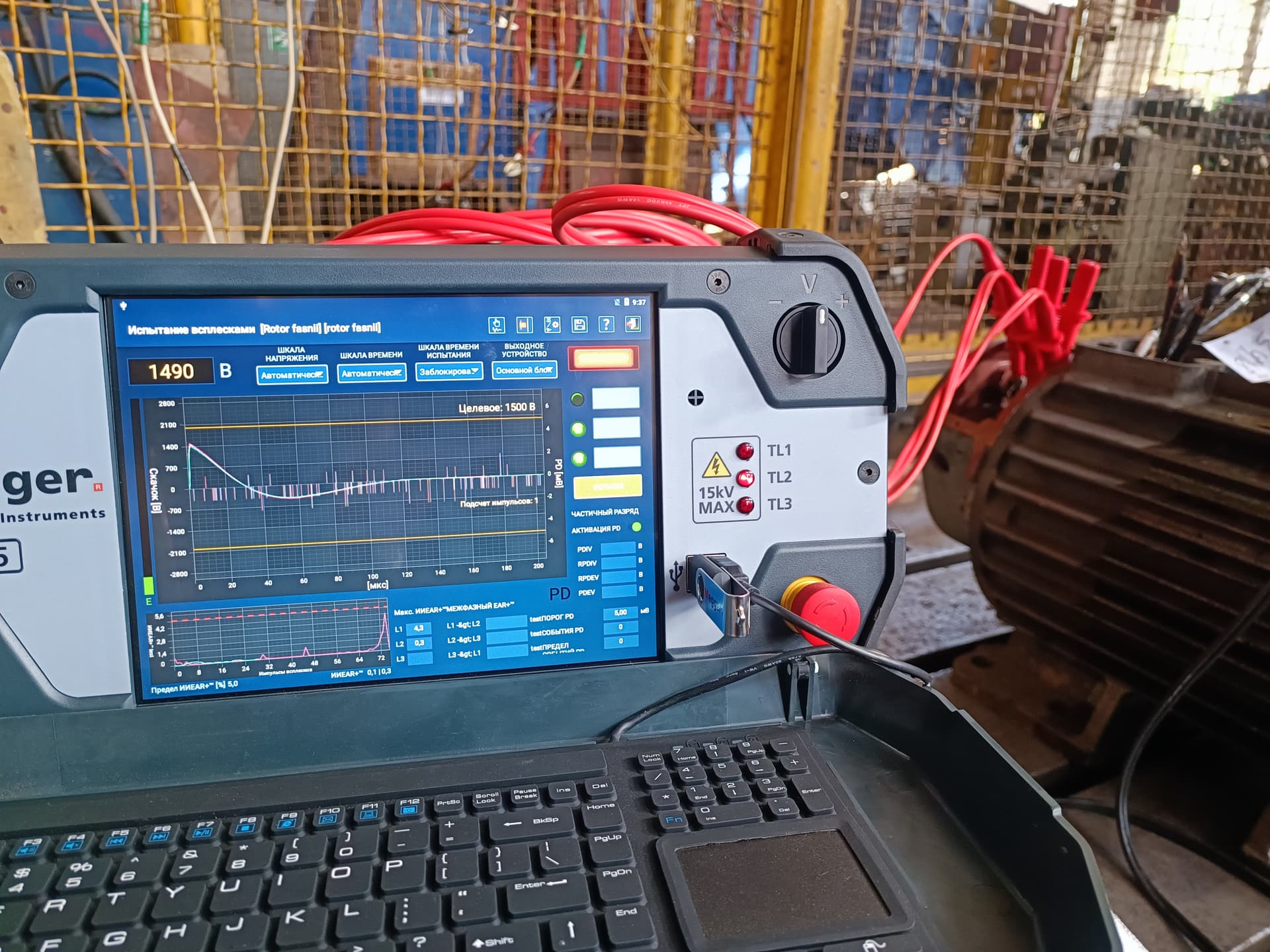 // MEGGER ADX-15 DIAGNOSTICS
// CONTROL AT EVERY STAGE
Control at every stage of a repair
Diagnostics follows the machine from the initial inspection through to condition monitoring once it is back in service — each stage answers its own question about the technical condition.
Pre-repair diagnostics
Determining the actual technical condition of the electric machine, locating defects and establishing the possible causes of a fault. The results are used to define a justified scope of repair work.
In-process control
Interim measurements and tests of the windings, active iron, insulation, mechanical assemblies and other critical components of the electric machine at the relevant stages of repair.
Acceptance testing
On completion of the repair, the electric machine undergoes a set of control checks matching its type, parameters and technical requirements.
In-service diagnostics
Vibration, thermal-imaging and electrical control of the equipment allows its actual condition to be assessed, the development of defects to be detected, and the need for further repair to be justified.
// TYPES OF DIAGNOSTICS
Types of diagnostics and testing
Every part of an electric machine has its own method of control — from insulation resistance to the thermal pattern of a winding.
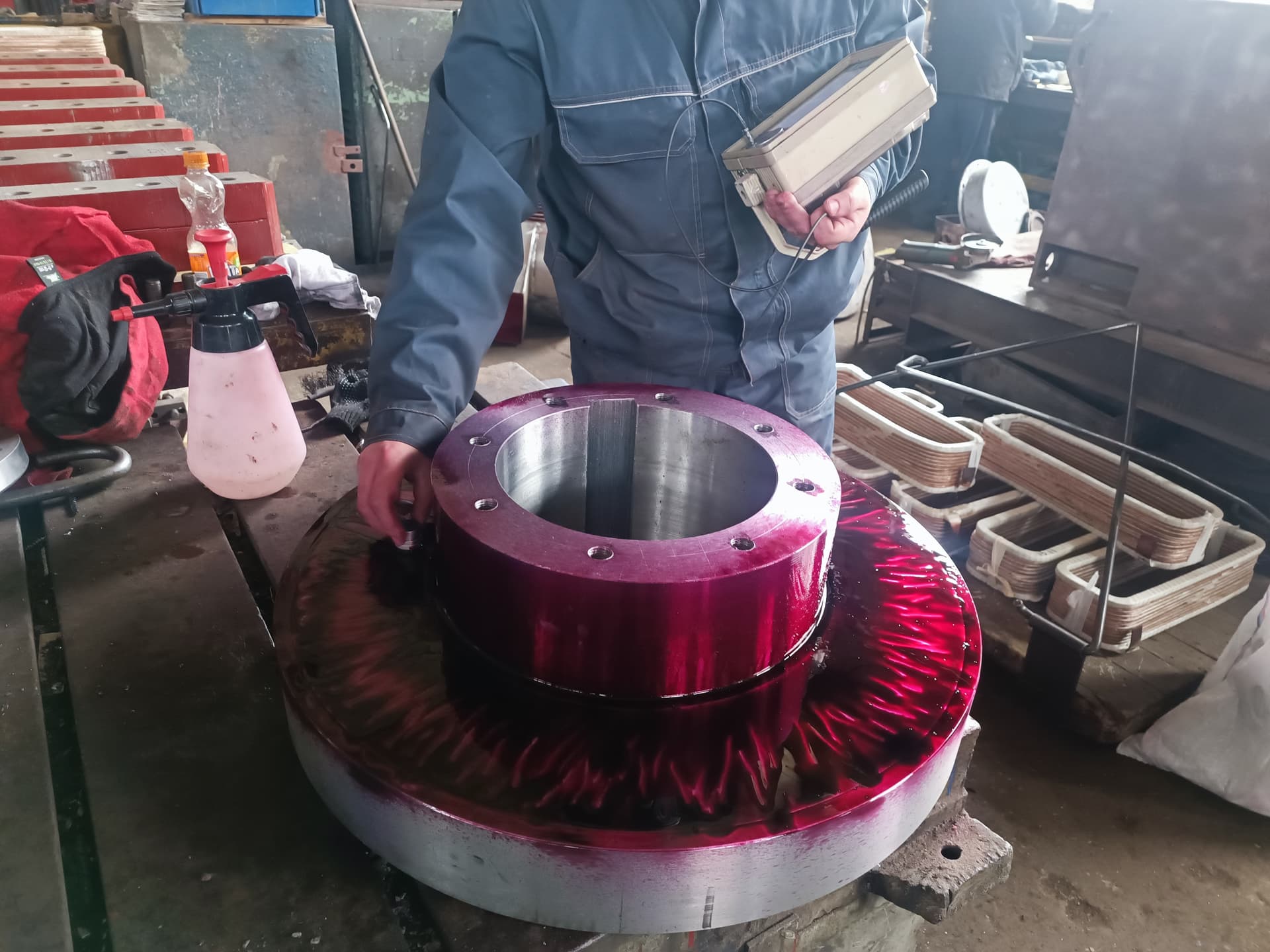 // DYE-PENETRANT INSPECTION
Electrical measurements and insulation control
We perform a set of electrical measurements matching the type and design of the electric machine: insulation resistance, winding parameters, electrical circuits and other characteristics needed to assess the equipment’s condition.
High-voltage testing
Testing the dielectric strength of the winding insulation and other electrical-equipment components with an elevated voltage, in accordance with normative, technical and repair documentation.
Winding diagnostics
Control of the condition of stator and rotor windings, detection of insulation damage, turn-to-turn faults, parameter asymmetry and other electrical faults.
Active-iron testing
Assessment of the condition of the stator core after the winding is removed, and control of possible local damage to the active steel.
Vibration diagnostics
Measurement and analysis of the vibration condition of electric machines, bearing assemblies and units to detect imbalance, misalignment and other mechanical defects.
Thermal-imaging diagnostics
Control of the thermal condition of electrical and mechanical assemblies, detection of local overheating, abnormal temperature zones and potential defects.
// NO-LOAD RUN
No-load run test
After assembly, repaired electric machines undergo a control test with a no-load run, where the equipment’s design and technical conditions allow it to be run at the test station. Electrical and mechanical parameters, bearing operation, vibration level, thermal condition and the machine’s overall running stability are all assessed.
// TEST CYCLE
A visual winding-insulation test cycle
Every stage on the blueprint is a real testing operation: connecting the instrument, insulation-resistance measurement, surge testing, partial-discharge control, and phase comparison.
// MODERN EQUIPMENT
Measurements you can build technical decisions on
For diagnostics and testing we use modern stationary and mobile measurement systems that provide objective data on the condition of an electric machine.
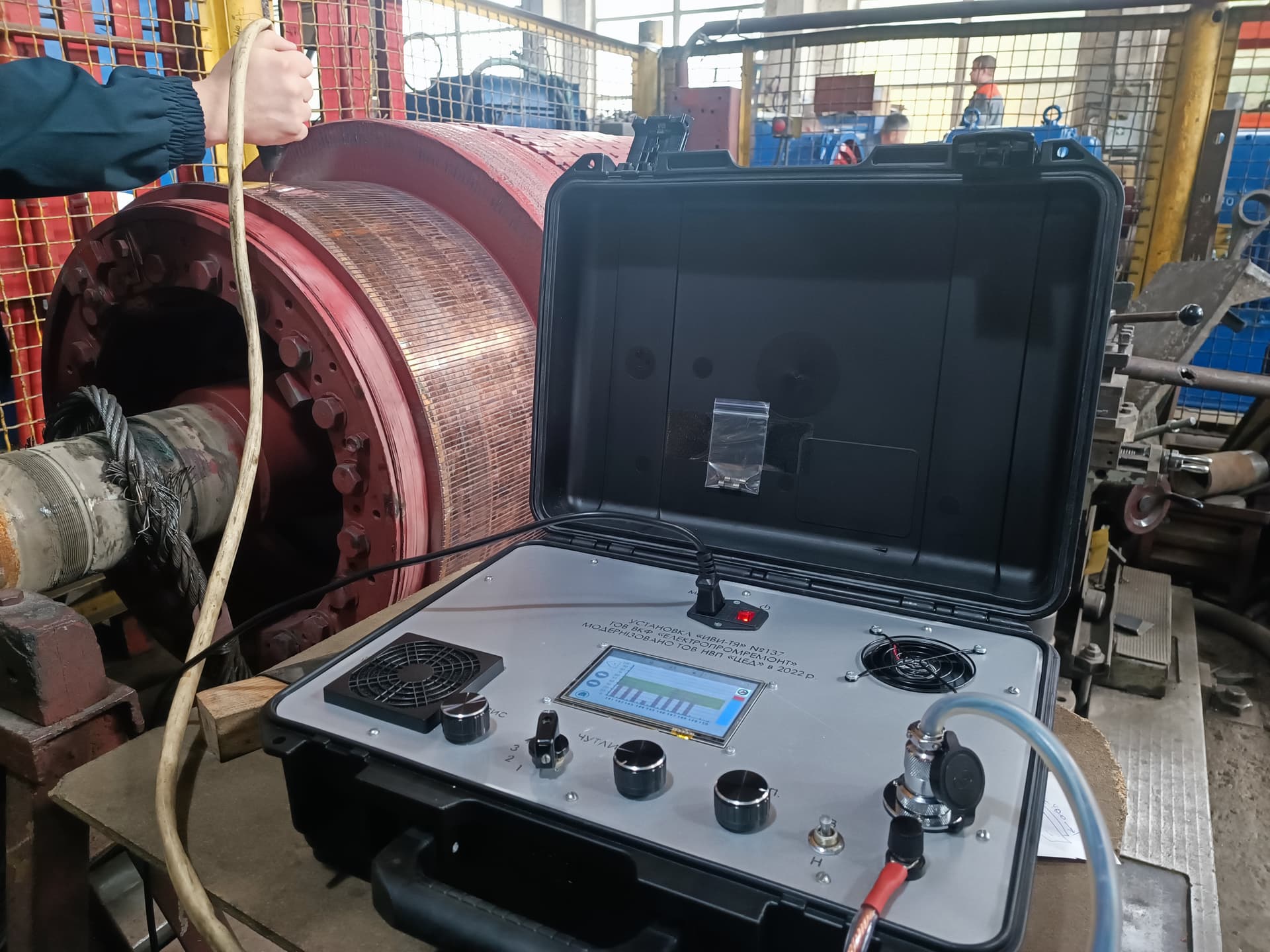 // IMPULSE-TEST INSTRUMENT
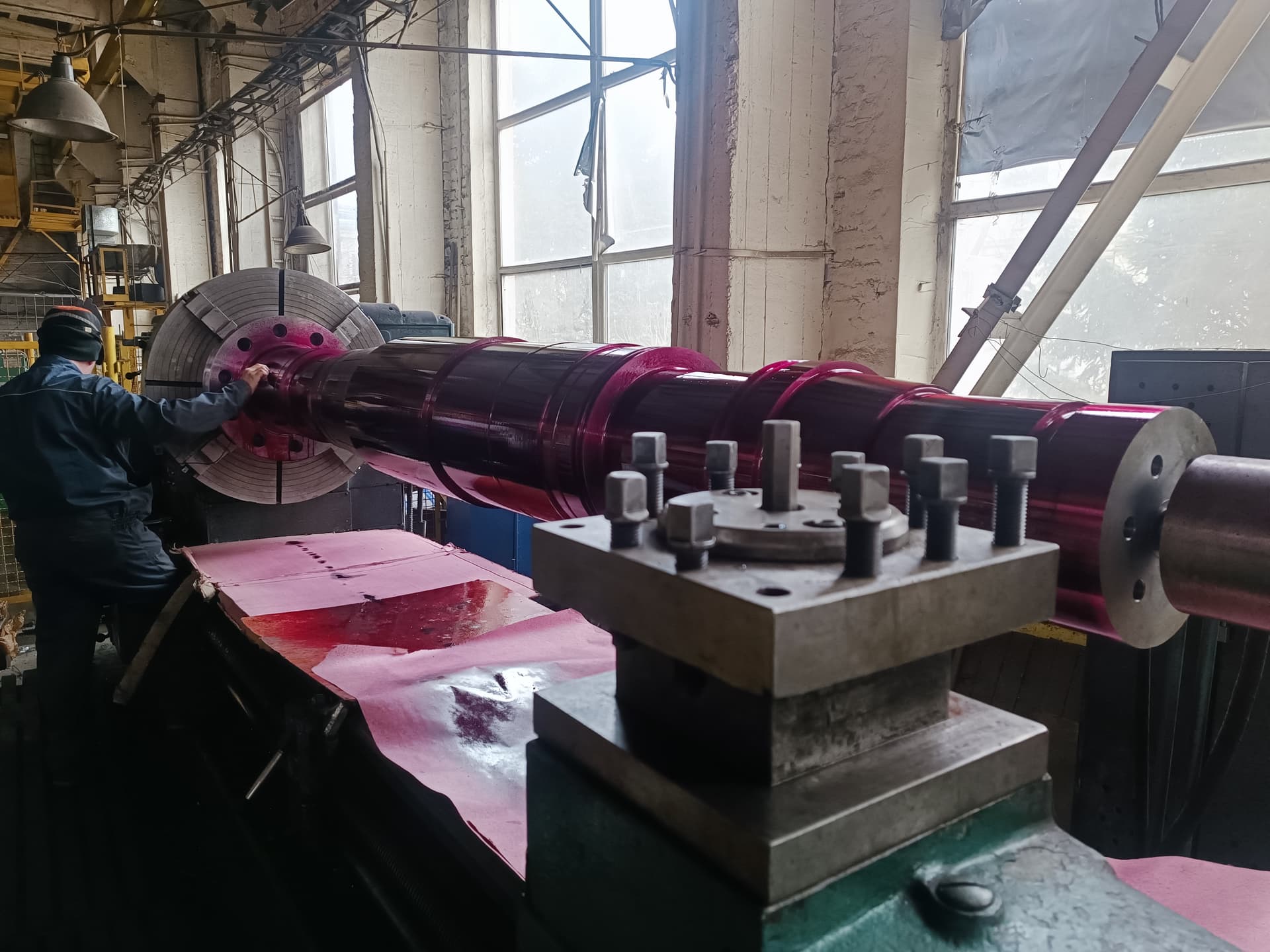
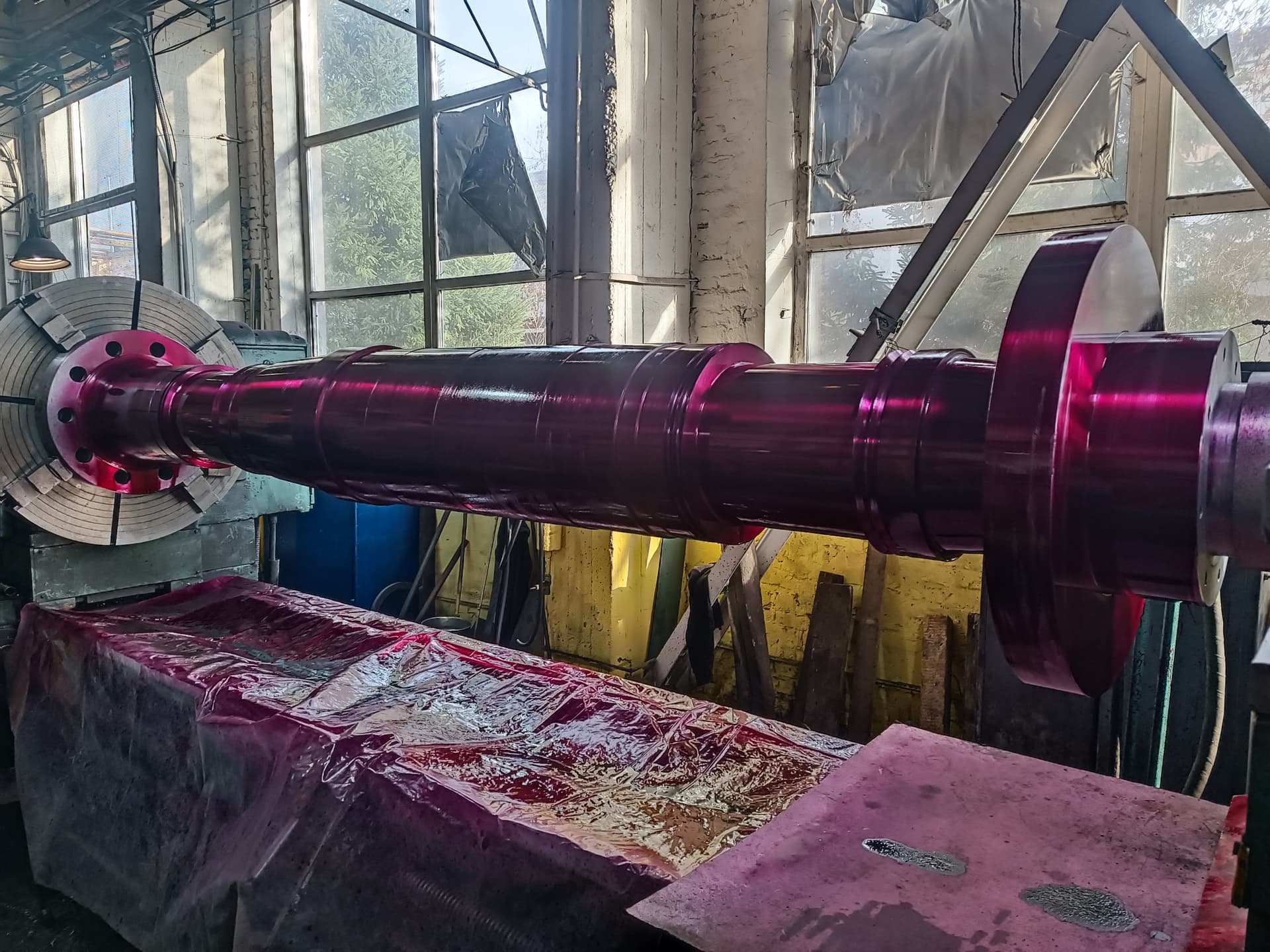 // ROTOR-SHAFT CONTROL
// ON-SITE DIAGNOSTICS
Diagnostics of electrical equipment directly on site
For large electric machines and equipment where removal is difficult or not economically justified, our specialists carry out diagnostics at the place of operation.
Mobile measurement equipment allows electrical measurements, insulation control, vibration diagnostics, thermal-imaging survey and other checks to be performed without transporting the machine to the repair works.
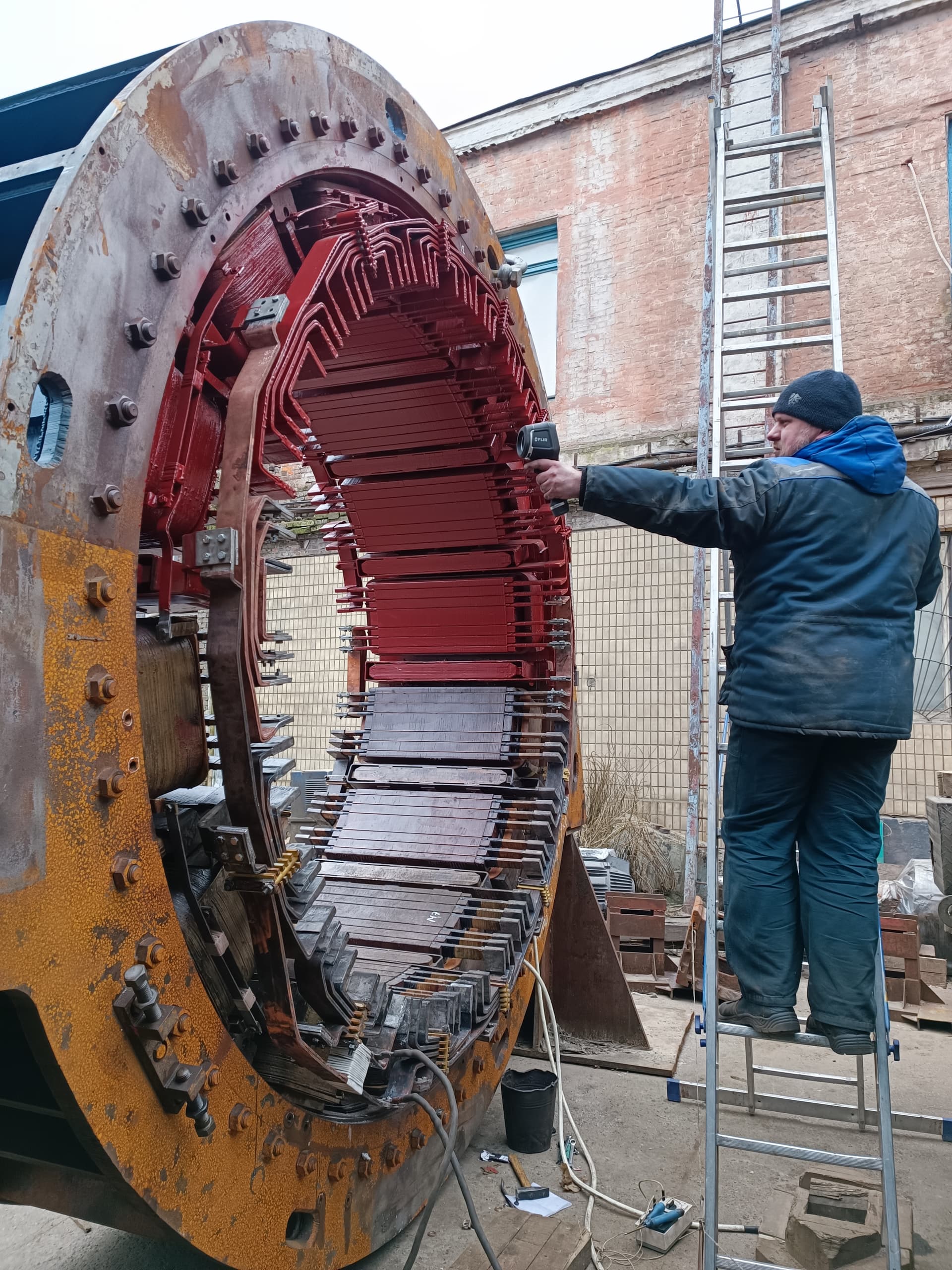 // ON-SITE DIAGNOSTICS
// QUALITY & COMPLIANCE
Test quality confirmed on paper
The company’s quality management system is certified to ISO 9001:2015. Control, measurement and testing are performed under approved procedures, normative-technical documentation and the technical requirements for the specific piece of equipment. The test station holds all the normative documentation it needs, and its measuring instruments go through the established metrological-control procedures.
// QUALITY SYSTEM
// REGULATORY BASIS
Measurements and tests are performed under current normative-technical documentation, technical conditions, manufacturer requirements and an agreed test programme for the specific type of electric machine.
From the diagnostics and testing, the Customer receives documented measurement results and test reports that make it possible to assess the equipment’s condition, confirm the quality of the repair performed, and make an informed decision on its further operation.
// QUALITY CONTROLLearn more about electric motor repair in knowledge base
Technical articles, diagnostic guides, and answers to common questions from Elektropromremont engineers.
Need to assess the technical condition of an electric machine?
We will carry out diagnostics at our own works or directly at the Customer’s site, determine the equipment’s actual condition, and put together the measurements and tests it needs.