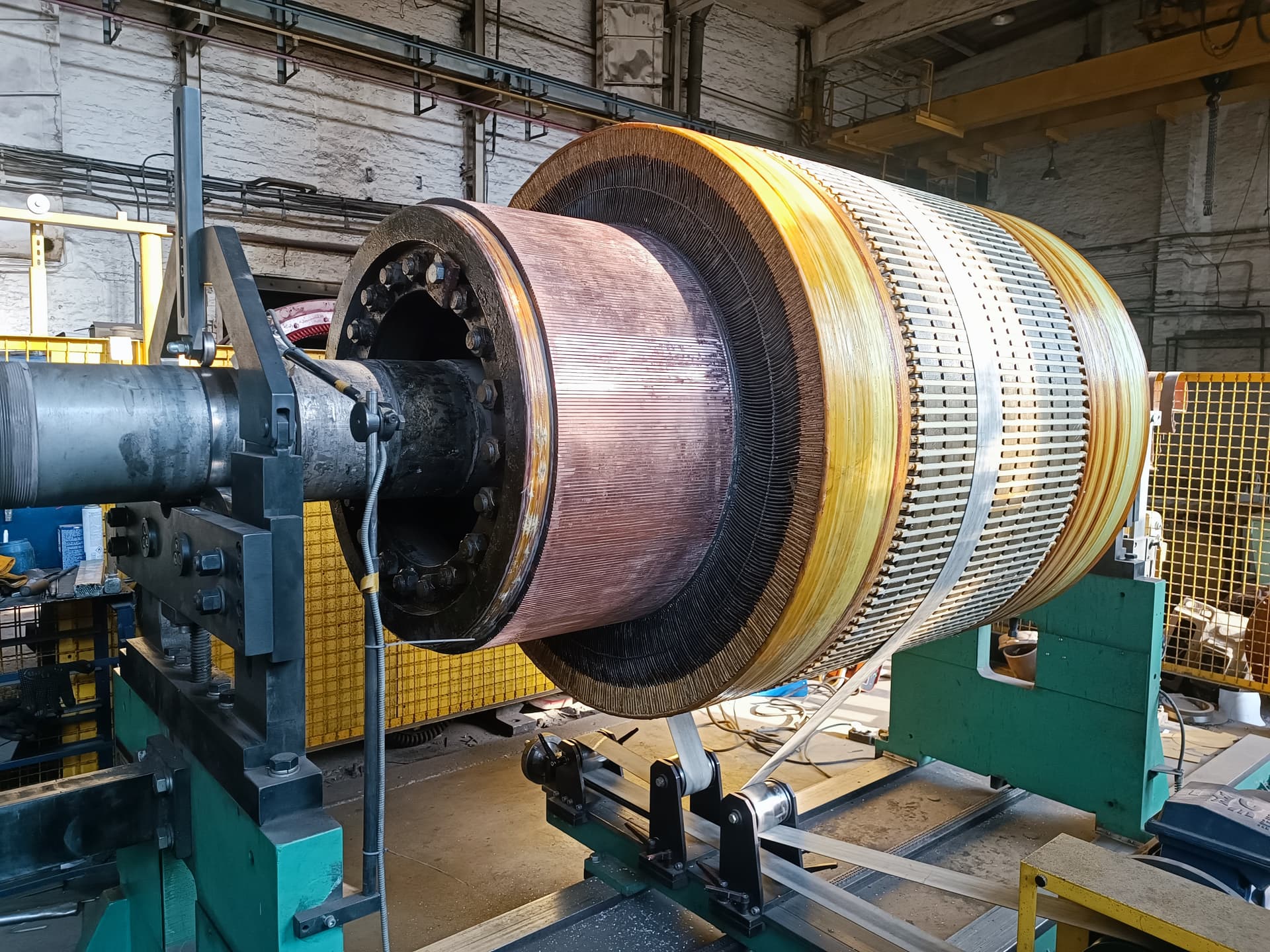
A quotation cannot be prepared without fault detection — this is the key difference from a photo-based estimate. The motor is received, its nameplate data, external condition and the customer’s complaint are recorded, and it is then disassembled to the extent needed for diagnostics.
Fault detection covers the electrical side — insulation resistance, winding resistance, phase symmetry, interturn insulation, the condition of the commutator or slip rings — alongside the mechanical side: the shaft, bearing seats, bearings, fan, housing and fasteners.
The outcome of this step is a complete, documented list of faults — it is this list, not a visual impression, that becomes the basis for the quotation that follows.