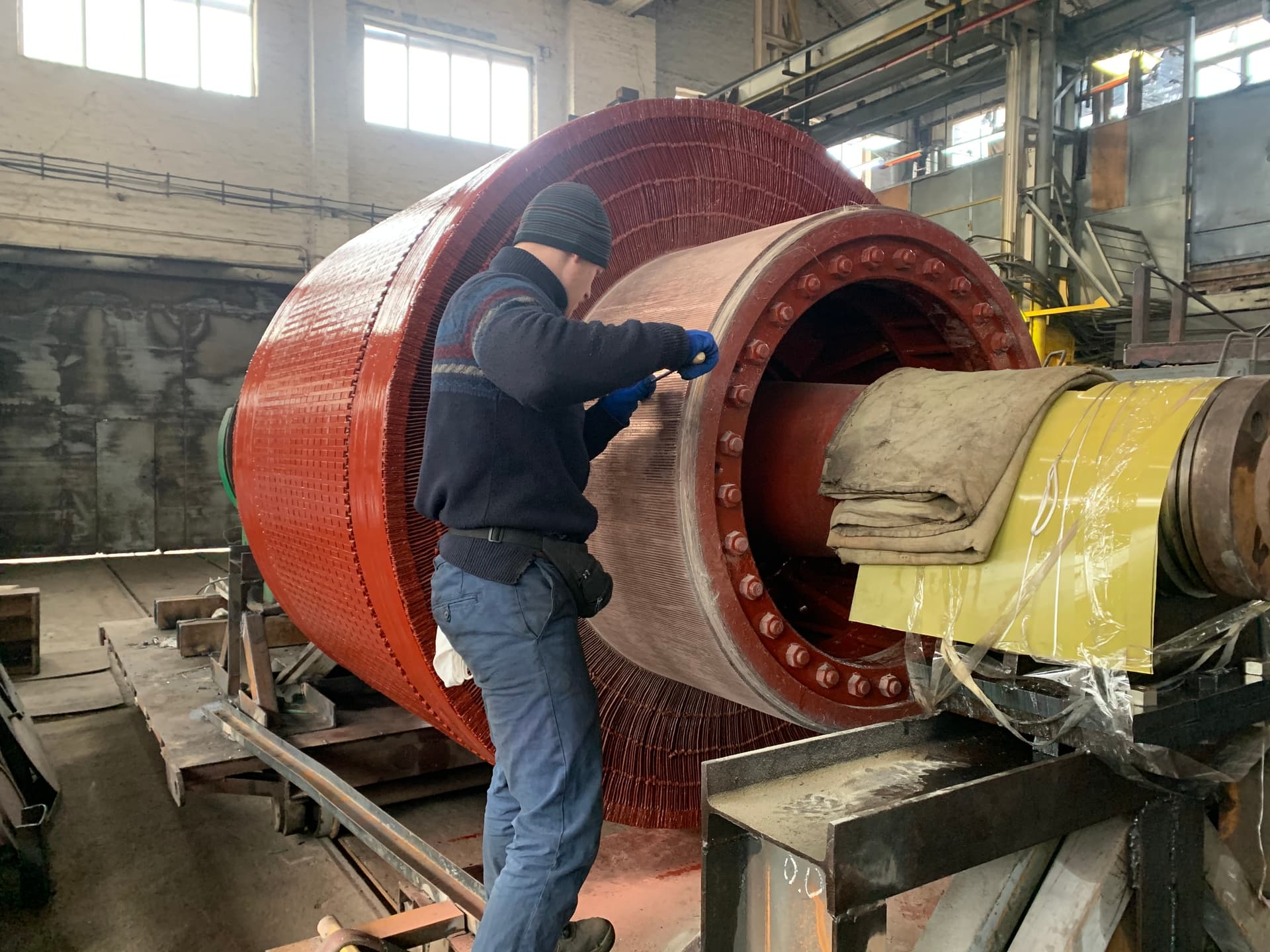
The type and size of the machine
A small induction motor with a squirrel-cage rotor is repaired quite differently from a DC machine with a commutator, brush gear and a compensating winding, or a large synchronous machine with field coils and an excitation system. Each type has its own set of units to check and potentially repair, so both the labour involved and the materials needed vary widely from one machine to another.
The actual extent of the damage
A customer’s complaint — "it hums", "it sparks", "it trips the protection" — only points in a direction; it does not reveal the actual extent of the damage. The real condition of the winding, the core, the shaft, the bearing seats and the commutator becomes known only after disassembly and measurement. Two motors with similar external symptoms can turn out very differently: one may need nothing more than a bearing replacement, the other a full rewind and a new commutator.
Manufacturing non-standard parts
If the part needed is not available off the shelf — a commutator of a specific diameter and lamella count, a unique shaft, or coils for a non-standard winding scheme — it has to be manufactured from scratch. That is a separate production cycle with its own process, and it differs substantially in duration from fitting a ready-made part taken off a shelf.
Parts availability
Even when a part is a standard one, it still has to actually be in hand. A bearing of a common size can usually be fitted straight from stock, while a bearing of a rare size, a special precision class, or an imported one may need to be ordered specially — and in that case the delivery time is set by the supplier, not by the workshop.