Is it always cheaper to repair a motor than to buy a new one?
No. Repair is usually cheaper for large, custom or legacy motors, but for small standard motors from mass production, replacement is often economically and logistically simpler.
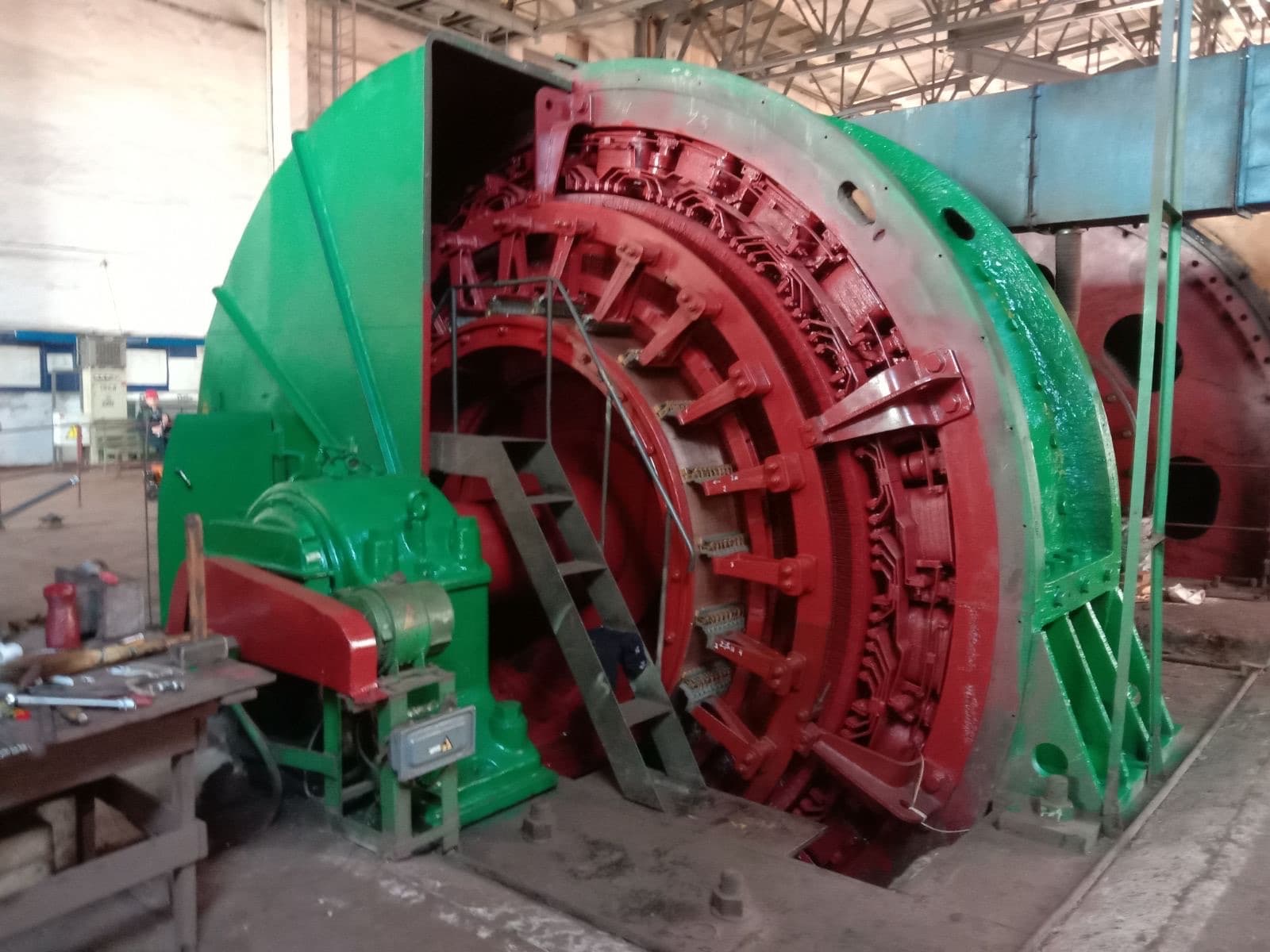
When a household appliance breaks, the decision is usually obvious — a new one is cheap and easy to buy. An industrial electric motor is a different story: the repair-or-replace decision depends on the machine’s value, whether a replacement is even available, how critical the equipment is to production, and the motor’s overall technical condition.
This article walks through the key factors worth weighing before deciding, and shows in which situations repair is usually the right call, and in which replacement is worth considering instead.
For consumer appliances, replacement is almost always simpler and cheaper: the new item is standard, mass-produced and available on the market at any time. Industrial electric machines often work the other way around. Large, custom or legacy motors are frequently more cost-effective to repair than to replace — but that is not true universally, and not for every motor.
The reason is that an industrial electric motor is not a typical consumer product. It may have unique winding data, non-standard mounting dimensions, be built into a specific production line, or simply have no modern off-the-shelf equivalent at all. That is why the decision should rest on several factors together, not on a single number.
The choice between repair and replacement is shaped by:
The most obvious criterion is comparing the repair quote with the price of a new motor of the same or equivalent power, voltage and design. If repair costs a small fraction of a new motor’s price, the economic case for repair is usually clear.
As a general guideline, industrial practice sometimes uses a rule of thumb: if repair cost approaches roughly 60–70% of a comparable new motor’s price, or exceeds that level, replacement is worth seriously considering. This is a general industry benchmark, not a fixed internal policy of any particular repair shop — the final decision always depends on the other factors described below as well.
The ratio on its own decides nothing. A motor with a high repair-cost ratio can still be the better candidate for repair if no equivalent exists on the market, or if a replacement would require an expensive rework of the surrounding equipment. Conversely, a low-cost standard motor is sometimes simpler, economically and logistically, to replace outright — even when the repair is technically cheaper.
For common standard motors, buying a new equivalent is usually easy and fast. But a large share of industrial machines — especially older DC machines — have no such equivalent: old traction motors, custom rolling-mill drives and other non-standard equipment were often built in small batches or to a specific order.
Even where a modern equivalent formally exists, it may have different mounting dimensions, a different shaft, a different shaft-height, or different control requirements. In practice, that means installing a "new" motor turns into a redesign of:
In such cases, repair often remains the only practical option, regardless of the cost ratio from the previous factor. It is cheaper and faster to restore the existing machine than to redesign the connection interface around a different motor.
The next question is how critical this motor is to production right now. If it is a spare unit or an auxiliary mechanism, there is usually enough time for a considered decision and a proper repair. If stopping the motor means stopping an entire line or plant, time pressure can push toward the fastest decision — which is not necessarily the best one.
In that situation, both extremes — a rushed "as is" repair and an emergency purchase of a new motor under downtime pressure — are rarely optimal. A more sensible middle path is often:
This approach avoids sacrificing repair quality for speed, while also avoiding a permanent purchase driven purely by a temporary lack of time.
Repair is only a genuine alternative to replacement when it actually brings the motor back to nameplate performance, rather than being a partial or temporary fix. A properly executed capital repair, with correct materials and a full testing cycle, is able to restore the machine to its original specification.
What "properly executed" means in practice:
If even one of these steps is skipped, the repair may look finished without guaranteeing the claimed service life — and the real comparison stops being "repair versus a new motor" and becomes "a poor repair versus a new motor", which is an entirely different balance.
The current fault is only part of the picture. It is worth separately assessing the condition of the parts it does not directly affect: the stator core, shaft, bearing shields, frame, fan and mountings. A motor with a mechanically sound "skeleton" is a far better candidate for repair than a machine failing on several fronts at once.
If, alongside the current fault, worn seats, frame cracks, a damaged core or signs of corrosion turn up, every subsequent repair becomes progressively less cost-effective — the machine’s remaining service life runs out faster than a single fault would suggest.
Repair extends the service life of equipment that has already been manufactured, and reduces resource consumption compared with building a new machine — electrical steel, copper, insulating materials, plus the energy spent manufacturing and shipping a new motor.
This factor is rarely decisive on its own, but over the long run, and when the economics are otherwise comparable, it tips the balance a little further toward repair rather than replacement.
| Factor | Favours repair | Favours replacement |
|---|---|---|
| Repair cost versus a new motor | Substantially below the price of a new machine | Approaches or exceeds the price of a new equivalent |
| Availability of a replacement on the market | No equivalent exists, or it needs a reworked mounting, coupling or control system | A modern equivalent is available and drops in without rework |
| Downtime cost and urgency | There is time for a proper repair, or a temporary/rental motor is possible | An immediate swap is required and no spare motor exists |
| Condition of the motor’s other components | The mechanical parts are sound and the fault is localized | The motor is worn across the board and faults keep recurring |
| Size, cost and uniqueness of the motor | A large, expensive, custom or legacy motor | A small, standard, low-cost motor from mass production |
| Environmental effect | Extends the service life of existing equipment | Not a decisive factor on its own, other things being equal |
No. Repair is usually cheaper for large, custom or legacy motors, but for small standard motors from mass production, replacement is often economically and logistically simpler.
Compare the nameplate data — power, voltage, speed, mounting dimensions and enclosure — against manufacturers’ current model ranges. For legacy or custom motors, this is easiest to establish during a technical assessment.
In that case, repair is usually the only practical option, regardless of its cost relative to a hypothetical "new machine" that does not actually exist in ready-made form.
No. It is only one of the factors. If no replacement is available, a replacement would require reworking the connection, or the motor’s mechanical parts are sound, repair can still be the right call even at a high cost ratio.
For common frame sizes, yes — this avoids rushing the repair of the main motor and avoids overpaying for an emergency purchase of a new machine.
When properly executed — with a full inspection, correct materials, the complete technological cycle and bench testing — yes. An incomplete or rushed repair offers no such guarantee.
It is rarely decisive by itself, but repair extends the service life of existing equipment and reduces resource consumption compared with manufacturing a new machine, so at comparable economics it is an additional argument for repair.
Elektropromremont LLC carries out a technical assessment of the electric motor to help the customer make the repair-or-replace decision objectively, rather than by eye. The assessment looks at the machine’s actual technical condition, not just its age or appearance.
Based on the assessment, the customer receives a documented conclusion and an estimated cost of the work, which can then be weighed against the price of a replacement for that specific motor. The assessment covers:
The repair-or-replace decision does not come down to comparing two numbers. Repair cost relative to a new motor is an important factor, but not the only one: the availability and compatibility of a replacement, the cost of downtime, whether the repair can genuinely restore full performance, the condition of the rest of the machine, and even the environmental effect together determine which decision is actually the better one.
A sound approach: assess the repair cost → check whether a compatible replacement exists → factor in downtime cost → confirm the repair will restore full reliability → assess the condition of the rest of the machine → decide.
For most large, custom or legacy industrial motors, a properly executed repair remains a technically reliable and economically sound decision. But the final choice should follow a technical assessment of the specific machine, not a general rule.
This material is for informational purposes. The values, diagnostic methods, scope of work and recommendations given here are general and do not replace the manufacturer’s technical documentation. The final decision for a specific machine is made from its own diagnostics and inspection, taking into account its type, power, design, duty, operating history and applicable standards.
We carry out a technical assessment of the motor and give an objective view of how well repair stacks up against replacement.