When does a motor need rewinding?
When the winding has a serious or systemic defect that cannot be reliably fixed by local repair.
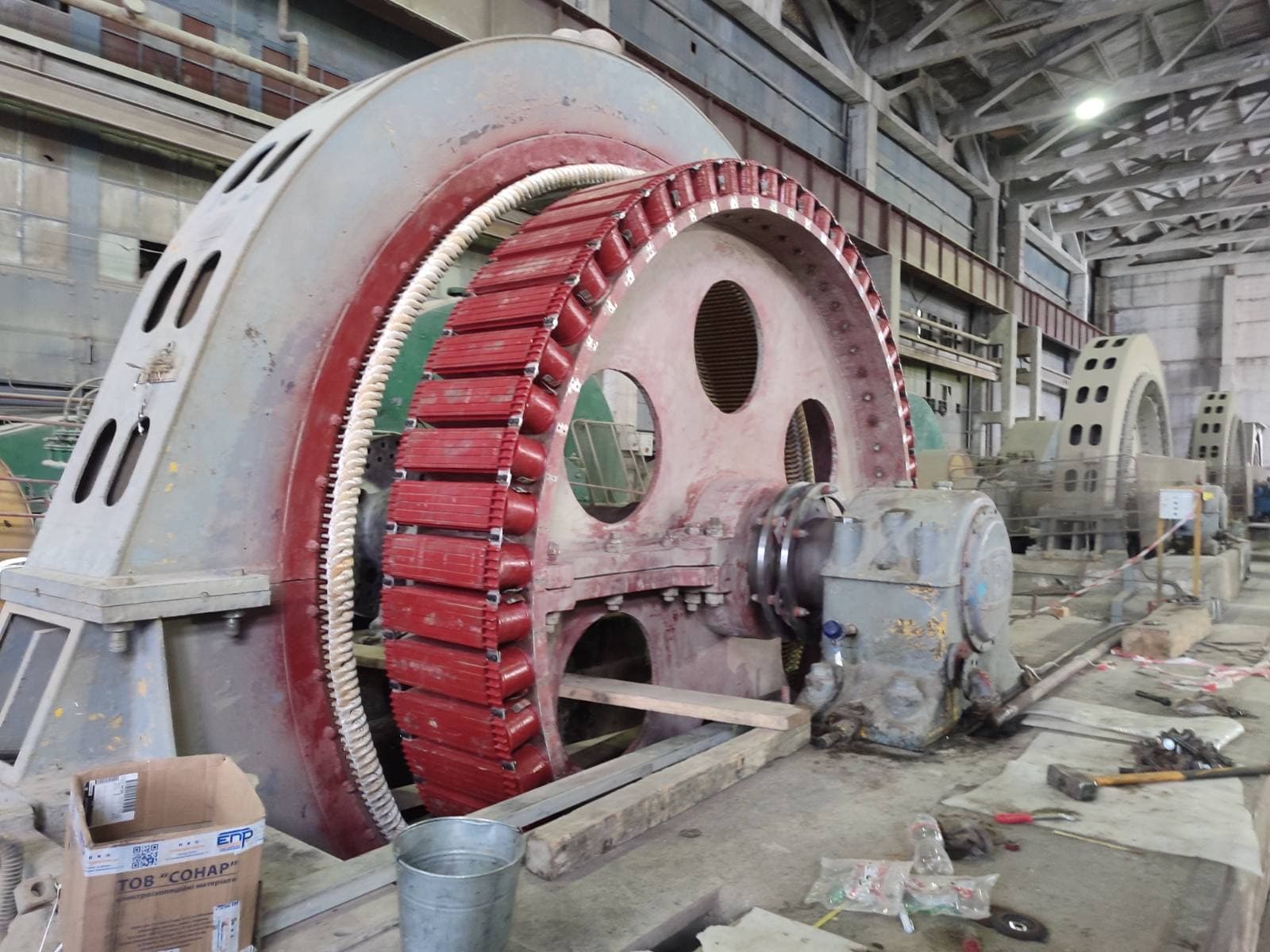
A motor needs rewinding when the stator, rotor or armature winding has damage that cannot be reliably fixed by local repair, or when the insulation system has lost the electrical, mechanical or thermal strength it needs.
Not every motor fault is grounds for rewinding. A motor can fail to run because of:
So the decision to rewind should be made after diagnostics, not just from the fact that the motor overheated, made noise, or stopped.
Rewinding is usually needed for:
But the final decision is made after a set of checks.
Rewinding is a full or partial replacement of an electric machine’s winding. For a stator the process can include:
For a wound rotor or an armature the technology differs, but the logic is the same: the old winding is replaced with a new one.
Rewinding is a significant intervention into the machine’s construction. During the repair it is necessary to:
If the old factory winding is sound, there is no point replacing it just because of the motor’s age.
An interturn short occurs when the insulation between adjacent turns is damaged. A circulating current arises in the shorted part of the coil, causing local overheating, destruction of the insulation, and growth of the defective zone.
The process often develops as: turn damage → local current → heating → destruction of neighboring turns → a serious failure.
Does an interturn short always mean a full rewind? Not always. In some large machines, replacing a single coil or section may be possible, but only when the defect is clearly localized, the rest of the winding is in good condition, the insulation shows no systemic aging, and the new section can be technologically installed correctly.
A short between conductors of different phases. It usually has more serious consequences — the coils, interphase insulation, end windings, slot area and core can all be damaged. In many cases a full rewind is needed after such a defect.
An electrical contact forms between the current-carrying part and the core or housing. Causes: aging, moisture, mechanical damage, insulation abrasion, partial discharges, overheating.
Can a breakdown be repaired without rewinding? If the defect is local, accessible, and has not damaged a large part of the winding, local repair is sometimes possible. But if the breakdown occurred deep in the slot, involved melting, damaged the core, or covered a large area, rewinding is usually the better option.
Overheating can substantially change the insulation’s properties: loss of elasticity, cracking, charring, reduced dielectric strength, and destruction of the impregnation. If the insulation has degraded throughout the whole winding, local repair no longer makes sense.
Signs of severe thermal damage: heavy discoloration, blackening, charring, brittle insulation, cracks, delamination, a characteristic smell. But the final conclusion should not be based on appearance alone.
Rewinding after any overheating is not automatically necessary. The motor may have briefly overheated due to overload, clogged ventilation, or a fan failure. If, after cooling and diagnostics, the winding has normal insulation resistance, passes the interturn check, and has no mechanical damage, rewinding may not be needed.
Insulation ages under the influence of temperature, vibration, the electric field, moisture, contamination, and thermal cycling. If defects already appear in many places, that is a sign of systemic aging — in that case, repairing one spot may not deliver sufficient remaining life. Signs of systemic aging: numerous cracks, brittleness, delamination, frequent local breakdowns, unstable insulation resistance, signs of partial discharge, weakened mechanical strength.
If the winding has already been locally repaired several times and new defects keep appearing, that can indicate the whole insulation system has run out of life. In that case, a full rewind can be technically more reliable than yet another local repair.
Mechanical damage to the winding can arise from loose slot wedges, coil movement, vibration, a short circuit, or rotor-to-stator contact. If a significant number of coils are damaged, rewinding may be necessary.
The rotor can touch the stator due to bearing damage, a bent shaft, eccentricity, or incorrect assembly. This can damage the teeth, slot insulation, coils, and core — if the winding sustains serious mechanical damage, it needs to be replaced.
Water ingress alone does not automatically mean rewinding is required. Cleaning, drying, an insulation resistance check, and other electrical tests may be performed first. But if the water caused corrosion, tracking, insulation destruction, or persistently low resistance, rewinding may be needed.
An aggressive chemical environment — acids, alkalis, saline solutions, process vapors — can damage insulation. If the materials have lost their properties, simple cleaning may not be enough.
For DC motors, a circular flashover can severely damage the commutator, the armature, the winding, and the lashing. If the winding damage is significant, a full rewind of the armature may be needed.
Rewinding a wound rotor is necessary for an interturn short, a break in a significant part of the winding, a breakdown to the core, widespread insulation damage, or destruction of the end windings. In that case the stator winding can remain completely sound.
For DC machines, rewinding the armature may be needed for an interturn defect, a broken section, a breakdown, severe overheating, or winding damage after a commutator failure.
Low insulation resistance can be caused by moisture, contamination, aging, or a breakdown. Low resistance does not automatically mean rewinding is necessary — the cause needs to be identified first.
If resistance recovers after drying, that can mean moisture was the main problem — if the other tests are normal, rewinding may not be needed. If resistance does not recover, serious aging, tracking, damage to the ground-wall insulation, or contamination inside the system are possible — then a deeper inspection is needed.
A megohmmeter can show normal resistance to ground while there is still an interturn short inside a coil. So the decision to rewind must be based on a set of tests.
Checks that help make the decision:
If one phase shows a significant deviation in resistance, that can indicate a break, a connection defect, an incorrect number of turns, or damage to a parallel branch. Not every such issue requires a full rewind, but it does need to be localized.
A surge (interturn) test is a very important tool for assessing interturn insulation condition. It can reveal a weakness that does not yet show up as a breakdown to ground or low insulation resistance. When a systemic interturn defect is confirmed, rewinding is often the most reliable solution.
A high-voltage test helps assess the strength of the main insulation. If a new or repaired winding cannot withstand the specified level, the defect needs to be located, the feasibility of local repair assessed, or the winding rewound.
For high-voltage machines, elevated partial-discharge activity can indicate voids in the insulation, delamination, corona-protection problems, or aging. That does not automatically mean a full rewind, but it can be an important factor when assessing remaining life.
Does a motor need rewinding just because of its age? No. Age by itself is not a technical reason. An old motor can have a good core, a stable factory winding, and normal insulation. Conversely, a relatively new motor can suffer a serious failure. What matters is the technical condition.
Is rewinding needed when replacing bearings? No — if the winding is sound, bearing replacement has nothing to do with rewinding.
Is rewinding needed for high vibration? Not necessarily. Causes of vibration include imbalance, misalignment, a bearing, the shaft, the foundation, the coupling, and the rotor — the winding can be completely sound.
Is rewinding needed if the motor does not start? Not always. Possible causes: a lost phase, a bearing, jamming, the supply, the starter, the rotor — diagnostics is needed first.
Is rewinding needed if the breaker trips? Not necessarily. The cause could be incorrect protection, a short circuit, mechanical jamming, a cable problem, or the winding itself — rewinding is only done once a winding defect has been confirmed.
Yes, in some machines. It is possible to replace one coil, several sections, or a damaged lead. But the condition of the whole winding needs to be assessed.
A local replacement is not advisable if the insulation is brittle throughout the whole stator, there are many defective zones, the winding operated under prolonged overheating, or the condition of the other coils is unstable. In that case, a local repair may have little remaining life.
Is rewinding needed after a local breakdown? Not always. If the defect is accessible, the damage is small, and the rest of the winding is in good condition, repair is possible. But afterward, repeat electrical tests are needed.
Sometimes a winding is changed not because of a failure, but to change the machine’s parameters — a different voltage, a different frequency, adaptation to a drive, an insulation upgrade. But that is no longer an ordinary repair — it is a technical upgrade.
Can rewinding increase power? Simply changing the wire or the number of turns does not automatically make a motor more powerful. Power is limited by the core, magnetic saturation, cooling, current loading, and the mechanical construction. Any upgrade requires calculation.
Why is the core checked after a burned winding? A severe short circuit or fire can damage the core’s inter-laminar insulation, creating eddy currents and local heating. If a new winding is installed in a damaged core, it can overheat again.
Why is it important to find the cause of the failure? Rewinding removes the consequence but not always the cause. The winding may have burned due to overload, a lost phase, mechanism jamming, poor cooling, frequent starts, or an incorrectly configured drive. If the cause is not fixed, the new winding can burn again.
The main factors:
When is a full rewind more economical? For example, if many sections need repair, the winding shows systemic aging, local work would be very labor-intensive, or a partial repair would leave the other coils with little remaining life. In such a situation a full rewind can be more cost-effective in the long run.
The need for rewinding can only be determined from photos in the case of obvious severe damage — a charred winding, melting, or significant mechanical destruction. In most cases, electrical measurements are required.
For a preliminary assessment it helps to send:
Things to avoid:
The decision to rewind should be based on the technical condition, not a single indicator. It makes sense to assess the winding, the insulation, the core, the mechanical retention, and the history of the failure. Rewinding is appropriate when local repair cannot deliver the needed reliability, does not eliminate a systemic defect, is not economically justified, or does not allow confirming the machine’s remaining service life.
The winding has significant thermal damage. Inspection confirms destroyed insulation and interturn defects. A full rewind is needed. But the external supply system also needs to be checked so the failure does not repeat.
The rest of the high-voltage winding is in good condition. The design allows replacing the section. In this case, a full rewind may not be needed.
Even if it still has acceptable insulation resistance, its mechanical and thermal condition may be unsatisfactory. Locally repairing several zones does not solve a systemic problem. A full rewind is more appropriate.
The cause is a contaminated cooling system. After cleaning, checking the winding, and bench testing, rewinding is not needed.
A surge test reveals an interturn defect. This is an example of why insulation resistance alone is not enough.
The stator winding is sound. A squirrel-cage rotor defect is found. The rotor is repaired, and the stator is not rewound.
| Condition | Is rewinding needed? | Comment |
|---|---|---|
| Bearing replacement | No | If the winding is sound |
| Rotor imbalance | No | Balancing is needed |
| A worn shaft fit | No | A mechanical repair |
| Moisture ingress | Not necessarily | Drying first |
| A damaged lead | Not always | Local repair possible |
| One defective section | Not always | Depends on the rest of the winding |
| An interturn short | Often yes | Depends on the extent |
| An interphase short | Often yes | Usually a significant defect |
| A breakdown to ground | Depends | Localization is needed |
| Significant charring | Yes, in most cases | Severe thermal damage |
| Systemic aging | Often yes | Local repair is ineffective |
| A rotor cage defect | Not for the stator | Repair the rotor |
| A damaged wound-rotor winding | Yes for the rotor | The stator can be sound |
| A damaged armature | Possibly | Depends on the winding condition |
| Vibration | Not necessarily | Mechanical diagnostics first |
When the winding has a serious or systemic defect that cannot be reliably fixed by local repair.
Not always. The insulation condition needs to be assessed.
It depends on the location and extent of the damage.
Often yes, but in some machines a local section replacement is possible.
It can be replaced if the rest of the winding is in good condition.
No, not if the winding is sound.
Rewinding is needed only if an electrical cause of the vibration is confirmed.
No, a set of tests is needed, including a surge (interturn) test.
Yes, especially after a burnout or rotor-to-stator contact.
Yes, if the stator or the rest of the machine remains sound.
Elektropromremont determines whether rewinding is necessary after diagnostics and inspection of the electric machine. Before the decision, it can assess:
If the winding can be reliably restored locally, a full rewind is not mandatory. If the insulation system shows systemic aging or significant damage, a full rewind may be recommended. After rewinding, electrical checks, impregnation, drying, high-voltage tests, assembly, bench control, and a load test can be performed, depending on the repair program.
A motor needs rewinding not simply because it is old or has stopped running, but because the winding has lost the technical reliability it needs. The main grounds are: interturn defects, an interphase short, a breakdown, significant thermal damage, systemic insulation aging, and widespread mechanical damage.
But even with a serious fault, the first question needs to be: is the problem in the winding at all?
The correct sequence: diagnostics → localizing the defect → assessing the whole insulation system → choosing between local repair and a full rewind → testing.
The main principle: rewinding should be a technically justified decision, not the standard answer to any motor fault. If the winding is sound, it is worth keeping. If its condition no longer allows the electrical, thermal, and mechanical reliability the machine needs, a full rewind becomes the right way to restore it.
This material is for informational purposes. The values, diagnostic methods, scope of work and recommendations given here are general and do not replace the manufacturer’s technical documentation. The final decision for a specific machine is made from its own diagnostics and inspection, taking into account its type, power, design, duty, operating history and applicable standards.
We run a comprehensive diagnosis of the winding and insulation and give a technically justified opinion on the required repair scope.