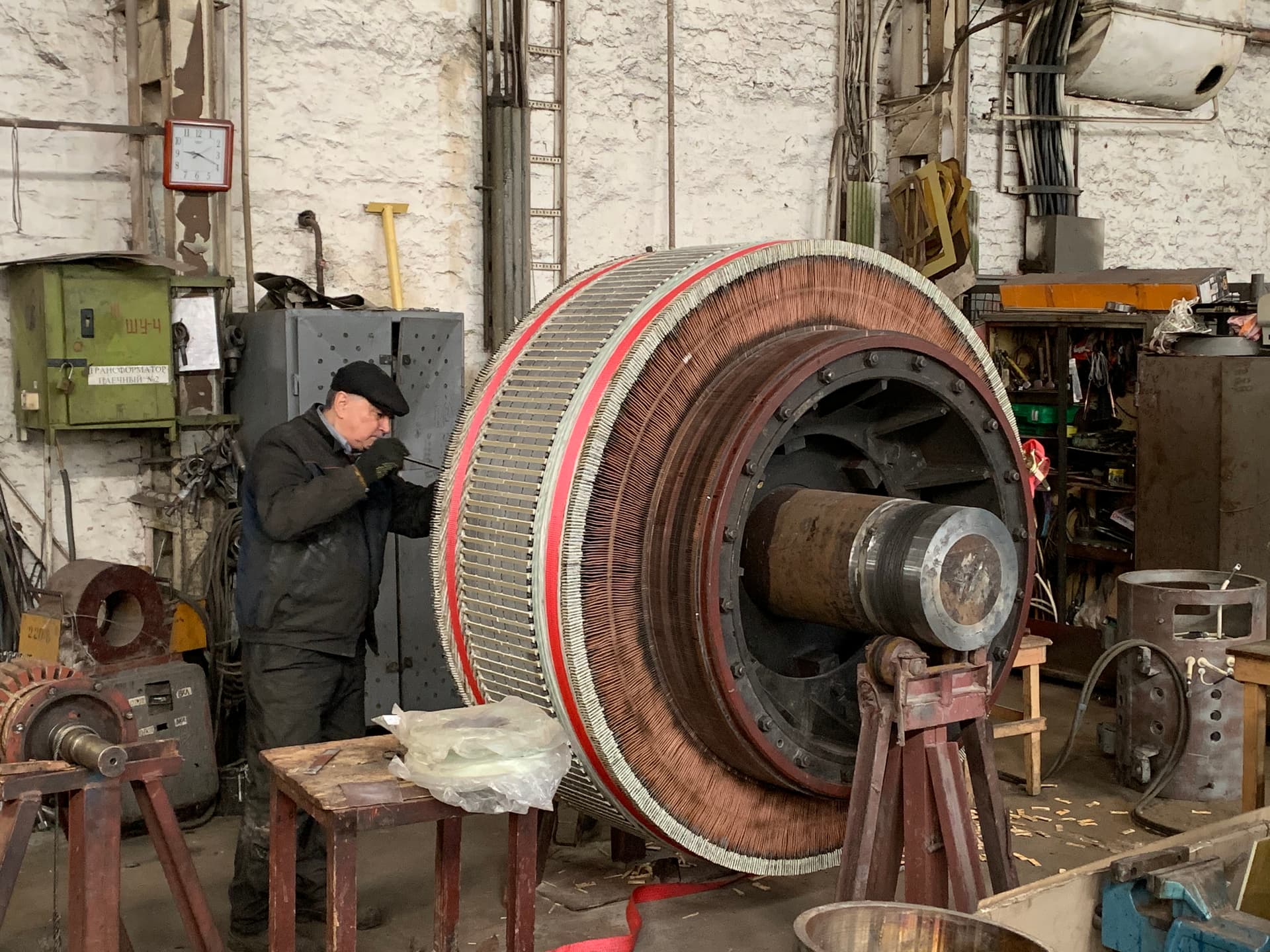
Is there a warranty on electric motor repair?
  1. // ELEKTROPROMREMONT
  2. Repair warranty

Is there a warranty on electric motor repair?

A repair warranty is one of the first questions a customer asks before signing a contract, and rightly so: repairing an electric machine means working on the winding, the insulation, the bearing assembly and the mechanical parts, so it is fair to ask what happens if the machine fails again a month later.

A warranty is not a formality or a marketing line — it is a concrete commitment by the repair shop to stand behind the quality of the work performed and the materials used for a defined period. Clear, written warranty terms are one of the clearest signs that a shop trusts its own workmanship.

This article covers what a motor repair warranty typically includes, what it usually does not cover, what terms are common in the industrial motor repair industry, what can void a warranty, and how to file a warranty claim if a fault reappears.

Short answer

Yes. A serious repair shop always offers a warranty on the repair work it performs — this is standard practice in industrial motor repair, not an optional extra. The warranty confirms that:

  • the repair work was carried out correctly — rewinding, assembly, balancing;
  • the parts installed or manufactured during the repair meet the required technical specifications;
  • the motor is able to run to its rated (nameplate) parameters under normal operating conditions.

The specific warranty period, its scope and its conditions are always set out in the contract or the commercial offer — they can vary depending on the type of repair, the machine, its power rating, and what has been agreed with the customer. It is worth confirming these terms with the repair shop before work begins.

Why a repair warranty matters

A warranty is one of the most practical ways to tell a serious repair shop apart from an unreliable one. A company that trusts its own repair process, quality control and staff qualifications can afford to stand behind the result — and conversely, a refusal to put warranty terms in writing, or a vague answer like "we usually don't have problems", is a reason to be cautious.

For the customer, a warranty is above all confidence — in the quality of the rewinding and reassembly, in the quality of the bearings, commutator or other replaced components, and in the fact that a fault caused by the repair itself will be fixed at no extra charge. This matters most for critical and continuous production lines, where unplanned downtime from a repeat failure costs far more than the repair itself.

Beyond the direct financial protection, a warranty disciplines the repair process itself: a shop that is on the hook for the outcome has every incentive to run a full inspection, follow the correct procedure, and test the machine before handing it back.

What a repair warranty typically covers

In industrial motor repair, a warranty generally covers three areas.

Quality of the work performed

Correct rewinding of the stator or armature winding, the right connection scheme, sound soldering and lead insulation, correct reassembly, bearing installation and fastener torque, and the quality of rotor balancing.

Quality of the parts installed or made

Bearings, the commutator or slip rings, insulation materials, winding wire, gaskets and any other part replaced or manufactured as part of the repair should meet the required specifications and be free of manufacturing defects.

Conformance to nameplate parameters

A repaired motor should deliver its rated power, torque and speed, stay within its allowed temperature rise, and run without excessive vibration or noise under the normal operating conditions stated on its nameplate.

What a repair warranty typically does not cover

A repair warranty is not insurance against any and every future fault — it covers the quality of the repair itself. It typically does not cover:

  • damage caused by misuse, overload, or operation outside the rated (nameplate) conditions after the repair;
  • damage from external causes — supply faults, voltage surges, flooding, physical impact, or other force-majeure events;
  • normal wear of parts during ordinary operation — brushes, for example, wear down over time even on a fully sound motor;
  • faults in parts of the machine that were not part of the repair scope — if only the commutator was serviced, that repair's warranty does not extend to an unrelated bearing failure that surfaces later.

This is why the scope of the work performed should be clearly stated in the contract, the handover certificate, or the commercial offer — it is the only way to say plainly which parts of the machine are under warranty and which are not.

Typical warranty terms in motor repair

There is no single, industry-wide, legally mandated warranty period for motor repair — every shop sets its own terms depending on the type of repair, the machine, and its own practice. As a general guide, the following ranges are common:

Type of repairTypical warranty range in the industry
Local repair without rewinding (bearings, a minor component)A few months
Stator or armature rewindingFrom a few months up to about six months
Capital (overhaul) repairRoughly six months to a year, depending on scope

These are indicative ranges commonly seen across the industry, not a stated official policy of any particular shop. The exact warranty period for your motor is agreed in the contract or the commercial offer — confirm it directly with ТОВ ВКФ «Електропромремонт» before work starts.

What can void a warranty

A repair warranty is a two-way commitment: the shop answers for the quality of the repair, and the customer answers for operating the motor correctly once it is back in service. A warranty is most often voided by:

  • unauthorized disassembly, repair, or modification of the motor by the customer or a third party without the repair shop's agreement;
  • continuing to run the machine after signs of a fault appear — increased vibration, noise, heating, or a burning smell;
  • incorrect installation — misalignment during mounting, poor coupling with the driven equipment, or inadequate fastening;
  • connecting the motor to a supply whose parameters do not match its requirements — wrong voltage, wrong frequency, or significant phase imbalance;
  • operating the motor beyond its rated (nameplate) parameters — power, current, speed, or allowed temperature.

How to file a warranty claim

If a fault appears after a repair and you believe it should be covered, the usual steps are:

  1. 01Stop the motor and do not attempt to fix the fault yourself — this can make it harder to pin down the cause and can affect the validity of the warranty.
  2. 02Document the circumstances — the date and time the fault appeared, the operating mode, instrument readings, and the nature of any noise, vibration or heating, with photos or video if possible.
  3. 03Gather the repair documentation — the contract, the handover certificate, the test report, and the motor's nameplate data.
  4. 04Contact the repair shop as soon as possible and describe the situation.
  5. 05Give access to the machine for inspection and diagnosis — the exact cause of a fault can usually only be confirmed after disassembly.
  6. 06Wait for the finding on the cause of the fault — once it is confirmed as a warranty case, the repair is carried out at no extra charge under the terms of the contract.

Why test reports matter for a warranty claim

The test report produced after a repair is not paperwork for its own sake — it is a documented record of the motor's actual condition at handover: insulation resistance, winding resistance, no-load test results, vibration, temperature, and other parameters.

That record is exactly what a comparison relies on if a fault is suspected later. Without it, it is hard to prove objectively that a parameter now out of range actually changed after the repair, rather than having been off from the start or shifted because of operating conditions.

It is worth keeping the test report together with the rest of the repair documentation for the whole warranty period — both the shop and the customer will need it if a warranty claim comes up.

Frequently asked questions

Does the warranty cover parts the customer supplies?

Usually not for the part itself. If a customer supplies their own part — a bearing bought elsewhere, for instance — the repair shop's warranty typically covers the quality of installing that part, not the part's own quality; a defect in the part itself is the manufacturer's or seller's responsibility. It is worth clarifying this point in the contract before work starts.

What if the same fault comes back?

Stop the motor, document the circumstances, and contact the repair shop with the test report and repair documentation. If the cause is confirmed as a warranty case, the repeat repair is carried out at no extra charge.

Does the warranty apply to repairs done on-site at the customer's facility?

Yes, but with extra conditions — if installation, connection and subsequent operation on-site were not part of the shop's contracted scope, the warranty does not cover the consequences of incorrect installation, unsuitable supply parameters, or site conditions themselves.

Do I need to keep the test report for a warranty claim?

Yes, it is essential. The test report is the main evidence of the motor's actual condition at handover, and without it a warranty claim is far harder to assess fairly.

Does the warranty cover shipping costs for a repeat repair?

Not automatically in every case — this depends on the specific contract. Transport and removal/reinstallation costs are worth clarifying up front, before the contract is signed.

What if the fault was caused by the customer?

That case is not covered by the warranty, since the cause falls outside the repair shop's responsibility. A reputable shop will still run an honest diagnosis, explain the cause, and, if needed, offer a paid repair.

Can I get the warranty terms in writing?

Yes, and it is worth insisting on it. A reliable shop sets out the warranty period, scope and claim procedure in writing — in the contract, the handover certificate, or the commercial offer.

EPR (Elektropromremont) services

ТОВ ВКФ «Електропромремонт» issues a test report before and after every repair and stands behind the quality of the work performed and the materials used. We want every motor to run its full service life without a repeat call, so we follow the correct procedure at every stage — from inspection through to final testing.

The specific warranty terms — period, scope and claim procedure — are set out in the contract or commercial offer individually for each project, based on the machine, the scope of the repair, and its intended operating conditions.

  • a test report issued before and after the repair;
  • written warranty terms in the contract or commercial offer;
  • guidance on installing and operating the repaired motor;
  • prompt handling of warranty claims.

Important disclaimer

This material is for informational purposes. The values, diagnostic methods, scope of work and recommendations given here are general and do not replace the manufacturer’s technical documentation. The final decision for a specific machine is made from its own diagnostics and inspection, taking into account its type, power, design, duty, operating history and applicable standards.

Need a repair backed by a warranty and test report?

We repair electric motors with a full test report and written warranty terms — agreed with you before the contract is signed.

Get a consultation