Fiberglass laminate in electric motor manufacturing and repair
  1. // ELEKTROPROMREMONT
  2. Fiberglass laminate

Fiberglass laminate in electric motor manufacturing and repair

Fiberglass laminate is one of the most widely used structural-insulating materials in manufacturing and repairing electric motors, generators, traction machines and high-voltage equipment. In electric-machine repair it is commonly used for slot wedges, inter-coil spacers, spacer elements, insulating washers, bushings, terminal boards and brush-gear parts.

Fiberglass laminate is a rigid layered composite made of glass cloth impregnated with a thermoset resin and pressed under heat and pressure, followed by curing. The glass cloth provides mechanical strength and dimensional stability, while the resin bonds the layers and provides electrical insulation and moisture resistance. General requirements for these materials are set out in the IEC 60893 series of standards.

Fiberglass laminate is not a one-size-fits-all material, though. Its grade, thickness, reinforcement direction, resin type and machining method all need to match the specific design — the wrong material can delaminate, absorb moisture, crack under tightening, or loosen a winding’s restraint.

What fiberglass laminate is

Fiberglass laminate is a composite in which glass fibers carry most of the mechanical load while a polymer resin bonds the fibers, forms a solid part, and provides insulating properties. Glass cloth alone is flexible and cannot hold a part’s shape, and cured resin without reinforcement is brittle and weak in tension — combining the two gives a material with high mechanical strength, good insulation, and stable dimensions.

Epoxy, phenolic, melamine, polyester, silicone and polyimide resins are all used — each defines a separate group of materials under IEC 60893 (for example, IEC 60893-3-2 for epoxy, IEC 60893-3-6 for silicone, and IEC 60893-3-7 for polyimide systems).

Grades and designations

The name "fiberglass laminate" alone does not fix a material’s exact properties. The market includes designations like STEF, STEF-1, G-10, G-11, FR-4, FR-5 and various manufacturers’ own grades — they differ by country, standard, resin type, mechanical properties, heat resistance, and flammability.

G-10 is a common epoxy glass-cloth laminate with high mechanical and dielectric properties; G-11 is a similar material that better retains its properties at elevated temperature. FR-4 is a very common flame-retardant epoxy laminate, widely known as a PCB material, but a standard PCB-grade material is not always optimal for a load-bearing part in a motor — mechanical strength and heat resistance need separate verification.

STEF-1 is not automatically a full equivalent of G-10 or FR-4 — a substitution should be based on comparing technical parameters (flexural and compressive strength, heat resistance, water absorption, dielectric strength, flammability), not just a similar name.

Key properties

Dielectric properties depend on the grade, thickness, humidity, temperature, and surface condition — contamination with graphite or metallic dust can lower the surface resistance even of a good material. Mechanical strength allows it to withstand bending, compression, tension, and vibration, but impact tightening of bolts, sharp stress concentrators, and loads across the layers are especially dangerous.

Heat resistance depends mainly on the resin type — materials exist for classes F and H, but a class temperature is neither a melting point nor a guarantee that the whole winding belongs to the same class. Fiberglass laminate usually has better moisture resistance than paper-based materials, but moisture can still enter through unsealed edges, microcracks, or delaminated zones.

Tracking resistance — resistance to the gradual formation of a conductive carbon path on the surface under voltage, moisture, and contamination — matters especially for equipment in damp or dirty conditions, for which special tracking-resistant grades are used.

Anisotropy

Fiberglass laminate is anisotropic — its properties depend on load direction relative to the fabric’s warp and weft. Strength along the sheet plane is usually far higher than strength against peeling or tension across the layers. That is why a part can handle significant bending load yet delaminate from incorrect drilling, or crack from overtightening a bolt.

Where fiberglass laminate is used in electric motors

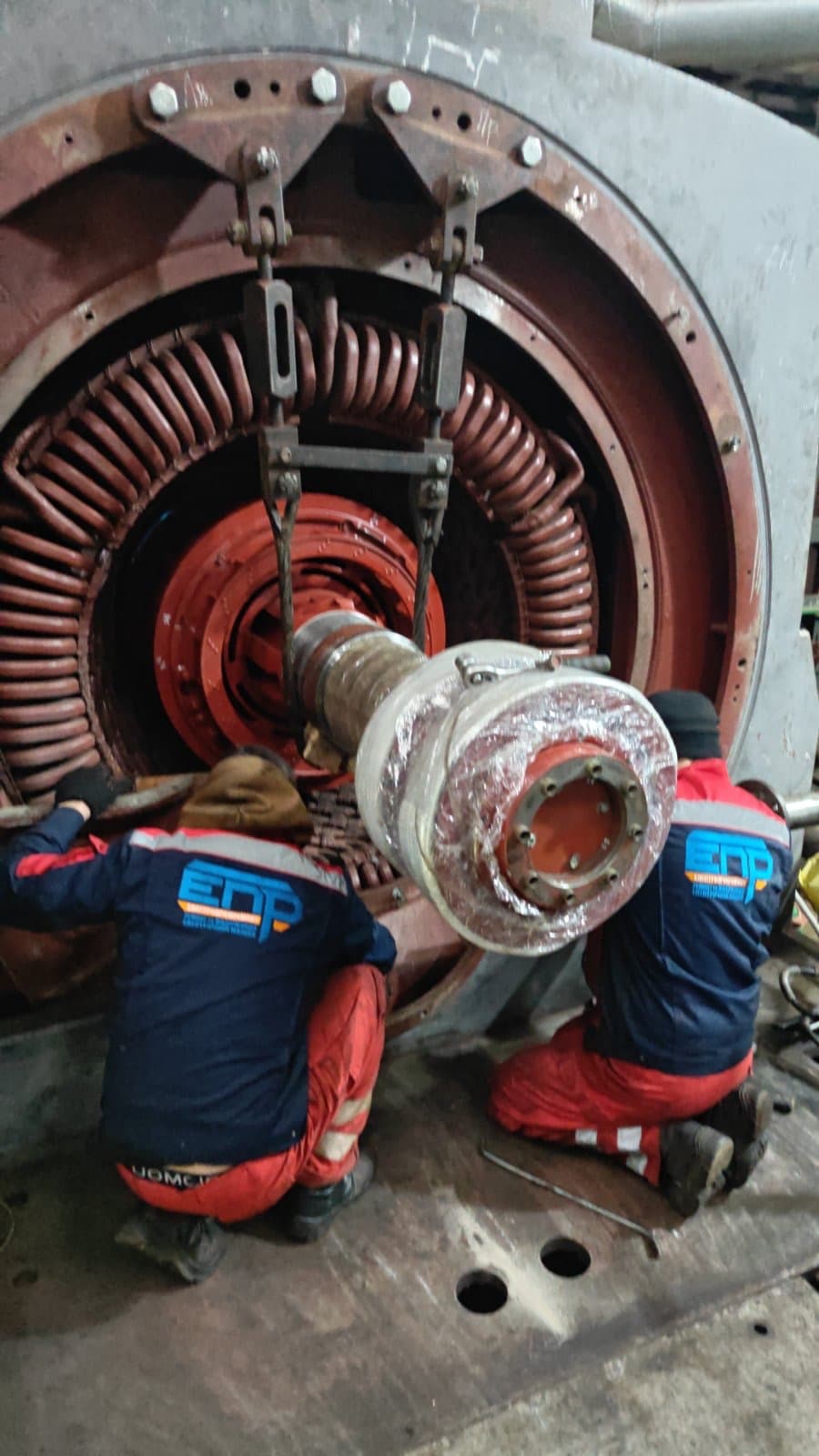
A slot wedge closes the slot and holds the winding in the core, withstanding vibration, electrodynamic forces, and thermal expansion. The wedge must have an accurate profile, consistent thickness, and compatibility with the impregnating varnish — the wrong wedge can loosen, come out of the slot, damage the winding, or block a ventilation duct. Not every slot wedge is made from plain fiberglass laminate — non-magnetic, magnetic, and semi-conductive wedges are also used, each affecting the slot zone’s magnetic permeance differently.

Slot spacers and packing strips separate the winding’s upper and lower layers and form a ventilation duct — they need rounded edges, since a sharp spacer can gradually chafe through the wire enamel or slot insulation. Inter-coil spacers in the end windings maintain electrical clearance between phases, but a rigid part in direct contact with the winding wire is undesirable — a soft pad or glass tape is normally placed between them.

Insulating washers and bushings separate a nut from a metal surface, a bolt from a bracket, or a brush holder from the rocker. Terminal boards are made from fiberglass laminate for terminal blocks, transition strips, and phase barriers — they must withstand operating voltage, terminal heating, and moisture. In brush-gear and pole-coil parts, fiberglass laminate is used for bushings, washers, strips, and frames that operate in carbon dust, vibration, and elevated temperature.

For rotating rotor or armature parts, a plain sheet part should never be fitted without engineering verification of centrifugal loading, balance, and reinforcement direction.
Is fiberglass laminate the main slot insulation?

Usually not. Rigid fiberglass laminate is not the main flexible slot liner in a random-wound winding — the main slot liner is more often made from polyester film, aramid paper, polyimide film, or mica-based materials. Fiberglass laminate more often serves as a wedge, a rigid spacer, a stand-off, or a mechanically loaded insulating part. Similarly, the main inter-bar insulation in a commutator is usually made from mica-based materials rather than plain fiberglass laminate, because of specific requirements for heat resistance and behavior under pressure.

Machining

Glass fiber wears cutting tools quickly, so carbide or diamond tooling is used. The main drilling risks are exit-side delamination, edge cracking, and burrs; a sharp tool, a backing plate, adequate edge clearance for the hole, and chamfering are all needed. When cutting and milling, overheating and resin scorching must be avoided, and for precise rotating parts (bushings, rings), a ready-wound tube is preferable to a part cut from sheet stock whenever the loads are radial.

A sharp edge can cut through slot insulation, damage wire enamel, or chafe through banding — after machining, parts are deburred, ground, chamfered, and rounded, and in critical parts the machined edges are also sealed with a compatible insulating varnish or sealant to reduce moisture ingress.

Machining produces fine glass and resin dust, so local extraction, dust removal, and personal protective equipment are all required.

Choosing thickness and incoming inspection

A part’s thickness is set from the operating voltage, mechanical load, temperature, and fastening method — "thicker is always safer" is the wrong principle, since excess thickness can shrink a ventilation duct, shift a coil’s position, or create excessive pressure.

On receipt, documentation (grade, batch, manufacturing date, test report) is checked, a visual inspection looks for delamination, blistering and cracks, and dimensions, mechanical and electrical properties are checked where needed. Without a certificate, the resin type, thermal class, or batch consistency cannot be reliably confirmed — critical for important machines. Sheets should be stored in a dry room, on a flat surface, out of direct sunlight, and away from contact with oils.

Typical defects

  • delamination — from an impact, incorrect drilling, overtightening, or moisture;
  • cracks near holes — from too little edge clearance or excessive tightening torque;
  • darkening — from overheating, electrical tracking, or resin aging;
  • electrical breakdown — from insufficient thickness, moisture, a crack, or contamination;
  • deformation — from high temperature, uneven pressure, or the wrong resin;
  • a loosened slot wedge — from insulation shrinkage, the wrong profile, or vibration.

Diagnostic table

SignPossible causeWhat to check
A wedge moves in its slotWrong profile or wearSlot and wedge dimensions
A part has delaminatedPoor drilling or weak materialEdges and the certificate
A panel has darkenedHeating or trackingContacts and contamination
Low surface resistanceMoisture or conductive dustCleaning and drying
A crack from a holeThe hole is too close to the edgeThe part’s geometry
An edge has chafed the insulationNo rounding appliedEdge finishing
A breakdown to frame occurredA defect in the part or the slot insulationThe whole insulation system

What not to do

  • using construction-grade fiberglass instead of an electrical-grade laminate;
  • choosing a grade by sheet color alone, without checking the data sheet or certificate;
  • treating STEF-1 as equivalent to any G-10 or FR-4 without comparing technical parameters;
  • making a rotating part without a centrifugal-force calculation and balancing;
  • placing a hole too close to an edge, or overtightening a fastener without a distribution washer;
  • leaving sharp, unfinished edges next to a winding;
  • swapping a magnetic slot wedge for a plain one (or vice versa) without checking the motor’s characteristics;
  • storing sheets damp, standing upright without support, or in contact with oils.

Frequently asked questions

How does fiberglass laminate differ from cotton and paper-based laminates?

Cotton laminate is made on a cotton-fabric base and paper-based laminate on a paper base; both usually have lower dielectric strength and moisture resistance than fiberglass-cloth laminate.

Is G-10 a full equivalent of STEF-1?

Not necessarily. The materials can be structurally similar yet differ in strength, heat resistance, water absorption, and flammability — a substitution needs a parameter-by-parameter comparison.

Can FR-4 be used for electric motor parts?

Yes, for lightly loaded insulating panels, but for load-bearing parts, mechanical strength and heat resistance need separate checking — a standard PCB-grade material isn’t always suitable.

Is fiberglass laminate the main slot insulation?

Usually not. It more often serves as a wedge, a rigid spacer, or a stand-off, while flexible slot insulation is formed from film or mica-based materials.

Why do fiberglass-laminate parts delaminate?

The most common causes are incorrect drilling, an impact, overtightened fasteners, or prolonged exposure to moisture and heat.

Fiberglass-laminate insulating parts

EPR (Elektropromremont) manufactures and selects fiberglass-laminate parts for repairing and rewinding industrial electric motors and generators.

The scope of work includes:

  • manufacturing slot wedges, spacers, and stand-off elements;
  • manufacturing insulating washers, bushings, and terminal boards;
  • CNC machining with edge-quality control;
  • selecting the grade by thermal class, mechanical load, and operating conditions;
  • incoming material inspection with certificate verification;
  • fitting parts as part of a complete stator or rotor repair.

Important disclaimer

This material is for informational purposes. The values, diagnostic methods, scope of work and recommendations given here are general and do not replace the manufacturer’s technical documentation. The final decision for a specific machine is made from its own diagnostics and inspection, taking into account its type, power, design, duty, operating history and applicable standards.

Need insulating parts made?

We manufacture and fit fiberglass-laminate slot wedges, spacers, and insulating parts using verified material grades.

Get a consultation