Does class H mean the motor runs at 180 °C?
No. The class states the system’s confirmed heat endurance; the motor’s actual temperature rise is often capped at a lower level to leave a margin.
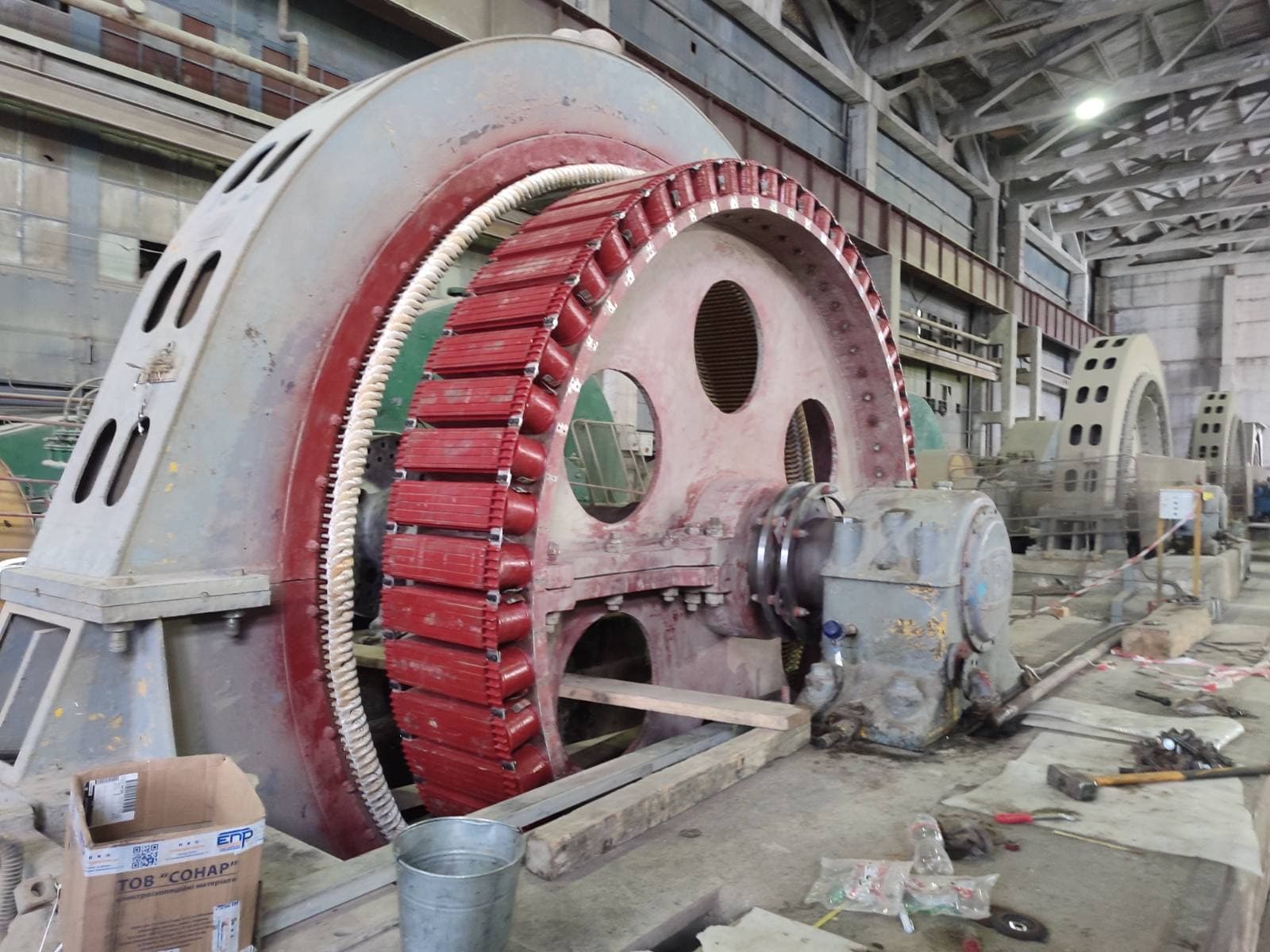
Winding insulation is one of the most important parts of an electric motor, generator, or any other electric machine. The state of the insulation largely determines the equipment’s reliability, allowable operating temperature, dielectric strength, resistance to moisture and vibration, and service life.
A winding can have the correct turn count and the right conductor cross-section, yet still fail to run reliably without a good insulation system. During repair, it is not enough to simply pick a material stamped "class F" or "class H" — a complete insulation system needs to be assembled in which the wire insulation, slot and phase insulation, impregnating varnish, banding materials, and lead cables are all compatible.
The international standard IEC 60085 distinguishes the thermal classification of individual insulating materials from that of complete insulation systems — so the heat resistance of a single film or wire does not automatically mean the whole winding belongs to the same class.
By function, insulation can be turn insulation, ground-wall (main) insulation, phase insulation, layer insulation, slot insulation, end-winding insulation, connection and lead insulation, banding, and impregnation.
Turn insulation separates neighboring turns of the same coil — in low-voltage windings this is often just the wire’s own enamel, while high-voltage coils add mica or glass-mica tape. An interturn short is especially dangerous, since large circulating currents can flow in the shorted turns while overall insulation resistance to frame can still stay high.
Slot insulation separates the winding from the core laminations and must withstand operating voltage, pressure from the winding, impacts during insertion, and the core’s sharp edges. Ground-wall (main) insulation separates the current-carrying parts from the grounded core and frame — especially important in high-voltage machines and generators. Phase insulation separates windings of different phases, since the voltage between phases can be far higher than the voltage between adjacent turns of a single coil.
Insulation serves several functions at once: electrical separation between turns, coils, phases, and frame; mechanical restraint of the conductors against the electrodynamic forces of starting or a short circuit; heat transfer from the copper to the core and the cooling medium; protection from moisture, dust, oil, and chemicals; and, in high-voltage machines, limiting partial discharge.
Thick, porous, or poorly impregnated insulation can significantly hurt heat dissipation — thickness should be engineered, not simply maximized.
A thermal class states the temperature level at which an insulating material or system has confirmed heat endurance — it is neither a melting point nor an instant-failure temperature, but a category established through thermal evaluation.
| Class | Temperature index |
|---|---|
| Y | 90 °C |
| A | 105 °C |
| E | 120 °C |
| B | 130 °C |
| F | 155 °C |
| H | 180 °C |
| N | 200 °C |
| R | 220 °C |
| 250 | 250 °C |
Modern industrial motors most often use class F (155 °C) and class H (180 °C). The gap between them is 25 °C on the temperature scale, but it applies to the whole confirmed insulation system, not just one material.
Suppose a repair uses class-200 winding wire, class-H slot insulation, a class-F lead cable, and a class-B impregnating varnish. That winding does not automatically become a class-H system — the weakest link limits the whole system’s allowable temperature, dielectric and mechanical strength, and service life. Two materials can also each have high heat resistance individually yet be incompatible together: a resin might wet a film poorly, soften another material, or crack under thermal cycling because of mismatched expansion coefficients.
Polyimide materials often have high heat resistance, but the class of the whole winding is still set by the complete system — the weak link can be the varnish, the adhesive, the lead cable, or the banding. Likewise, the name "epoxy resin" alone does not fix a thermal class — that depends on the chemistry, the hardener, and the cure schedule.
An insulation class describes the system’s thermal endurance, not the motor’s constant operating temperature. The actual winding temperature depends on ambient temperature (usually rated up to 40 °C), load, cooling method, and duty. Ambient temperature, average winding temperature rise, an allowance for the local hot spot, and the system’s ultimate temperature limit all need to be kept distinct.
A common design choice is "class F insulation with a class B temperature rise": the insulation system is rated class F, but the allowable temperature rise is capped at a lower level, leaving margin between the actual temperature and the insulation’s potential. That margin slows thermal aging, extends service life, and better absorbs a dirty ventilation path or higher ambient air temperature.
Class F is the most common choice for modern industrial AC motors — materials are widely available, repair technology is well established, and the cost-to-service-life ratio is good. Class H is used in machines with tougher requirements — traction and crane motors, frequently started machines, compact and sealed designs — that need a larger temperature margin.
Class H is not automatically better than class F: it costs more, its impregnation process is more demanding, its materials do not always mix freely, and a hotter motor still hurts the bearings, grease, and seals regardless. Upgrading to class H is technically possible but must be done systematically — the enamel, slot and phase insulation, impregnating compound, lead wires, and banding all need checking, not just one swapped material with "class H" written on the nameplate.
Class H does not compensate for clogged ventilation ducts, chronic overload, an interturn short, or a badly tuned variable frequency drive — moving to a higher class should never mask the real cause of overheating.
Thermoplastic insulation softens on heating and hardens again on cooling — this can repeat many times, though each cycle brings some aging. Examples: polyethylene, polyester films, PVC. Advantages: flexibility and easy forming; drawbacks: softening under heat, creep under mechanical load, and sensitivity to solvents.
Thermoset insulation undergoes an irreversible chemical reaction as it cures, forming a cross-linked structure that no longer melts on reheating — it degrades or chars instead if overheated. Examples: epoxy, polyester, silicone, and polyimide resins. Advantages: high mechanical stiffness, dimensional stability, less creep, and a solidly bonded winding; drawbacks: irreversibility, a risk of brittleness, and harder disassembly during repair.
A modern motor rarely uses just one type — a typical combination is a thermoplastic film for slot insulation, wire enamel, a thermoset impregnating resin, thermoset glass banding, and an epoxy compound at the connections.
A typical VPI cycle includes preliminary drying, drawing a vacuum to remove air and moisture, feeding in the impregnating resin, holding under vacuum, applying pressure to fill the pores, and final curing in an oven. VPI usually uses thermoset systems.
VPI is an impregnation technology, not a thermal class: VPI systems exist in class B, F, H, and above — the class comes from the resin, the wire enamel, the slot and phase insulation, and the banding together, not from using VPI itself.
A variable frequency drive produces a pulsed voltage with a steep rise time, which loads the first turns of the winding, the interturn and phase insulation, and the lead cables more heavily. Repair therefore needs to account for inverter-duty winding wire, reinforced phase insulation, the cable length between drive and motor, and the quality of grounding.
Thermal class and partial-discharge resistance are separate properties: a material can withstand 180 °C yet have poor resistance to corona, or fail quickly under voltage impulses. High-voltage and inverter-fed machines therefore need a separate assessment of electrical endurance, not just a higher thermal class.
Temperature speeds up oxidation, loss of volatile components, and cracking. Moisture lowers insulation resistance and raises dielectric losses. Vibration causes chafing and conductor movement in the slots. Partial discharge gradually erodes the mica barrier and surface coatings, and a chemical environment — acids, oil, solvents — accelerates material degradation.
After repair, insulation resistance, the absorption ratio and polarization index, a high-voltage withstand test, an interturn surge test, and — where relevant — partial-discharge monitoring and a dissipation-factor test are all performed. A megger mostly assesses insulation to frame — an interturn short, a weak joint, or a void can still be present, so high insulation resistance alone does not guarantee a sound winding.
Insulation resistance depends heavily on winding temperature — comparing two readings without temperature correction is misleading.
| Sign | Possible cause | What to check |
|---|---|---|
| Low insulation resistance | Moisture or contamination | Drying, cleaning |
| Insulation is brittle | Thermal aging | Temperature history |
| The film has deformed | Overheated thermoplastic | Operating temperature |
| Resin is tacky after curing | Incomplete cure | The oven cycle |
| Resin has voids | Moisture or too fast a heating rate | Drying and the cure cycle |
| Winding shifts in the slot | Weak impregnation | Wedges and restraint |
| An interturn short | Damaged enamel | A surge test |
| A class-H system ages quickly | Actual temperature too high | A heat run test |
| Insulation fails from the inverter | Voltage impulses | Cable, filters, wire |
No. The class states the system’s confirmed heat endurance; the motor’s actual temperature rise is often capped at a lower level to leave a margin.
Technically yes, but it needs a systematic check of every component — the enamel, slot and phase insulation, impregnation, leads, and banding — not just one swapped material.
No. VPI is an impregnation technology; the class comes from the resin, wire, and insulation materials together, and can be B, F, H or higher.
Not always. Class H does not compensate for blocked ventilation, overload, an interturn short, or a badly tuned variable frequency drive.
A megger mostly assesses insulation to frame and can miss an interturn short or local voids.
Thermoplastic softens on heating and hardens again; thermoset forms an irreversible cross-linked structure after curing that no longer melts.
EPR (Elektropromremont) selects and applies class F and class H insulation systems when repairing and rewinding industrial electric motors and generators.
The scope of work includes:
This material is for informational purposes. The values, diagnostic methods, scope of work and recommendations given here are general and do not replace the manufacturer’s technical documentation. The final decision for a specific machine is made from its own diagnostics and inspection, taking into account its type, power, design, duty, operating history and applicable standards.
We select a compatible class F or H insulation system for your machine and carry out the rewind with a full test cycle.