What is a high-voltage test?
A check of the insulation’s dielectric strength using an elevated voltage.
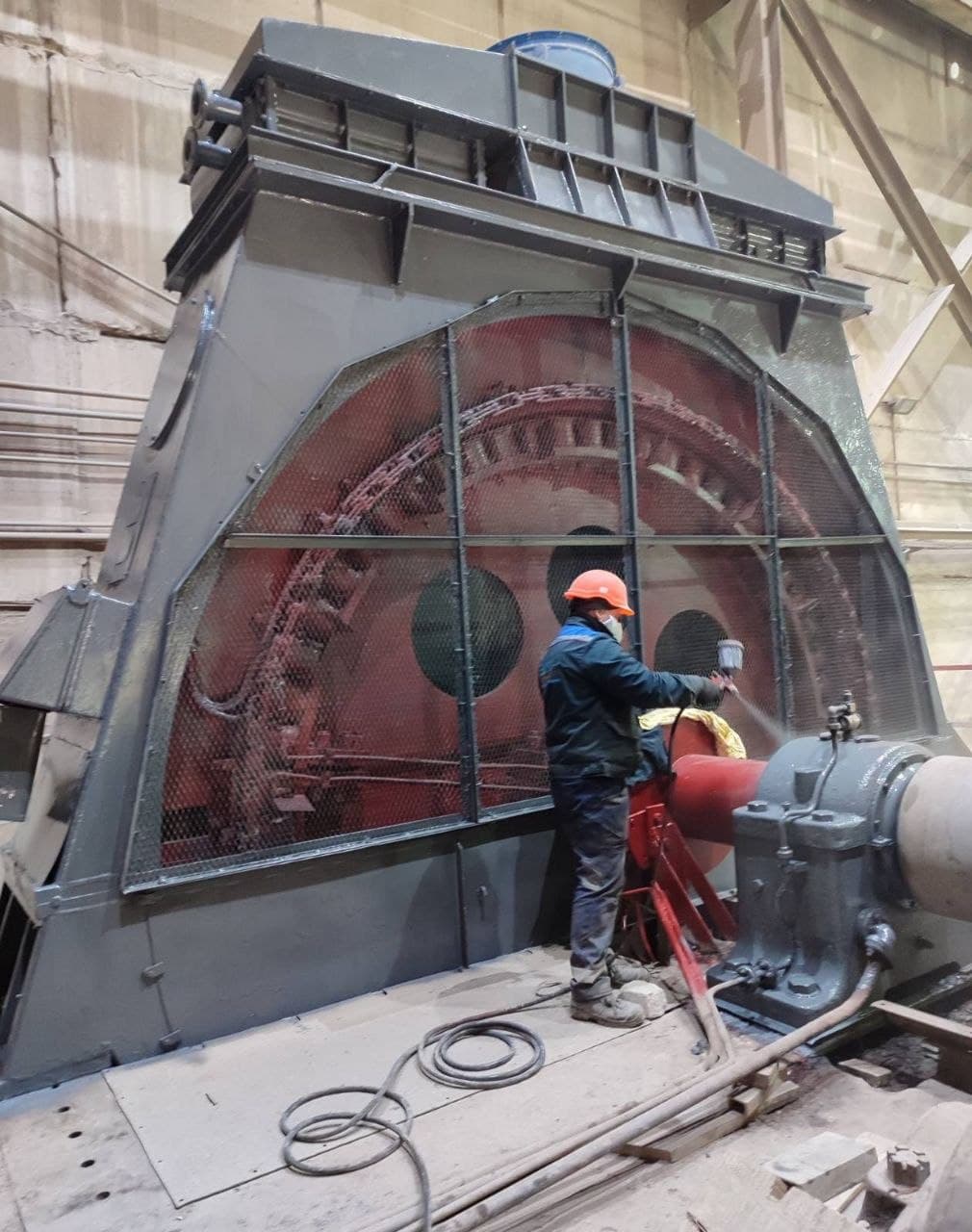
A motor high-voltage test checks the insulation’s dielectric strength by applying a specially defined test voltage to the winding, higher than the normal operating level.
The goal of such a test is to confirm that the insulation system:
High-voltage testing is used for motors, generators, traction machines, transformers, high-voltage coils, cables, and other electrical products. For electrical machines, it is especially important after:
A high-voltage test should not, however, be treated as a universal test that reveals every possible winding defect.
A high-voltage test applies an elevated test voltage to a motor’s insulation while monitoring for breakdown, excessive leakage current, insulation instability, or an electrical flashover.
The voltage is usually applied between the winding and the motor frame, with the frame grounded. If the insulation withstands the set voltage for the specified time without breaking down, the test is considered passed under the applicable program.
The main goal is to check the dielectric strength of the main insulation — that is, its ability to separate live parts from the core, frame, and other grounded metal components. Without this check after a rewind, it’s impossible to fully confirm the quality of the slot insulation, ground-wall insulation, end-turn insulation, terminals, and winding assembly.
The term HiPot comes from High Potential Test. Such a test checks whether the insulation withstands a specified voltage without an electrical breakdown. Depending on the program, leakage current, current stability, the occurrence of breakdown or flashover, and the insulation’s behavior over time are all monitored.
These are fundamentally different tests. A megohmmeter measures insulation resistance — it shows how well the winding is insulated from the frame under a relatively limited DC test voltage. A high-voltage test checks whether the insulation can withstand a higher electrical load without breaking down.
In other words: a megohmmeter assesses resistance; a HiPot test checks dielectric strength. A good megohmmeter result does not automatically guarantee a successful high-voltage test.
Breakdown is when insulation loses its ability to electrically separate conductors: a conductive channel forms, for example winding → damaged insulation → core → frame. This can produce an electrical arc, a sharp rise in current, local charring, and damage to both the insulation and the core.
A flashover can occur not inside the insulation but across its surface, due to contamination, moisture, insufficient clearance, conductive dust, or a defect in the surface coating. This is especially relevant at terminals, end-turns, terminal blocks, and high-voltage sections.
The most common are:
For motors, the choice of method depends on rated voltage, design, insulation system, machine age, and the manufacturer’s documentation.
In an AC test, AC voltage is applied to the winding — the electric field is closer in character to what occurs during normal AC-machine operation, but the test set must supply adequate power because of the winding’s capacitive current; this matters especially for large motors, long windings, and generators.
A DC test uses direct voltage. The equipment can be more compact, since current decreases once the capacitance is charged. But the electric-field distribution in the insulation under DC differs from the operating AC regime, so DC HiPot is not always a direct substitute for an AC test.
Different insulation systems behave differently — capacitance, resistance, binder type, insulation thickness, aging, humidity, and the machine’s voltage all matter. The methodology must match the specific construction.
Most often:
It is sometimes used as part of special diagnostics on an existing machine.
HiPot can also be performed on older motors, but with caution. Old insulation can have hidden defects, be thermally aged, have lost mechanical elasticity, or have local weak spots. An overly harsh test can not only reveal a defect but permanently damage insulation that could otherwise have kept working — so for an older machine, the test level must be determined separately.
A new or freshly rewound winding must have an adequate dielectric-strength margin — it hasn’t yet been through years of thermal aging, vibration, contamination, moisture, or many start cycles. A stricter acceptance program is therefore possible for it than for old in-service insulation.
Depending on the design, the stator winding, a wound rotor, the field winding, pole coils, an armature, or auxiliary windings can be tested — each system can have its own test program.
A simplified scheme: the high-voltage lead connects to the winding, and the frame is grounded; other parts are connected or grounded per the test scheme, which is defined by the documentation.
The frame is grounded for correct field formation, for safety, and to create a controlled current path in case of breakdown. Without reliable grounding, a high-voltage test is hazardous.
Typical logic:
Applying maximum voltage abruptly can create an uncontrolled transient, increase the risk of damage, and make analyzing leakage-current behavior harder. A gradual ramp allows current, stability, and anomalies to be monitored.
During the test, actual voltage, leakage current, time, breakdown, current instability, electrical discharges, sound, smell, and the test set’s protection behavior can all be monitored.
Even sound insulation is not a perfect infinite resistance — a small current flows through it, which can include capacitive, absorption, and conduction components. For assessment, not just the absolute value matters, but also how the current changes over time.
A winding has electrical capacitance. When DC voltage is applied, it charges, and the initial charging current can be higher, then decrease — this is a normal electrical process and does not always indicate a defect.
Depending on the methodology, this can be breakdown, protection tripping, a sharp current rise, instability, a surface flashover, or other anomalous behavior. After a failed test, the cause must be localized.
The test cannot simply be repeated after a breakdown. The location must first be found, the extent of damage assessed, the repair carried out, and intermediate checks performed. Reapplying high voltage to damaged insulation can enlarge the defect.
This is one of the most important distinctions. HiPot mainly checks the winding relative to the frame — the main insulation. A surge test mainly checks turn relative to turn — the interturn insulation. These two tests therefore complement each other.
Imagine two adjacent turns have shorted together — the whole coil can still be well insulated from the frame. In that case, the ground-wall insulation passes HiPot, but a defect already exists inside the coil. Comprehensive testing is therefore needed after a rewind.
HiPot is a pass/fail test within a specified program. Tan δ is a diagnostic measurement of dielectric losses, providing information on overall insulation condition, moisture, aging, and non-uniformity — especially useful for high-voltage machines.
Partial discharges are localized electrical discharges that don’t fully bridge the insulation; they can occur in an internal void, on the surface, or at a material boundary. PD diagnostics can reveal defects that haven’t yet led to a full breakdown, while HiPot only shows whether the insulation withstands the specified load.
In motors at 3, 6, 10 kV and above, the electric field in the insulation is far stronger. Section exits from the slots, ground-wall insulation, slot corona protection, stress-grading coatings, connections, and terminals are all especially critical — a small defect can create a local field concentration.
High-voltage sections can use semiconducting corona-protection coatings in the slot region, aimed at equalizing potential, reducing local field stress, and limiting slot discharges. Damage to this layer can affect the winding’s behavior under high voltage.
Where a section exits the slot, the electric field changes very sharply — special semiconducting or resistive materials (stress-grading protection) can be used there to distribute potential gradually. If this layer is damaged, surface discharges are possible even with sound main insulation.
Moisture can substantially reduce dielectric strength. Before a test, it’s important to confirm the winding is dry, clean, and has an acceptable insulation resistance — running HiPot on an obviously damp winding can cause a breakdown.
Dust, oil, carbon particles, and metal particles can create surface currents, a local electric field, and tracking, so cleaning is part of preparing for a high-voltage test.
The insulation’s electrical parameters depend on winding temperature, so temperature must be recorded, accounted for when comparing results, and match the test methodology.
Tracking is the formation of a conductive path along the insulation surface due to moisture, contamination, local discharges, or thermal damage. Over time, this conductive trace degrades the insulation and can lead to flashover.
In many cases, a high-voltage test can be performed without disassembling the motor. But the converter, sensors, electronics, auxiliary equipment, and cables must be disconnected or protected. It is especially important not to apply the test voltage to electronic components.
A motor connected to an inverter cannot be tested as a single system without a special procedure. High test voltage can damage IGBTs, power electronics, filters, and sensors. The motor is therefore usually electrically isolated from the converter.
Temperature sensors (Pt100, PTC, and other sensors) can have a much lower allowable voltage level — they must be disconnected, properly grounded, or tested under a separate program.
High-voltage current must not be allowed to pass through bearings, sensors, couplings, or auxiliary connections. The grounding scheme must exclude unwanted current paths.
When manufacturing a high-voltage section, it can be tested even before it’s fitted into the stator — this checks the ground-wall insulation, manufacturing quality, and the absence of damage. After insertion, the winding goes through further checkpoints:
This staged control helps catch a defect before an expensive repair is completed.
Proper impregnation fills voids, reduces conductor movement, protects against moisture, and improves mechanical stability, but incorrect curing or contamination can degrade its properties. After vacuum-pressure impregnation (VPI) and curing, the winding must undergo electrical testing to confirm the process didn’t damage the insulation, there’s no assembly defect, and the system is ready for service.
With the correct methodology, sound insulation should withstand the test. But any high-voltage test adds electrical stress, so the principle "more voltage is always better" is wrong. The test should be enough to confirm condition, not needlessly harsh.
Excessive voltage can damage a weak spot, initiate electrical treeing, create partial discharges, cause a breakdown, and shorten insulation life. The test level is therefore not set "with a rough margin."
Frequent repetition of the test at maximum level is undesirable, especially for old insulation, emergency-restored windings, and machines with high operating hours. Less stressful methods can be used for repeat diagnostics: a megohmmeter, polarization index, tan δ, partial discharge, and trend analysis.
A high-voltage test is a potentially hazardous operation. Required:
A winding has capacitance. After the source is disconnected, it can remain charged, meaning its terminals can still carry a hazardous voltage. Controlled discharge and grounding are therefore required after a DC test.
It is recommended to record:
The report confirms the test was passed, tracks repair history, allows future results to be compared, and documents repair quality. For an industrial customer, this is often an important part of the repair documentation.
What not to do:
A high-voltage test should be considered as part of a system, not on its own: visual inspection + insulation resistance + DC resistance + interturn testing + HiPot + functional testing. HiPot answers only one specific question: does the main insulation withstand the specified electrical load without breaking down? It doesn’t fully answer whether the turn count is correct, whether there’s an interturn fault, whether the rotor is sound, whether the winding is correctly phased, or whether the motor will overheat. That’s exactly why a quality test program is always comprehensive.
It’s possible for insulation resistance to be high, yet a weak zone breaks down as the electric field rises. Causes: a local crack, damaged ground-wall insulation, an air void, a terminal defect, or insufficient electrical clearance. This shows the difference between resistance and dielectric strength.
This isn’t a contradiction. The cause can be an interturn fault, an incorrect turn count, phase asymmetry, mechanical overload, or poor cooling. HiPot doesn’t check any of these parameters.
If an arc occurred across the outer surface, check cleanliness, moisture, creepage distance, insulation condition, and terminal position. Not every flashover means an internal coil breakdown.
The slot, coil, inter-phase zone, terminal, or end-turn must be localized. Possible causes: damage during insertion, a sharp slot edge, a defective insulation tape, mechanical pinching, or an incorrect impregnation process.
| Result | Possible cause | What to check |
|---|---|---|
| Breakdown at low voltage | A serious defect | The ground-wall insulation |
| Current rises sharply | A developing defect | The insulation |
| A surface flashover | Moisture or contamination | Terminals, end-turns |
| Good megohmmeter, poor HiPot | A local weakness | The insulation under a high field |
| HiPot passes, but the surge test fails | An interturn defect | The coils |
| Unstable leakage current | Surface processes | Cleanliness, moisture |
| Breakdown after a repair | An assembly defect | The slot zone |
| The test won’t start | Incorrect connection | The scheme, grounding |
A check of the insulation’s dielectric strength using an elevated voltage.
To confirm there is no breakdown between the winding and the frame.
The common name for a High Potential Test.
No. A megohmmeter checks insulation resistance, while HiPot checks the insulation’s ability to withstand a specified voltage.
Not always. A surge test or other special methods are used to find an interturn defect.
Yes, this is a standard step in acceptance testing.
Possibly, but the program must account for the insulation’s age and condition.
No. Excessive voltage can damage a weak spot and shorten insulation life.
A conductive channel forms, an electrical arc appears, or current rises sharply.
No — the defect must first be found and fixed.
It can retain a hazardous electrical charge even after the source is disconnected.
Not without a special procedure — the electronics must be protected or disconnected.
Electropromremont LLC performs a full set of electrical checks on electrical machines after repair and rewinding.
Depending on the design and repair scope, the following can be performed:
The specific test voltage and methodology are determined for each machine individually, accounting for rated voltage, insulation type, age, repair scope, technical documentation, and applicable regulatory requirements.
A high-voltage test is one of the key steps in checking a motor’s insulation. Its main goal is to confirm the winding’s main insulation withstands the specified electrical load without breaking down.
HiPot does not replace:
The correct approach: insulation resistance → interturn check → HiPot → functional testing, accounting for the specific machine’s design and technical condition.
A high-voltage test should confirm insulation quality, not subject it to needlessly harsh stress.
This material is for informational purposes. The values, diagnostic methods, scope of work and recommendations given here are general and do not replace the manufacturer’s technical documentation. The final decision for a specific machine is made from its own diagnostics and inspection, taking into account its type, power, design, duty, operating history and applicable standards.
We perform a full package of electrical checks — from insulation resistance and interturn testing to a hipot test with a full test report.