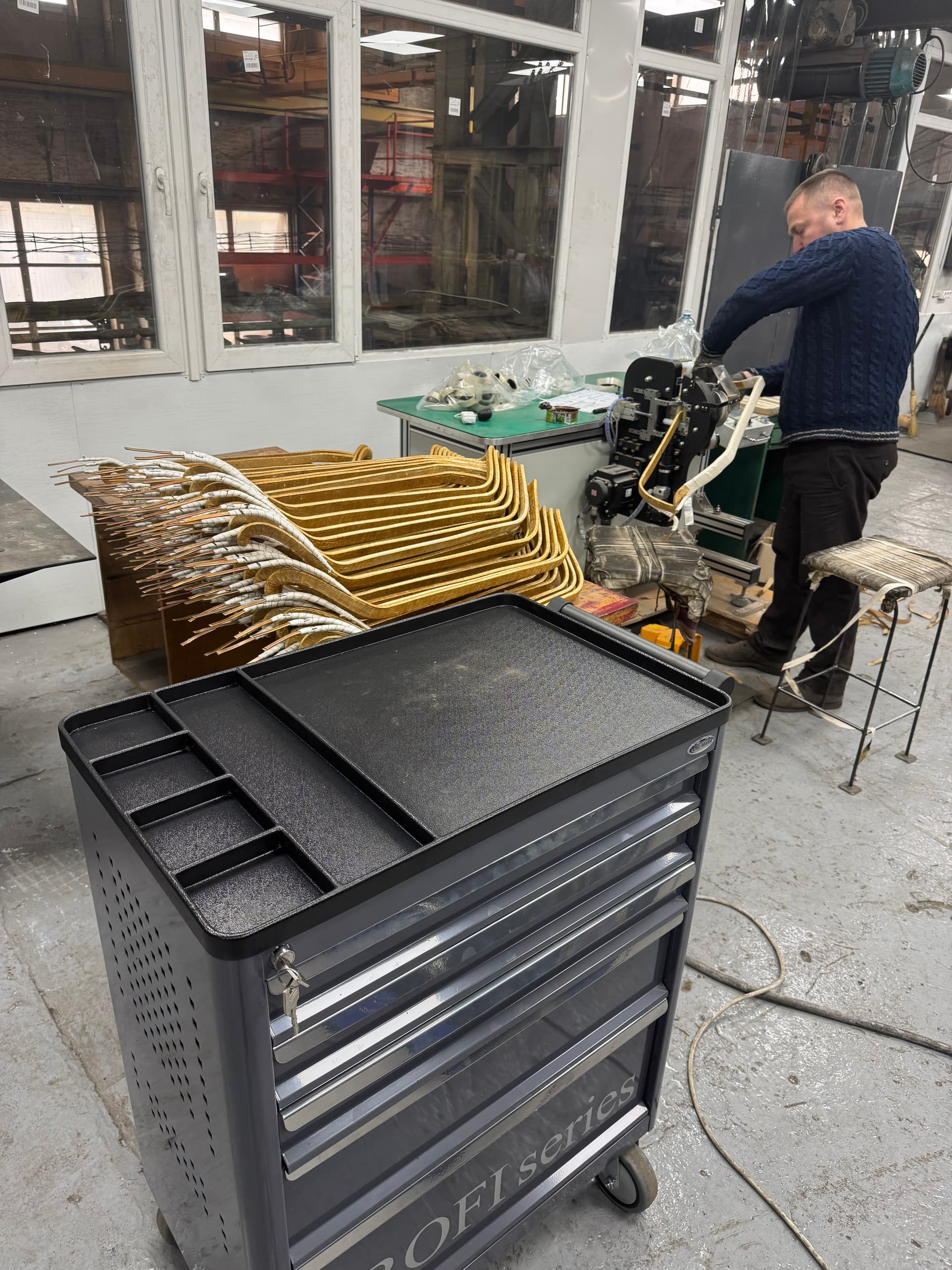
The stator is one of the main parts of an electric motor. It is where the magnetic field that interacts with the rotor and produces the rotation of the shaft is created.
During normal operation, the stator winding and magnetic core heat up. This is a natural process, since part of the electrical energy is inevitably converted into heat.
A problem arises when the temperature of the stator:
exceeds the permissible level;
keeps rising after the motor reaches its operating regime;
differs significantly between individual phases or zones;
is accompanied by a smell of overheated insulation;
causes the thermal protection to trip;
is combined with increased current, noise or a loss of power.
Stator overheating does not always mean that the winding is already damaged and the motor needs rewinding. The cause may be overload, a supply fault, insufficient cooling, an incorrect connection diagram, or a fault in the driven mechanism.
Therefore, before deciding on a repair, it is necessary to establish exactly what is heating up: the whole winding, one phase, an individual section, an end winding, or the stator core.
01
The short answer
The stator of an electric motor most often gets hot because of:
overload of the motor;
increased current in the windings;
phase unbalance;
loss of one phase;
reduced or increased voltage;
an incorrect winding connection;
frequent or prolonged starts;
an interturn short circuit;
a phase-to-phase short circuit;
a breakdown of the insulation to the frame;
loosened contacts and connections;
contamination or moistening of the winding;
clogged ventilation ducts;
a faulty fan;
high ambient temperature;
defects of the magnetic core;
an uneven air gap;
incorrect variable frequency drive settings;
exceeding the permissible operating regime.
Local heating of the stator is especially dangerous. Such overheating can indicate an interturn defect, a damaged connection, shorted core laminations, or disturbed circulation of the cooling air.
02
What is the stator of an electric motor?
The stator is the stationary part of an electrical machine, which usually consists of:
the frame;
a laminated magnetic core;
slots;
the winding;
slot and phase-to-phase insulation;
wedges;
the end windings;
connecting and lead wires;
a winding fastening system;
temperature sensors, if provided for by the design;
ventilation ducts.
In a three-phase asynchronous motor, the stator winding creates a rotating magnetic field. It is this field that induces currents in the rotor and produces the rotating torque.
The technical condition of the stator directly affects:
the power of the motor;
the starting torque;
the efficiency;
the noise level;
the temperature;
the symmetry of the currents;
the reliability of the insulation;
the service life of the whole electrical machine.
03
Why does the stator heat up during normal operation?
The main source of heat in the winding is electrical losses. When current flows through a conductor, part of the energy is converted into heat.
The greater the current, the more intensively the winding heats up. That is why even a relatively small excess current, if it persists for a long time, can significantly worsen the thermal regime.
Besides the losses in the winding, heat in the stator also arises from:
hysteresis losses in the magnetic core;
eddy currents;
additional losses from harmonics;
unevenness of the magnetic field;
local short circuits between the steel laminations;
heating of the contact connections;
heat transfer from the rotor and the internal air.
In a sound motor, this heat is dissipated through the frame, the cooling fins, the internal ventilation ducts and the airflow.
04
What exactly can overheat in the stator?
The phrase "the stator is overheating" can refer to different faults.
The whole winding heats up evenly
Likely causes:
overload;
insufficient cooling;
high ambient temperature;
an incorrect operating regime;
reduced voltage under load;
operation at low speed without sufficient ventilation.
One phase heats up more strongly
Possible causes:
voltage unbalance;
a poor contact;
a partial break in a connection;
uneven phase resistance;
an interturn defect;
an incorrect winding connection;
asymmetry of the external supply.
An individual section or coil heats up locally
This can indicate:
an interturn short circuit;
insulation damage;
a soldering defect;
a loosened contact connection;
mechanical damage to a conductor;
local contamination;
insufficient impregnation;
loosened winding fastening.
The end windings heat up
Likely causes:
insufficient cooling;
loosening or vibration of the sections;
defects of the phase-to-phase insulation;
a poor contact connection;
excessive current;
an unsuitable shape or arrangement of the end windings after a repair.
The stator core heats up
Possible causes:
short circuits between the steel laminations;
mechanical damage to the core;
scoring from contact with the rotor;
incorrect removal of the old winding;
damage to the slots;
increased voltage;
saturation of the magnetic core;
unsuitable parameters of the new winding;
an uneven air gap.
05
The main signs of stator overheating
Possible overheating of the winding or the core can be indicated by:
the central part of the frame is significantly hotter than the end shields;
the temperature rises quickly after starting;
the motor gets hot even without a significant load;
one area of the frame is hotter than the others;
the phase currents differ noticeably;
the thermal protection trips;
a smell of overheated varnish appears;
the insulation changes colour;
an increased electromagnetic hum is heard;
the motor loses power;
the speed drops;
the current consumption increases;
smoke appears;
darkening or melting is visible in the terminal box;
the phase measurement results differ;
after cooling, the motor runs normally for a while and then overheats again.
Special attention should be paid to the recurrence of the fault. If, after cleaning, tightening the contacts or replacing the bearings, the stator keeps overheating, in-depth electrical diagnostics are required.
06
The main causes of stator overheating
Cause
Nature of the heating
Additional signs
Overload
Mainly even
Increased current, a drop in speed
Insufficient cooling
Even or zonal
Contamination, weak airflow
Phase unbalance
Uneven
Different currents in the phases
Loss of a phase
Fast and dangerous
A sharp increase in current
Reduced voltage
General overheating
A prolonged start, increased slip
Increased voltage
Heating of the magnetic core
Increased no-load current
Interturn short circuit
Local
A smell of insulation, current asymmetry
Poor contact
Local
Darkening, melting, heating of the terminals
Magnetic core defect
Local
A hot spot on the core
Frequent starts
General
Accumulation of heat
Prolonged start
Significant heating
The motor takes a long time to reach speed
Incorrect connection diagram
Rapid overheating
High current or low torque
Operation from a drive
Even or local
Low speed, harmonics
Moistening and contamination
Local or uneven
Deterioration of the insulation condition
07
A detailed look at the causes
01
Overload of the motor
Overload is one of the most common causes of even overheating of the stator winding.
When the mechanism demands more torque, the motor draws more current. Increased current raises the thermal losses in the winding conductors.
Overload can be caused by:
jamming of a pump or a compressor;
clogging of the working element;
exceeding the rated throughput;
excessive pressure;
mechanical damage to the gearbox;
excessive belt tension;
incorrect alignment;
thickening of the process medium;
incorrect selection of the motor’s power.
A characteristic sign: without a mechanical load the temperature and current can be close to normal, but they rise quickly once the mechanism is connected.
02
Insufficient cooling
Even a sound winding will overheat if the heat is not removed from the stator.
A disturbance of the cooling can be caused by:
contamination of the frame fins;
clogged ventilation ducts;
damage to the fan;
an incorrect direction of rotation;
a fault in the forced ventilation;
clogged filters;
a faulty heat exchanger;
installing the motor in an enclosed space;
a high temperature of the cooling air;
applying too thick a layer of paint to the frame;
contamination of the internal ducts with oil-laden dust.
If the cooling deteriorates gradually, the motor temperature can also rise slowly — over weeks or months.
03
Voltage and current unbalance between phases
In a three-phase motor, the winding is designed for a symmetrical supply.
With a difference between the phase or line-to-line voltages, the currents in the windings are distributed unevenly. An individual phase can heat up considerably more.
Unbalance arises because of:
uneven loading of the network;
a poor contact;
cable damage;
a faulty contactor;
differing resistance of the connections;
transformer problems;
loosened links;
a winding defect.
During the check, all three line-to-line voltages and the current of each phase must be measured. The average value can look normal while hiding a dangerous asymmetry.
04
Loss of one phase
Loss of a phase is an emergency regime.
If the motor is stationary, it may fail to start. If it is already running, it sometimes keeps operating on two phases, but the currents rise sharply.
Causes:
a blown fuse;
a faulty contactor;
a broken cable;
a loose terminal;
a burnt contact;
a damaged link;
a broken connection inside the winding.
If signs of phase loss appear, the motor must be stopped immediately. Continued operation can quickly damage the stator winding.
05
Reduced voltage
At reduced voltage the motor develops less torque. To keep driving the mechanism, it may draw an increased current.
As a result:
the stator winding heats up;
the duration of the start increases;
the slip increases;
the rotor overheats;
the motor may fail to reach rated speed.
A voltage dip during starting is especially dangerous, and it cannot be detected by a measurement taken only before the motor is switched on.
06
Increased voltage
Increased voltage can raise the magnetic flux in the stator core.
This leads to:
an increase in the losses in the steel;
an increase in the no-load current;
saturation of the magnetic core;
increased electromagnetic noise;
heating of the core and the winding.
Such a motor can overheat even at a small mechanical load.
07
Frequent starts
The starting current is several times higher than the running current. During frequent starts the winding does not have time to cool down.
Particularly dangerous are:
repeated attempts to start a jammed mechanism;
frequent reversals;
short intervals between starts;
starting an already warmed-up motor;
operation in a regime that does not match the nameplate rating;
switching on again immediately after the protection has tripped.
Even if each individual start is relatively short, the accumulated thermal load can exceed the permissible value.
08
Prolonged start
During a prolonged start the motor draws increased current for an extended period.
The causes can be:
excessive load;
low voltage;
jamming of the mechanism;
a rotor defect;
bearing problems;
incorrect star-delta changeover;
unsuitable variable frequency drive settings;
an incorrectly selected motor.
A prolonged start heats not only the stator but also the rotor, so repeated starting attempts are especially dangerous.
09
Interturn short circuit
An interturn short circuit is one of the most dangerous causes of local stator overheating.
When the insulation between adjacent turns is damaged, part of the winding is effectively shorted. A significant local current arises inside the shorted loop.
Consequences:
rapid local heating;
destruction of the insulation of the neighbouring turns;
the defect spreading to the whole coil;
a phase-to-phase short circuit;
a breakdown to the frame;
an emergency shutdown;
burnout of the winding.
At an early stage, the overall insulation resistance can remain acceptable. Therefore a normal megohmmeter reading does not rule out an interturn defect.
Possible signs:
one phase draws a different current;
the frame heats up locally;
a smell of varnish is noticeable;
the motor hums;
the torque deteriorates;
the fault gets worse after the machine warms up.
10
Phase-to-phase short circuit or breakdown to the frame
When the phase-to-phase insulation or the insulation relative to the frame is damaged, a serious emergency fault arises.
Causes:
ageing of the insulation;
moisture;
contamination;
mechanical movement of the winding;
loosened fastenings;
overvoltage;
previous overheating;
partial discharges;
a foreign metal object;
damage caused during a repair.
Such defects can lead to rapid destruction of the winding and must be detected by specialised electrical tests.
11
Poor contacts and connection defects
Increased transition resistance at a connection creates local heat generation.
Problems can occur at:
terminals;
cable lugs;
links;
lead ends;
soldered joints;
welded connections;
inter-coil connections;
transition points between conductors.
Signs:
a local hot zone;
darkening;
melting;
a smell;
uneven current;
unstable operation;
periodic loss of contact.
Tightening the external terminals does not eliminate an internal defect in a soldered joint or a winding connection.
12
Incorrect winding connection diagram
The motor winding can be designed for different connections depending on the supply voltage.
An incorrect star or delta connection can cause:
excessive current;
insufficient torque;
a prolonged start;
overheating;
protection tripping;
damage to the winding.
Before starting after a repair or reconnection, the diagram must always be checked against the nameplate and the technical documentation.
13
Incorrect winding parameters after a repair
After rewinding, the stator can overheat if the following have been changed or incorrectly reproduced:
the number of turns;
the wire cross-section;
the connection diagram;
the winding pitch;
the number of parallel branches;
the geometry of the coils;
the slot fill;
the insulation parameters;
the arrangement of the end windings;
the winding direction;
the phasing.
Even if the motor starts, deviations in the parameters can lead to increased no-load current, uneven heating, noise and reduced efficiency.
14
Contamination and moistening of the winding
Industrial dust, oil, moisture, salt, chemicals and other contaminants worsen the condition of the insulation and the heat removal.
Possible consequences:
a decrease in the insulation resistance;
surface leakage currents;
local discharges;
corrosion;
overheating;
accelerated ageing of the varnish;
a short circuit to the frame.
The combination of conductive dust and moisture is especially dangerous.
Simple drying is not always sufficient. Cleaning, washing, drying, repeated impregnation and verification tests may be needed.
15
Ageing of the insulation
Insulation gradually loses its properties under the action of:
temperature;
vibration;
the electric field;
moisture;
dust;
the chemical environment;
thermal cycles;
frequent starts;
overvoltages.
Overheating accelerates the ageing of the insulation, and ageing, in turn, increases the risk of new overheating and breakdowns.
After significant emergency heating, the winding can look relatively sound externally, but its electrical and mechanical strength will already be reduced.
16
Loosening of the winding in the slots
The winding must be reliably fastened.
When the wedges, bandages or fastenings loosen, the following arise:
vibration of the conductors;
friction of the insulation;
mechanical damage;
loosened connections;
local heating;
a characteristic noise.
Especially significant electrodynamic forces act during starts and short circuits.
17
Defects of the stator magnetic core
The magnetic core consists of individual insulated laminations of electrical steel. This design reduces eddy currents.
If the insulation between the laminations is damaged, local conductive loops are formed. Eddy currents arise in them, causing local overheating.
Causes of the defects:
contact between the rotor and the stator;
mechanical damage;
incorrect removal of the old winding;
working with a chisel or a grinding tool;
overheating during burnout of the winding;
damage to the slots;
a foreign object;
loosening of the steel stack.
A local core defect can cause repeated damage even to a new winding.
That is why, before rewinding, it is important to check not only the old winding but also the stator core.
18
Uneven air gap
When the rotor is displaced relative to the stator, the magnetic field becomes asymmetric.
The causes can be:
bearing wear;
misaligned end shields;
shaft deflection;
frame deformation;
incorrect assembly;
wear of the fit surfaces;
loosening of the core fastening.
Consequences:
additional magnetic forces;
increased vibration;
noise;
local heating of the stator;
a risk of the rotor rubbing;
damage to the magnetic core.
19
Operation from a variable frequency drive
When supplied from a variable frequency drive, the shape of the voltage differs from an ordinary sine wave.
This can lead to:
additional losses in the winding;
heating of the magnetic core;
an increased electrical load on the insulation;
local overvoltages;
overheating during operation at low speed;
insufficient self-ventilation.
The following are important:
the correctness of the motor parameters entered;
the control mode;
the switching frequency;
the cable length;
the presence of output filters;
the minimum operating speed;
the need for forced ventilation;
the suitability of the motor’s insulation for this kind of supply.
20
High ambient temperature
The temperature of the winding depends not only on the internal losses, but also on the temperature of the air used to cool the motor.
If the motor runs next to a furnace, inside a closed enclosure, or in a room without ventilation, the difference between the stator temperature and the ambient temperature decreases. Heat is removed less effectively.
In such a situation, the motor can overheat even at a current close to the rated value.
21
Unsuitable duty
The motor may be technically sound but used in a regime for which it was not designed.
Examples:
prolonged operation of a short-time duty motor;
an excessive number of starts;
frequent reversals;
prolonged electric braking;
operation at low speed;
cycles with an insufficient pause;
prolonged operation with overload.
In such cases it is necessary to analyse not only the condition of the stator, but also whether the motor matches the process it drives.
08
How to distinguish stator overheating from other faults?
Sign
More likely the stator
More likely another component
A hot central part of the frame
Yes
—
Only the end shield is hot
—
Bearing
Different currents in the phases
Yes
Also possibly the supply or the rotor
A smell of varnish or insulation
Yes
—
A metallic grinding noise
—
Bearings or rubbing
Slow acceleration
Possibly
Rotor or mechanism
A local hot spot
Winding or core
A possible external source
Increased current with no load
Winding or magnetic core
Bearings, rubbing
Increased current only under load
Possibly
Overload or rotor
Strong vibration
Possibly with a defect
More often a mechanical cause
It is impossible to determine the source of overheating conclusively from a single sign. A combination of measurements is needed.
09
How to diagnose stator overheating correctly?
Step 1. Determine the nature of the heating
It is necessary to establish:
whether the heating is even or local;
whether the motor gets hot with no load or only under load;
whether the problem occurs immediately or after prolonged operation;
whether one side of the frame heats up;
whether the phase temperatures differ according to the built-in sensors;
whether the overheating appeared after a repair.
Step 2. Check the actual load
It is necessary to measure:
the current of each phase;
the power;
the rotation speed;
the load on the shaft;
the parameters of the driven mechanism.
If the currents are symmetrical but exceed the rated value, the first suspicion is overload or an incorrect operating regime.
Step 3. Check the voltage
All the line-to-line voltages are measured:
before starting;
during the start;
in the steady state;
at maximum load.
The contactors, fuses, cables, terminals and links are also checked.
Step 4. Check the cooling system
The following are inspected:
the frame fins;
the fan;
the cowl;
the grilles;
the ventilation ducts;
the filters;
the heat exchangers;
the forced-ventilation system;
the direction and the actual airflow.
Step 5. Carry out thermal monitoring
The temperature is measured at several points:
the central part of the frame;
individual zones around the circumference of the stator;
the drive-end and non-drive-end shields;
the terminal box;
the lead cables;
the air at the inlet and outlet.
Thermal-imaging monitoring is best carried out under a stable load and compared with previous results.
Step 6. Measure the insulation resistance
Measuring the insulation resistance helps to detect:
moistening;
contamination;
a general deterioration of the insulation;
a short circuit to the frame.
However, this method does not always reveal an interturn short circuit. Therefore a normal insulation resistance is not final confirmation that the winding is sound.
Step 7. Measure the phase resistance
Comparing the phase resistance makes it possible to detect:
a break;
a poor contact;
a soldering defect;
unevenness of the parallel branches;
connection errors;
some of the winding defects.
The measurement must be carried out taking into account the winding temperature and the accuracy of the instrument.
Step 8. Check the interturn insulation
Specialised methods can be used to detect interturn defects, in particular comparing the surge (impulse) characteristics of the windings.
The specific method and the test voltage are determined by:
the type of motor;
the rated voltage;
the design of the winding;
the technical documentation;
the condition of the insulation;
the standards of the enterprise.
Step 9. Check the magnetic core
After the winding has been removed, or if a local defect is suspected, the following are checked:
traces of rubbing;
darkening;
melting;
damage to the teeth;
short circuits between the laminations;
loosening of the stack;
local heating zones;
the condition of the slots.
Checking the magnetic core is especially important after an emergency burnout of the winding or contact between the rotor and the stator.
Step 10. Check the connection diagram and the winding parameters
After a repair it is necessary to confirm:
the number of turns;
the wire cross-section;
the connection diagram;
the phasing;
the number of parallel branches;
the phase resistance;
the correctness of the leads;
compliance with the nameplate voltage;
the no-load current.
Step 11. Carry out a verification start
After the defects have been eliminated, the following are monitored:
the phase currents;
the voltage;
the temperature;
the vibration;
the noise;
the acceleration time;
the direction of rotation;
the operation of the fan;
the stabilisation of the thermal regime.
The decision on whether the motor is sound should not be made immediately after a short no-load start.
10
What to do if the stator is overheating?
The method of elimination depends on the cause.
Possible measures:
reducing the actual load;
eliminating a fault in the driven mechanism;
restoring the normal voltage;
eliminating phase unbalance;
restoring the contacts;
replacing faulty starting equipment;
correcting the connection diagram;
cleaning the frame and the ventilation ducts;
repairing or replacing the fan;
installing forced ventilation;
cleaning and drying the winding;
carrying out repeated impregnation;
repairing the connections;
replacing the damaged section, if the design allows it;
rewinding the stator;
repairing the magnetic core;
restoring the geometry of the components;
eliminating unevenness of the air gap;
changing the variable frequency drive settings;
selecting a motor that matches the actual duty.
After the repair, it is necessary to eliminate not only the consequence but also the root cause. Otherwise the new or repaired winding can overheat again.
11
When must the motor be stopped immediately?
The electric motor should be taken out of service immediately if:
the stator temperature is rising quickly;
a smell of burnt insulation has appeared;
smoke is visible;
the current of one phase differs significantly;
there are signs of phase loss;
the thermal or differential protection has tripped;
the motor cannot complete the start;
the electromagnetic hum has increased;
strong sparking has appeared;
melting is visible in the terminal box;
the motor is losing speed;
after cooling, the fault reappears.
Restarting without establishing the cause can enlarge the damaged area and turn a local defect into complete burnout of the winding.
12
What should not be done?
It is not recommended to:
draw an immediate conclusion about the need for rewinding;
continue operating after a smell of insulation;
repeatedly start the motor after the protection has tripped;
increase the rating of the circuit breaker;
raise the thermal protection settings;
assess the condition of the winding with a megohmmeter alone;
check the current of only one phase;
ignore the voltage during starting;
replace the winding without checking the magnetic core;
rely on the data of an external thermal-imaging inspection alone;
skip checking the driven mechanism;
start the motor after a repair without verification tests;
rewind the motor again without establishing the cause of the previous overheating.
13
Practical experience of ELEKTROPROMREMONT LLC
Experience in repairing industrial electric motors shows that the phrase "stator overheating" is often used too broadly.
After disassembly and comprehensive fault detection it may turn out that:
the winding was sound and the motor was running overloaded;
the cause was phase unbalance due to a burnt contact;
the frame was overheating because the ventilation ducts were completely clogged;
a local hot zone arose because of damage to the magnetic core;
the new winding was overheating because of incorrect parameters left over from a previous repair;
the stator defect was a consequence of the rotor rubbing because of worn bearing assemblies;
an interturn short circuit was not detected by an ordinary insulation resistance measurement;
the overheating appeared only after prolonged operation, when a defective connection expanded from the heat.
During diagnostics our specialists most often encounter the following causes:
overload;
disturbed ventilation;
current asymmetry;
loosened terminal connections;
moistening and contamination;
ageing of the insulation;
interturn defects;
damage to the end windings;
loosened winding fastening;
core defects;
mistakes made during a previous rewinding;
an unsuitable regime of operation from a variable frequency drive.
One of the most important practical recommendations is not to consider the stator in isolation from the whole electrical machine.
Stator damage can be a secondary consequence of:
a rotor defect;
bearing wear;
shaft misalignment;
an uneven air gap;
an incorrect supply;
overload of the mechanism;
a fault in the cooling system.
That is why professional diagnostics must cover not only the winding, but also the rotor, the bearing assemblies, the magnetic core, the supply, the cooling and the driven mechanism.
Note for technologists: this block should ideally be supplemented with real examples from the company: a local interturn defect, core damage after the rotor rubbed against the stator, incorrect parameters left over from a previous winding, or overheating caused by contaminated ventilation ducts.
14
Typical mistakes during stator diagnostics
MISTAKE No. 1
Assuming that any overheating means an interturn short circuit
Overheating can be caused by overload, the supply, the cooling, or a mechanical fault.
MISTAKE No. 2
Drawing a conclusion from the insulation resistance alone
A normal insulation resistance does not rule out an interturn defect, a poor contact connection, or local damage to the core.
MISTAKE No. 3
Not comparing the currents of all the phases
A difference between the phases is often the first sign of a supply or winding defect.
MISTAKE No. 4
Not monitoring the voltage under load
The voltage before starting can be normal but drop significantly during starting or operation.
MISTAKE No. 5
Sending the motor for rewinding straight away
If the root cause lies in the mechanism, the network or the cooling, the new winding will overheat too.
MISTAKE No. 6
Not checking the magnetic core
A damaged core can locally heat and destroy a new winding.
MISTAKE No. 7
Assessing the temperature by hand alone
Human perception does not allow accurate determination of the temperature or the location of internal overheating.
MISTAKE No. 8
Not taking the ambient temperature into account
The same current can be permissible in a cool workshop and dangerous next to hot equipment.
MISTAKE No. 9
Not checking the parameters after rewinding
The phase resistances, the no-load current, the connection diagram, the vibration, the noise and the thermal regime must be monitored.
MISTAKE No. 10
Ignoring the recurrence of the fault
If the stator has already been rewound but has overheated again, a systemic external or design-related cause must be sought.
15
Frequently asked questions
Why does the stator get hot with no load?
Possible causes:
increased voltage;
an incorrect winding connection;
a magnetic core defect;
an interturn short circuit;
a parameter error after rewinding;
insufficient cooling;
mechanical rubbing.
Why does the stator get hot only under load?
Most often this is linked to overload, reduced voltage, increased mechanical resistance, or an incipient winding defect that shows up after the machine warms up.
Why does one phase get hotter?
The cause can be voltage unbalance, a poor contact, uneven phase resistance, a connection defect, or an interturn short circuit.
Why does the stator get hot after rewinding?
You should check:
the number of turns;
the wire cross-section;
the connection diagram;
the phase resistance;
the phasing;
the no-load current;
the condition of the magnetic core;
the cooling system;
the air gap;
the actual load.
Can the stator get hot because of low voltage?
Yes. At reduced voltage the motor can draw increased current and run with greater slip.
Can increased voltage heat up the stator?
Yes. It can increase the magnetic flux, the losses in the steel, and the no-load current.
Does local heating always mean an interturn short circuit?
No. Local overheating can also be caused by a poor contact, damage to the magnetic core, or a disturbance of the cooling.
Can an interturn short circuit be detected with a megohmmeter?
Not always. A megohmmeter mainly assesses the insulation relative to the frame and between electrically separated parts. Other methods may be needed for interturn defects.
Does the stator have to be rewound after any overheating?
No. The decision depends on the temperature, the duration of the overheating, the condition of the insulation, the test results, and whether there is actual damage.
Can a damaged rotor cause stator overheating?
Yes. A rotor defect can increase the slip, worsen the acceleration, and raise the stator current.
Can stator overheating be related to the bearings?
Yes. A damaged bearing increases the mechanical resistance, can disturb the air gap, and can cause overload of the motor.
This material is for informational purposes. The values, diagnostic methods, scope of work and recommendations given here are general and do not replace the manufacturer’s technical documentation. The final decision for a specific machine is made from its own diagnostics and inspection, taking into account its type, power, design, duty, operating history and applicable standards.
Is your motor stator overheating?
We will carry out electrical and thermal diagnostics of the stator — checking the supply, the cooling, the interturn insulation and the magnetic core — and perform repair or rewinding.